Low- and middle-income earners in Kenya are set to receive significant tax relief as the government moves to ease the financial burden on salaried workers.
The National Treasury says the initiative would leave more disposable income in the hands of employees earning below Sh30,000 a month, helping to boost consumer spending amid rising cost of living.
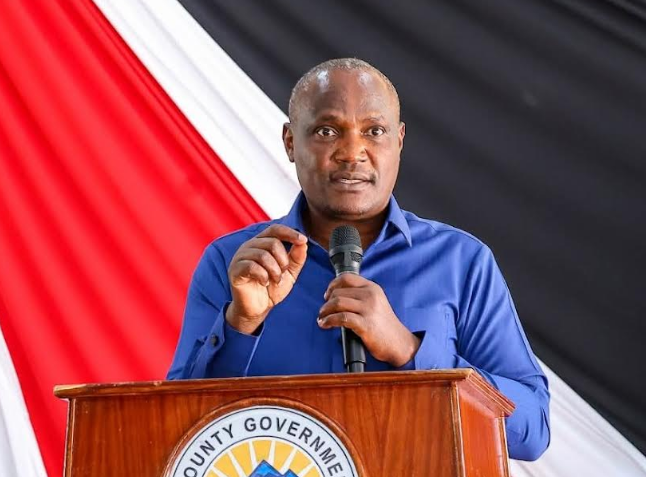
Treasury Cabinet Secretary John Mbadi announced the plan on Monday at the Budget and Privatisation Public Engagement Forum for the Upper Eastern region (including Embu, Tharaka Nithi, Meru, Isiolo and Marsabit Counties) held at Meru National Polytechnic.
He said the government intends to abolish income tax for workers earning under Sh30,000, while reducing tax rates for those earning up to Sh50,000.
“We have agreed with President William Ruto that low-income earners should be given a reprieve and to this effect, I am preparing to take a proposal to Parliament on the Tax Law Amendment Bill once it resumes,” said Mbadi.
He said those earning between Sh30,000-Sh50,000 will have their tax rate reduced from the existing 30 per cent PAYE to 25 percent.
He added that the Kenya Revenue Authority (KRA) is also integrating the tax system to capture those who have not been paying taxes, especially property owners.
“We have many people making Sh100,000 but just because they are not on the payroll, you want to run away yet you are also using the roads and other infrastructure like that salaried person who is being taxed. This is being unfair and we are coming for you softly through your records,” Mbadi.
“The principles of taxation dictate that you should tax wealth and if this is not enough, you go to the income tax but not trade. We are trying to avoid taxing trade and reducing taxation on income but tax wealth and this is what most countries do,” said the CS.
On Privatisation, the CS said the government was committed to engaging the youth in their respective regions on matters pertaining to public financial management and to aligning with the recent Privatisation initiatives.
It has been deemed necessary to broaden this engagement to include the Business Community and Bunge la Wananchi for more comprehensive stakeholder participation and transparency, he added.
“Since the launch of this exercise, we have held engagement meetings in Kakamega, Migori, Eldoret and Nakuru and have received very insightful feedback from the youth on the desired fiscal and macroeconomic policies and also on the kind of goods and services that communities value,” said Mbadi.
He said the forums have provided opportunities to highlight the trade-offs associated with allocating limited resources against the numerous competing needs.
“This indeed epitomises the objective of this exercise, as citizens are better informed about policy choices amidst the constrained fiscal environment,” said Mbadi.
He added that Kenya has adopted privatisation as a strategic economic policy shift to promote efficiency in the economy by subjecting public services to market forces.
This engagement process is timely in view of the intensified conversation regarding opportunities privatisation offers in contributing to national development through revenue enhancement, containing public debt and easing pressure on public expenditure, he said.
By Dickson Mwiti