Kenyans have been advised to seek immediate medical attention if they experience flashing lights, floaters, shadows, or sudden blurry vision, as these are early signs of retinal or neurological issues.
World Sight Day 2025 will be commemorated on 9th October under the theme “Love Your Eyes”.
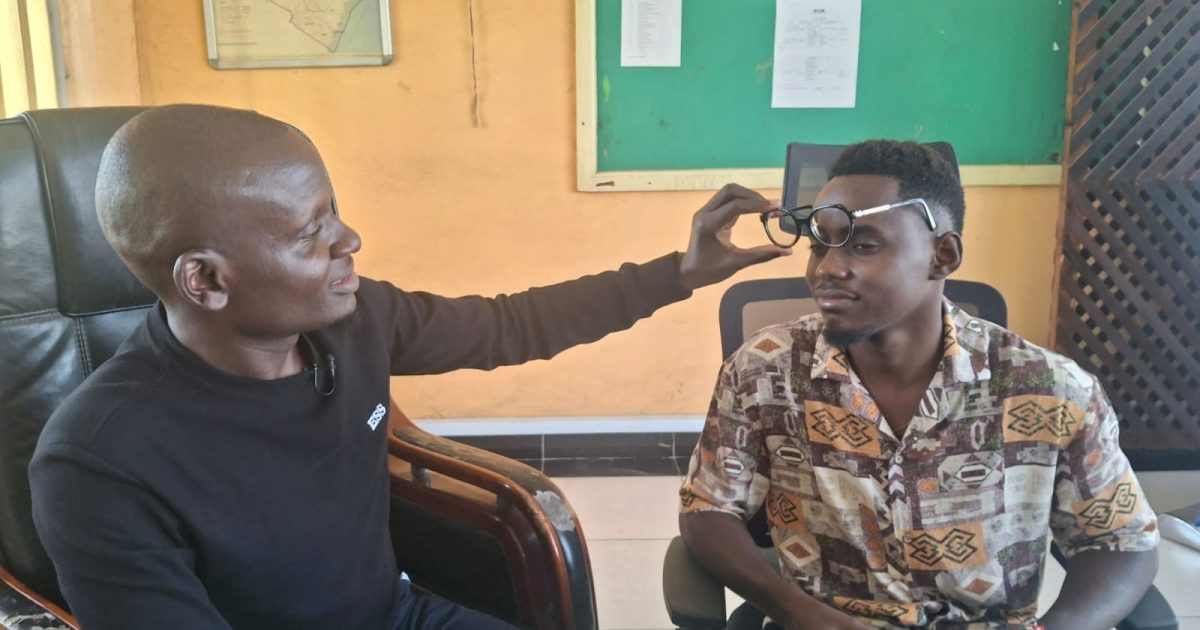
Dennis Somba, a 27-year-old Content Creator and Agronomist from Kisauni Sub-county, began to notice flashing lights and severe eye strain last year. He thought it was a minor issue that could be fixed with new spectacles.
Within months, his vision deteriorated drastically, leaving him partially blind in one eye.
After visiting several optical outlets without a clear diagnosis, Somba was finally referred to an Ophthalmologist who confirmed that he had suffered a retinal detachment in his left eye and underwent corrective surgery.
Retinal detachment is a serious condition that can cause permanent blindness if not treated promptly.
“The doctor told me that if I didn’t undergo surgery immediately, I would lose my sight permanently. It was terrifying, but I was lucky to have a supportive family and doctors who acted fast, ”he narrated.
Since then, he regularly goes for eye clinics and has adopted new habits to protect his eyes, including reducing screen time and wearing protective lenses.
Dr Victor Opiyo, President of the Optometry Association of Kenya and Secretary General of the African Council of Optometry, says Somba’s case underscores the importance of early detection.
“Retinal detachment is an ocular emergency. Early diagnosis and immediate referral to a specialist make all the difference. In Somba’s case, the success came from detecting the problem early and treating it urgently,” explained Dr Opiyo.
While retinal detachment is more common among older adults, Dr Opiyo notes that myopia (short-sightedness), especially when unmanaged, can increase the risk for younger people.
“When the eyeball keeps growing, it exerts pressure on the retina, causing it to thin and sometimes pull away. That’s what happened with Somba,” he stated.
Dr Opiyo disclosed that the country has a shortage of eye care professionals, with rural areas most affected, as most specialists are concentrated in urban areas.
“Nearly a quarter of Kenyans need eye care. Yet, about half of these cases involve avoidable blindness. We urgently need to train more optometrists and establish eye care units at county hospitals to increase access,” he said.
He recommends annual eye examinations for healthy adults and biannual check-ups for those with conditions like diabetes or hypertension, which can affect eyesight.
“Listen to your body. If you wake up and something doesn’t feel right with your vision, don’t wait. Visit a professional immediately,” he advised.
He further noted that eye surgeries in the country remain costly, with retinal detachment surgery in public hospitals averaging around Sh250,000 per eye, and higher in private facilities. The expense often deters patients from seeking timely care, leading to irreversible vision loss.
To reduce this burden, the Optometry Association of Kenya is engaging policymakers to subsidise eye care services and integrate eye health into universal healthcare plans.
By Sadik Hassan