Kenya’s donkey population is plummeting at an alarming rate, with recent statistics indicating a decline of over 50% in the last decade.
The surge in demand for donkey hides, particularly for export to China, has fuelled illegal slaughter and smuggling, threatening the livelihoods of communities that rely on these animals for transport and trade.
According to a report by the Kenya National Bureau of Statistics, the number of donkeys in Kenya dropped from 1.8 million in 2009 to approximately one million in 2019. More recent data shows that as of 2024, the donkey population has further declined to less than 500,000, marking a significant loss.
The primary driver behind the mass slaughter of donkeys is China’s booming market for ejiao, a traditional medicine made from collagen extracted from donkey hides. Ejiao is believed to have blood-enriching properties, improve immune function, and slow aging.
The market for ejiao has grown exponentially, reaching US$7.8 billion in 2020, up from US$3.2 billion in 2013.
China’s domestic donkey population has plummeted due to overexploitation, forcing traders to source hides from Africa. Kenya, Ethiopia, and other African nations have become key suppliers, despite bans and restrictions. The high value of donkey skins, that fetches up to hundreds of dollars per hide, has led to widespread theft, illegal slaughter, and smuggling.
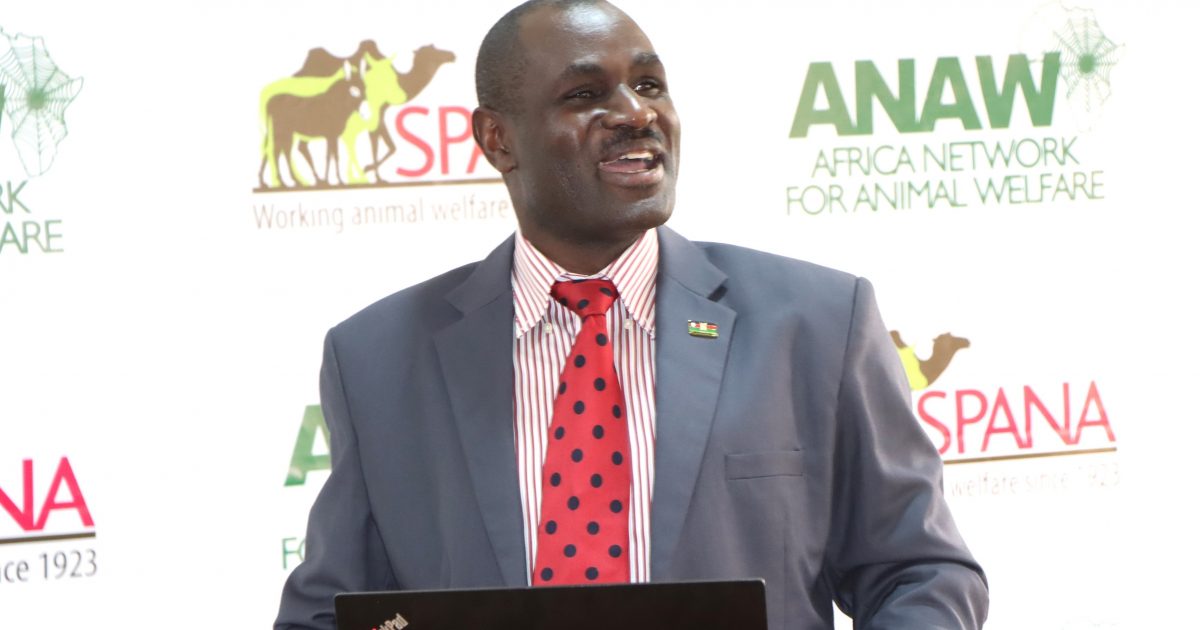
Speaking at a recent Media Stakeholders and Consultative Workshop on Donkey Welfare, Josiah Ojwang, Chief Executive Officer of Africa Network for Animal Welfare (ANAW), stressed the urgent need for coordinated efforts to address the burgeoning crisis.
He highlighted that the illegal donkey skin trade not only threatens animal welfare but also undermines local economies and food security in affected regions.
Ojwang called for strengthened enforcement of existing bans, increased awareness campaigns, and the development of sustainable livelihoods for communities involved in donkey husbandry.
The CEO further revealed that apart from illegal slaughter, donkeys have a slow reproduction rate, making population recovery slow. Unlike other livestock, donkeys have a gestation period of 11 to 14 months, and they typically give birth to only one foal every two to three years.
“There is an urgent need for intervention to stop the illegal slaughter which has resulted in the declining population. Apart from the slaughter, donkeys have a slow reproduction rate and thus should be protected to ensure they do not become extinct,” he said.
Sebastian Mwanza from ANAW noted the important role the media can play in highlighting issues affecting animal welfare, illegal trade, and the broader social and economic impacts of the donkey skin trade.
Mwanza noted that through raising awareness, advocating for policy changes, and informing the public, the media can help galvanize support for stronger enforcement measures and promote responsible practices regarding donkeys.
The officer emphasized that responsible journalism is vital in shedding light on the complexities of the trade, dispelling misconceptions, and fostering a collaborative approach to protect donkeys and support sustainable communities.
“The media plays an important role in highlighting the illegal slaughter of donkeys and the existing legal gaps that enable the cross-border movement and trade of donkeys in Kenya. Through dissemination of these issues, the media can drive public awareness and push for stronger enforcement of donkey protection laws.” Said Mwanza.
Soila Leng’ete, a resident of Rombo, Kajiado South, revealed that the declining number of donkeys due to theft in Rombo has had a negative impact on the lives of women from the Maasai community.
“In the Maasai community, donkeys belong to women. They help us fetch water, carry firewood, and transport goods to the market and even pay school fees. Without them, the burden falls entirely on our backs,” Leng’ete said.
Leng’ete added that donkey theft and slaughter have pushed many women into economic hardship, as they struggle to replace the lost animals.
“A donkey is not just a beast of burden; it is our partner in survival. Losing them means losing our independence. The loss of donkeys has left many families struggling, as donkeys are our only means of transport and income,” she added.
Samson Sokoine, another resident, revealed that cases of donkey theft were rampant in the area, with locals reporting weekly disappearances of their animals.
“We wake up to find our donkeys missing, and most of them are never recovered. They are stolen at night and smuggled across the border into Tanzania and Nairobi, where they are slaughtered for their skins,” Sokoine explained.
Sokoine added that organized criminal networks are behind the thefts, making it difficult for locals to track and retrieve their animals.
He called for stronger enforcement to stop the illegal trade which threatens the animal’s existence.
In an effort to curb the trade, the government banned slaughterhouses in Kenya; however, the illegal trade still persists.
Reports indicate that traders are now smuggling donkey skins via sea routes after airlines imposed restrictions on their export.
In a landmark decision, the African Union (AU) Assembly at its 37th Summit in Addis Ababa imposed a continent-wide 15-year moratorium on the commercial slaughter of donkeys for their skins. The resolution aims to protect donkey populations and safeguard the livelihoods of millions of Africans who depend on these animals for transport and economic activities.
By Rop Janet