A Kericho farmer is earning Shs 5,000 a week in profit by growing and selling two varieties of indigenous vegetables on a small section of his farm.
Silas Kipruto, 34, a resident of Chepkubei village within Belgut sub-county in Kericho County is growing and selling traditional vegetables like the black nightshade popularly known as managu and the spider plant (saga/saget) on 0.25 acres of land.
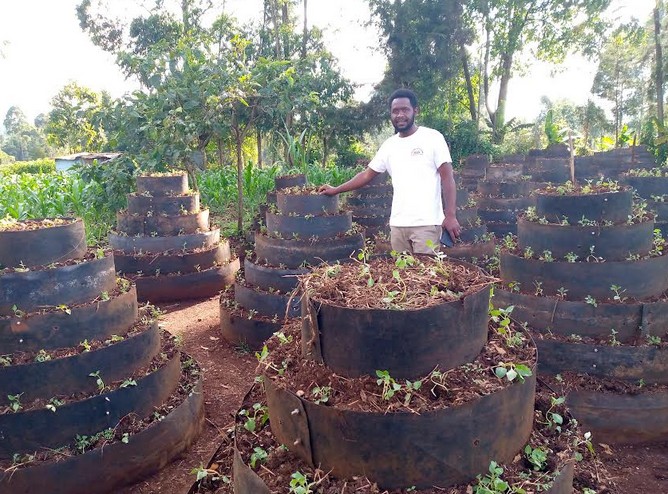
When KNA visited his farm christened the Palace Farm which is on one acre of land one marvels at the vertical gardens bursting with the vegetable crop of managu and the green canopy of saga growing on the raised beds swinging away from the wind. His farm is situated approximately 12 kilometers from Kericho town.
Kipruto, an IT diploma holder reveals that he embarked on the indigenous vegetable farming in 2013 which he later turned to a thriving business venture after his endless search for a job turned unfruitful.
“After graduating with a diploma in IT studies in 2012, I was optimistic about landing a job in my field. However, my job search proved to be more challenging than expected, and I spent a year searching for opportunities. After the passing of this one year, I decided to explore alternative ways to support myself and I discovered a passion for growing traditional vegetables. I decided to turn this passion into a career and I’ve been working hard to build a livelihood from it all this while,” said Kipruto.
The father of two has found success in cultivating traditional vegetables using two key methods: vertical gardening and raised bed techniques. These approaches have allowed him to optimise his space and grow thriving crops.
“My 54 vertical gardens and 12 raised beds have enabled me to increase my land productivity tenfold, allowing me to grow my managu and saga and at the same time enjoy a bountiful harvest. I harvest two or three times in a week and with each harvest I earn Sh5000. In one vertical garden section I plant up to 130 seedlings of managu whereas in one of my raised bed measuring 6feet by 35feet, I plant 500grams of saga seeds, ” he added.
“These traditional vegetables mature rapidly, typically within three weeks when I do my first harvest. Afterwards, I think the shoots to promote healthy growth and conduct regular weeding to ensure they receive adequate sunlight, water and nutrients. I also generate my own seedling by allowing the vegetables to flower, pollinate and germinate seeds which I then dry and use to grow more managu and saga,” revealed Kipruto.
He further added that he packages the harvested produce in Sh10 carrier bags which he sells each at Sh200 and in one harvest he makes Sh5,000. Most of his customers are in Kericho town where he delivers the fresh produce.
“My journey into selling traditional vegetables began with my first customers at the Kericho agricultural office in Kericho town where I earned the nickname ‘Kijana wa Mboga.’ It was not an easy start, facing laughter and gossip as I went from office to office selling my produce. I have come a long way since then and I am proud to have proven my critics wrong. The returns are high and by two-months a farmer will have received great returns. These crops are considered to be three months crops but the harvests get to decrease as the plant grows old. I do not destroy the old crops that dry but I let the straws of the plant to act as manure. They make the best compost manure before I embark again on planting the seeds, ” he added.
Many of my customers are in Kericho town where I deliver them to their offices with some working in various schools and hospitals which I sell for Sh200 when packaged in a Sh10 carrier bag. I use my phone to alert my customers when I am harvesting the traditional vegetables,” said Kipruto.
In addition to employing three farm hands his wife plays a crucial role in supervising and harvesting the produce, especially when he gets overwhelmed with other areas in his farm.
“I am also lucky to have my wife’s help, overseeing the farm and harvesting the produce. We have three farm hands working with us,” he added.
He has piped water which supplies the traditional vegetable farm with adequate water as he only uses organic manure which consists of chicken and rabbit droppings.
“I have access to piped water, ensuring my traditional vegetables receive a consistent and reliable supply of water. I also prioritize using organic manure, specifically chicken and rabbit droppings from the animals I rear on other parts of my farm to fertilise my crops,” said Kipruto.
Kipruto with a twinkle in his eyes insists he has no regrets of pursuing his lifetime passion while in the same breath appealed to youths in Kericho County to embrace agriculture and agribusiness as a path to addressing unemployment and boost food security in their communities.
“I harbour no regrets for venturing into traditional vegetables farming as I am able to provide for my family. Many youths want shortcuts. Some sell their parcels of land to buy boda boda motorcycles instead of developing their parcels of land and earning a livelihood from it. One can start small and continue building up. This work requires patience, hard work and there is no giving up when faced with challenges,” noted Kipruto.
He called upon the Kericho County government to use various methods including agricultural shows and competitions to promote innovation and exchange of modern farming techniques with a view of encouraging and celebrating the excellence of the agricultural sector.
“The Kericho County government can significantly support farmers in this region by promoting innovation and the exchange of modern farming techniques through events like the Nairobi Agricultural Show. Such platforms enable farmers to connect and share ideas, explore potential partnerships and business opportunities,” said Kipruto.
by Sarah Njagi