Kericho County has achieved a commendable 80 per cent immunisation coverage for the third dose of the pentavalent vaccine, a milestone praised by health officials and partners yet it falls below the recommended 90 percent threshold.
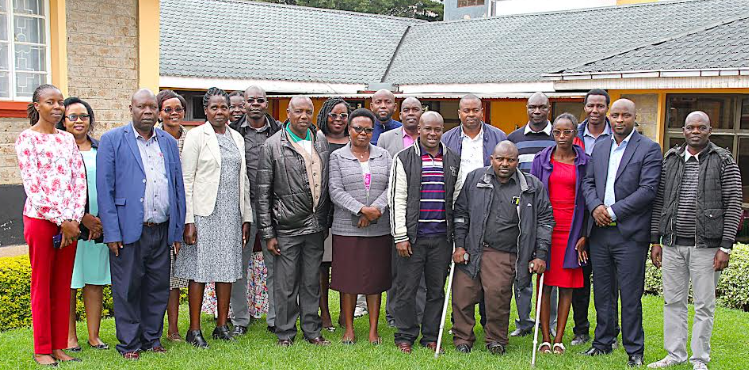
Speaking during a sensitisation forum at the ACK Grace Conference Hall in Ainamoi Sub-County, Expanded Programme on Immunisation (EPI) Coordinator Alfred Langat said the progress was commendable but emphasised the need to close remaining gaps.
“We acknowledge the progress made, but 80 per cent is not enough. Our goal is to achieve and sustain above 90 per cent coverage. To do this, we must identify unvaccinated children at the community level and ensure they are brought to health facilities,” Langat said.
Data presented showed that in Ainamoi Sub-County alone, 748 children — representing 13.4 per cent of those eligible — have never received any form of immunisation, classified as the “zero-dose” population.
Countywide, at least 28,660 children under one year require immunisation annually out of a population of more than 1 million residents.
Kericho has 302 health facilities, of which 218 offer immunisation services. However, stakeholders noted that vaccine hesitancy, cultural and religious barriers, supply chain challenges, stock-outs, and inadequate cold-chain equipment continue to hamper progress.
The forum brought together representatives from the Ministries of Health, Education, and Interior; the Children’s Department; the National Council of Churches of Kenya (NCCK); civil society organisations; and community health promoters.
Officials highlighted the critical role of schools, local administration, and faith-based platforms in mobilising carers to improve uptake.
Reviewing Kenya’s immunisation journey since the launch of the Kenya Expanded Programme on Immunisation (KEPI) in 1980, experts noted that the addition of vaccines such as Pentavalent, PCV-10, rotavirus, IPV, and HPV has significantly reduced preventable childhood illnesses.
At the end of the forum, stakeholders resolved to strengthen cold-chain systems, address staffing gaps, scale up outreach in schools, churches, and villages, and enhance community mobilisation.
“Every child left out is a child at risk. The vaccines provided are safe, effective, and proven. By vaccinating today, we prevent tomorrow’s outbreaks and safeguard the health of our county,” Langat stressed.
Kericho now aims to push beyond the 80 per cent coverage and work towards universal immunisation, ensuring no child is denied life-saving vaccines and boosting community health resilience.
By Gilbert Mutai