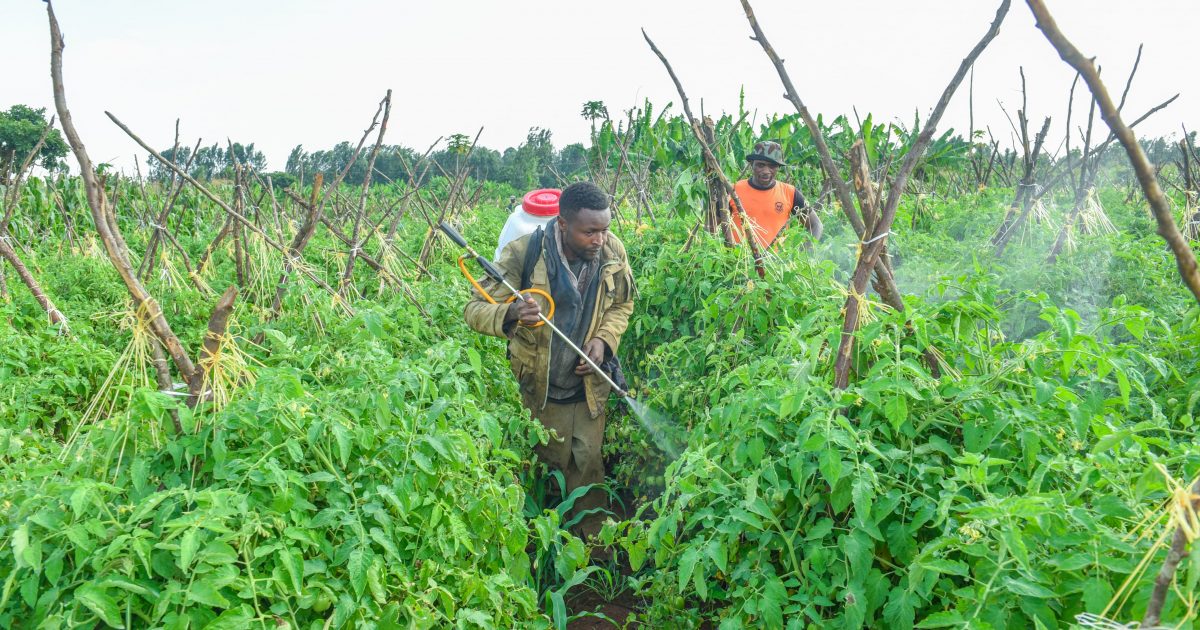
Farmers in Kirinyaga County have been trained on safe use of agrochemicals in a campaign aimed at mitigating the potential negative impacts of chemicals on humans and the environment.
The training program undertaken through collaboration between the national and the county governments targeted rice farmers from the expansive Mwea Rice Irrigation Scheme, horticulture, as well as tea and coffee farmers.
Safe use of agrochemicals involves practices that minimize risks to human health, the environment or non-targeted organisms while ensuring effective application for pest and disease control.
Speaking during one of the training sessions in Mwea, the County Executive Committee Member (CECM) for Agriculture, Dr. John Gachara, emphasized the importance of the initiative, noting that improper use of pesticides has been a major challenge, particularly among smallholder farmers, hence the need for sensitization on the matter.
“Many farmers misuse chemicals, leading to hazards that affect both them and consumers,” he said, pointing out that the county has also trained agricultural extension officers as well as recently recruited agri-preneurs who have been pivotal in equipping farmers with the right knowledge on agrochemicals.
Gachara added that proper use of agrochemicals would go a long way in mitigating health risks and improving the quality of agricultural produce in the predominantly agricultural county. Kirinyaga has about 80 percent of its population practicing agriculture.
The initiative that targeted all major farming cooperatives across the county is aligned to the county government’s broader agricultural agenda, which seeks to empower farmers through knowledge, resources, and sustainable farming techniques that will enhance food safety standards while boosting farmers’ productivity and market access.
Julian Wairimu, a representative from the Mwea Irrigation Water Users Association, highlighted the importance of the training in as far as eradicating unsafe use of pesticides and safeguarding the health of users and consumers is concerned.
Peter Chege, another leader from the association, acknowledged the significance of the initiative, stressing, “We are collaborating with the government to train our farmers on the safe use of pesticides and this training will ensure that the food we produce for local and international markets meet the international safety standards.”
Some of the elements that the farmers were trained on include correct product selection, personal protective equipment, and chemical handling. They were also taught on the duration of harvesting diverse crops after pesticide application.
These efforts aimed at reducing the potential negative impacts of agrochemicals while maximizing their effectiveness in crop management.
By Mutai Kipngetich