Kirinyaga County has registered a remarkable decline in new HIV infections, positioning itself among the best-performing counties in Kenya in the management of the epidemic.
This achievement was highlighted during the World AIDS Day (WAD) commemoration held at Kirinyaga University, where health officials, community leaders, students, and partners came together to reflect on progress, advocate for prevention, and call for continued vigilance in the fight against HIV.
Statistics presented during the event revealed that only 91 new HIV cases had been recorded in the county this year, a dramatic reduction from 779 cases reported in 2013, shortly after the devolution of health services to county governments. The significant decline underscores the success of interventions aimed at improving awareness, increasing access to testing, and ensuring timely initiation of managing the scourge.
The County Executive Committee Member (CECM) for Health, Medical Services and Sanitation, George Karoki, said the progress is a result of deliberate and sustained efforts by the county government, in collaboration with partners, to prioritize HIV prevention, treatment, and care. He noted that while the improvement is commendable, the ultimate goal is to achieve zero new infections.
“It is not enough to reduce infections; our goal is zero new cases. Every new infection is a life affected, and in one way or another, HIV touches families across the county,” Karoki said, emphasizing that the fight against HIV is far from over.
Karoki explained that the county has made substantial investments in both technology and human resources. Digitized diagnostic equipment has been deployed to enhance testing accuracy and speed, while community health promoters (CHPs) have been trained and deployed to ensure that preventive messages reach even the most remote parts of the county.
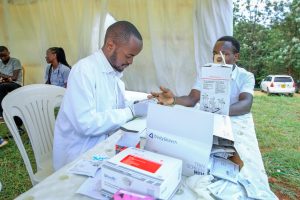
“Our approach combines technology, community engagement, and education. We cannot rely on any single strategy; a holistic approach is essential,” he said.
The county has also achieved the UNAIDS 95–95–95 targets, a global benchmark for HIV control. This means that 95% of residents know their HIV status, 95% of those diagnosed are on antiretroviral therapy (ART), and 95% of those on treatment have achieved viral suppression.
Currently, approximately 13,000 people are living with HIV in Kirinyaga County, with nearly all enrolled in treatment programs, including 447 children under 14 years.
Among those receiving treatment, 97% have achieved viral suppression, which not only improves their health outcomes but also significantly reduces the likelihood of transmission.
The county has also simplified treatment regimens to a single daily pill with minimal side effects, making adherence easier and more sustainable for patients.
Despite these gains, Karoki warned that young people remain disproportionately affected. Adolescents and young adults aged 14 to 24 accounted for 41% of new infections this year.
“The burden on our youth has been high, and it remains a priority for us. The youth are at the center of our prevention strategy because they are not only the most affected but also the most at risk of gender-based violence and early pregnancies,” he said.
Karoki stressed the importance of sustaining and expanding the current gains. The county aims to eliminate the triple threat of HIV, sexual and gender-based violence, and teenage pregnancies by 2030.
“Our vision is clear. We want a Kirinyaga where no one contracts HIV, where children and young people grow up free from abuse, and where families thrive in safe and healthy communities,” he said.
Karoki also noted that the county will continues to collaborate with Kirinyaga University and other institutions to ensure that health education reaches young people, who form the bulk of new HIV cases.
Joseph Kanyi, the County HIV/STI Programme Coordinator, underscored the urgency of focusing interventions on adolescents and young adults. He explained that many in this age group have never witnessed the severe effects of AIDS, leading to a false sense of safety.
“Young people are the backbone of our future, but they are also the most vulnerable. We must ensure that they are equipped with knowledge, protected from risky behaviors, and given access to health services that can save lives,” Kanyi said.
He further highlighted that sexual and gender-based violence (SGBV) remains a major driver of new infections.
“Out of the 91 new infections recorded this year, 36 cases are linked directly to rape and other forms of GBV. This is alarming and highlights the urgent need for interventions that protect our young people and women,” Kanyi added.
Kanyi said the aim to target young people is because they are at the crossroads of multiple vulnerabilities. Saying by empowering them, educating them, and protecting them, we can reduce new infections and create a healthier, safer generation.
“It’s my call to the county to continue to work with schools, universities, youth groups, and civil society organizations to reach adolescents and young adults with targeted messages on prevention, safe behaviors, and access to care. These initiatives are designed to ensure that the next generation is better informed, healthier, and capable of breaking the cycle of infections,” Kanyi added.
He said that the county has therefore integrated SGBV prevention and response programs within the broader HIV strategy, ensuring that victims receive immediate care and follow-up support.
Millicent Nyawira, the County Executive Committee Member for Gender and Youth, also addressed the role of technology and social media in shaping the behaviors of young people. She observed that mobile phones, social media platforms, and digital dating have contributed to the breakdown of relationships and, in some instances, led to risky sexual encounters. Nyawira cautioned young people to be mindful of the risks associated with online interactions.
“We are in a digital age, but technology has become a catalyst for behavior that exposes young people to danger. We advise our youth to avoid digital dating and always report cases of abuse immediately for pre-treatment and support,” she said.
She noted that the county has 78 health facilities, including both public and private centers, providing comprehensive medical care for those living with HIV. Continuous follow-up, routine medical check-ups, and counselling have led to a reduction in opportunistic infections and improved overall health outcomes.
Governor Anne Waiguru, in a recent state of the county address, lauded the investments made in the health sector since she assumed office. She highlighted major improvements in key health indicators, which have contributed to better HIV outcomes. Mother-to-child transmission of HIV, for instance, has declined from 13% to 6.5%, reflecting enhanced maternal health services and antenatal care interventions.
“The investments we have made are bearing fruit. Families are healthier, children are surviving, and our health facilities can provide comprehensive care for all residents,” Governor Waiguru said.
She emphasized that sustaining these gains requires continued vigilance, community engagement, and innovative strategies to reach the youth and other vulnerable populations.
The county’s approach also integrates economic empowerment and social protection initiatives. Nyawira explained that programs aimed at reducing poverty, promoting education, and supporting women’s economic independence are essential components of HIV prevention.
“We cannot fight HIV in isolation. Poverty, lack of education, and social vulnerabilities increase the risk of infection. By empowering families, ensuring children are in school, and supporting women to provide for their households, we address the root causes that increase vulnerability,” she said.
By David Wandeto