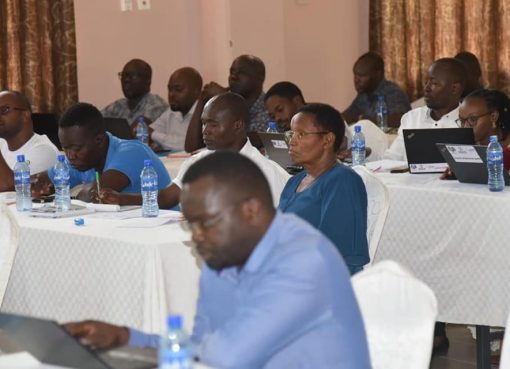
Rice farmers in Kirinyaga County are set to benefit from free protective gear and training on safe chemical handling following the launch of the Kilimo Swafi Campaign by the African Centre for Corrective and Preventive Action (ACCPA).
The initiative, unveiled at the Mwea West rice plantations, will see farmers receive 3.8 million pieces of personal protective equipment (PPE) between 2025 and 2028.
The campaign aims to protect farmers from harmful exposure to agrochemicals while promoting safer farming practices.
Beyond distributing protective gear, the program will also train farmers on proper disposal of chemical waste and advocate for a ban on hazardous products that are already outlawed but continue to flood markets.
Speaking during the launch, ACCPA Founder Mwangi Macharia underscored the importance of prioritizing farmer safety.
Macharia said the Kilimo Swafi Campaign is part of a broader effort to make farming not only productive but also safe for both farmers and consumers.
He noted less than 1000 farmers in over 25,000 acres plantation in Mwea uses PPEs, which heartbreaking, calling on both levels of government to consider the safety of the farmers
“It is not acceptable that we have accepted as normal a cyclical poisoning of our lives and environment on account of our collective carelessness and indifference. Farmers are the first and last line of defense when it comes to our safety.” Macharia said.
Macharia also raises concerns over rapidly increasing agrochemical outlets, yet inspection officers are very few.
“Only about 15 percent of farmers have PPEs. As an organization we want to partner with stakeholders to ensure that in all 47 counties, farmers have access to PPEs. Farmers often buy counterfeit or fake chemicals cheaply, without being informed of the dangers,” he added.
Peter Chege, chairperson of the rice farmers, expressed gratitude to the organization for the training on self-protection from the harmful effects of agricultural chemicals, a danger that farmers face daily.
He urged the government, international organizations, and all relevant bodies to consider the welfare of farmers, especially by providing education, protective gear, and access to health services.
“We have worked hard and produced enough, but most of the money we earn ends up being spent in hospitals due to health issues caused by pesticide exposure,” he said.
Chege requested the farmers, especially those who spray chemicals on their farms, not to go without protection measures, including boots, gloves or masks.
“Even if the government cannot provide everything, protect yourself for the sake of your own life and that of your family. Farming is the backbone of our economy, but we must also protect the health and safety of our farmers,” he said.
One of the farmers, Samuel Kariuki, noted the challenge of disposing of chemical waste, saying the situation endangers health and contributes to the rise of serious illnesses, and asked the authorities to provide an official and safe system for collecting and disposing of these agricultural chemical containers.
“After using these chemicals, we have no safe place to dispose of the bottles and containers. At the moment, these bottles are being thrown carelessly in the farms, in rivers where we draw our drinking water, along the roads and even in our homes,” he said.
By Mutai Kipngetich