The Kenya Institute of Supply Chain Management (KISM) has intensified efforts to position itself as the Pan-African Centre of Excellence in supply chain management.
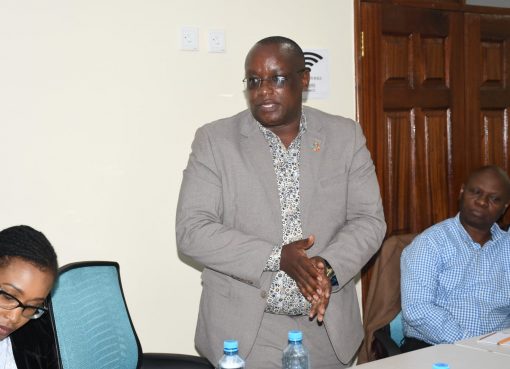
Speaking in Mombasa during the opening of the Advanced Course for Procurement of Works and Consulting Services, KISM CEO Kenneth Matiba reaffirmed the institute’s commitment to professionalising supply chain management and strengthening procurement practices across the continent.
The 18-day course organised in partnership with the World Bank has participants from Kenya, Gambia, Eswatini, Lesotho, Zambia and Somalia. The training is offered in three phases annually: Foundation, Intermediate, and Advanced Levels, which have been curated in response to the growing demand for more in-depth experiential learning.
The course aims at assisting Countries, National and County Government Ministries, Departments and Agencies (MDAs) and Public Sector Entities to increase their efficiency and cost effectiveness in conducting, monitoring and reporting procurements of the World Bank-funded projects.
In 2018, the World Bank signed a Memorandum of Understanding with KISM to offer training materials, resource persons, and programme execution support.
“This is the second time the Advanced Course is being undertaken and seeks to bolster and augment our reform initiatives,” stated the KISM CEO, adding that the course is a follow-up to the Foundation and Intermediate Classes held in February and June, respectively, this year.
“This class will discuss how to develop and successfully implement procurement strategies and plans that meet the desired goals for country-specific organisations across the continent,” he said.
The CEO lauded the collaborative regional approach, noting that it aligns perfectly with the institute’s strategic commitments of being the Pan-African Centre of supply chain excellence.
“We believe in fostering Peer-To-Peer Learning where professionals from across the region can share their experiences, challenges, and knowledge, noting that we all operate in a comparable ecosystem characterised by volatility, uncertainty, complexity and ambiguity, among other challenges,” said Matiba.
The CEO assured participants of the course that after the intense training, they will be equipped with the prerequisite knowledge on internationally accepted best procurement practices.
“I am confident the resource persons have been carefully selected and briefed to work together harmoniously and deliver optimally,” he said.
The CEO disclosed that they are rationalising their programmes to sustain industry-relevant content that addresses emerging issues such as the application of Artificial Intelligence and blockchains in supply chain management, humanitarian and health supply, transport and logistics, and inventory management.
“Our view is that we have to be holistic in our approaches so that we take care of both the demand and supply sides of operating environments when it comes to the capacity building programme. This means we have to address both the public, private and the third sectors,” said the CEO.
He called for collaborations in upscaling the Institute’s Vision of building competent and ethical supply chain management practitioners.
The CEO also hailed the World Bank procurement framework that has been in operation since July 2016, which promotes tailored procurement approaches that emphasise choice, quality, and value for public spending while enabling adaptation to country contexts.
“The framework assists client nations in determining the best value for their money by ensuring that projects adapt swiftly to changing needs,” he said, stressing that Supply Chain Management is the implementation vehicle by which service delivery is achieved and plays a major role in socio-economic development.
The CEO further elucidated that in Kenya, the government has established and continues to undertake reforms by creating the policy, legal, and institutional framework to facilitate efficient and effective service delivery through Supply Chain Management.
The latest reform is the rollout of the Electronic Government Procurement System that is aimed at entrenching transparency, accountability and tackling business processing bureaucracies.
By Sadik Hassan