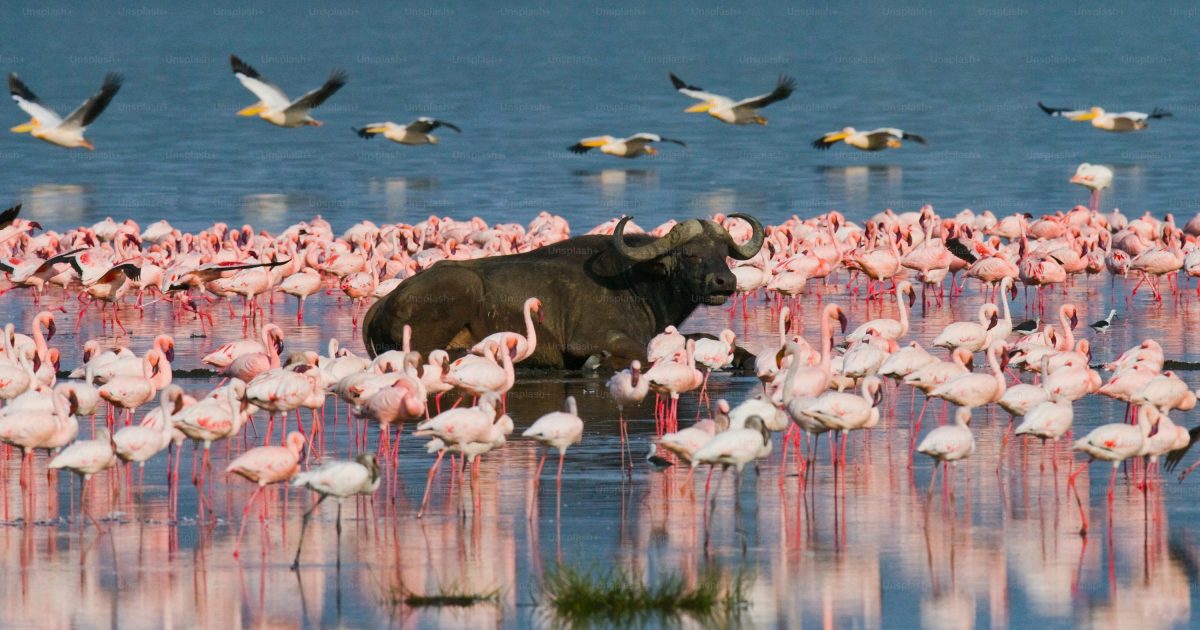
The Kenya Wildlife Service (KWS) is actively involving local communities in wildlife conservation efforts, aiming to foster a sense of ownership and responsibility for wildlife management.
This comes even as KWS seeks to implement initiatives contained in its 2024-2028 strategic plan which is focused on maximizing the socio-economic benefits of wildlife conservation, creating jobs, and boosting Kenya’s foreign exchange earnings.
Lake Nakuru National Park and Bird Sanctuary’s newly deployed Senior Warden Emmanuel Koech said KWS was working with local communities in wildlife conservation efforts through various initiatives including education, awareness programs and by training community members to carry out conservation activities.
The senior warden explained that the initiative was also engaged in educating communities on the value of wildlife, promoting sustainable land use practices, fostering a sense of ownership and responsibility for wildlife management and on the ecological importance of wildlife.
Besides, the initiative is also creating awareness on the negative consequences of poaching, human-wildlife conflict, the benefits of conservation for local livelihoods and the laws and regulations related to wildlife management.
While emphasizing the role of the community in safeguarding natural resources and ensuring sustainable tourism, Koech noted that by training local communities and providing them with the necessary resources and skills, KWS helps them to become active participants in wildlife conservation efforts, contributing to the protection of Kenya’s wildlife and its habitats.
The senior warden made the remarks at the Lake Nakuru National Park offices when a delegation from Nakuru County Government led by Chief Officer for Tourism, officially welcomed him to his new station.
Guided by the Strategic Plan for 2024-2028, KWS intends to implement initiatives focused on maximizing the socio-economic benefits of wildlife conservation, creating jobs, and boosting Kenya’s foreign exchange earnings.
The plan includes five goals including supporting thriving wildlife populations, building resilient ecosystems, enhancing community involvement, expanding Kenya’s wildlife economy, and establishing a high-performing organization.
The Strategic Plan for 2024-2028 offers a platform to reduce biodiversity loss, improve community engagement, and ensure equitable access to wildlife conservation benefits.
The Senior Warden added that KWS was also promoting sustainable land use practices that could help reduce conflicts between humans and wildlife and ensure the long-term health of ecosystems adding that this was being done through awareness programs to the public, schools, communities, and stakeholders.
He indicated that KWS supports community-based tourism and other economic activities that benefit from the presence of wildlife, providing a livelihood incentive for their conservation efforts.
The official further said that that KWS was collaborating with local and international partners, including NGOs, donors, government agencies, and the private sector, to support wildlife conservation initiatives adding that Nakuru National Park was offering a variety of sustainable tourism activities, including camping, game drives, bird watching, Boat Safaris, hiking, photography, horse riding and wildlife viewing.
He added that sustainable practices were also being implemented to mitigate the impact of tourism on the environment and local communities and protect the park’s natural beauty and diverse ecosystems.
In his remarks, the County Chief Officer for Tourism John Koech said that Lake Nakuru National Park and Bird Sanctuary was a crucial driver for tourism in Nakuru and Kenya, attracting both domestic and international visitors.
The County official said Governor Susan Kihika’s administration was supporting an initiative by KWS to create awareness on communities’ key role in conservation of lakes and rivers in the devolved unit as more than 70 per cent of their ecosystems lie outside protected areas.
He indicated that educating communities residing in water catchment areas, near the lakes’ shores and along the rivers’ courses on the value of natural resources would motivate Kenyans to act and ask national and county governments to enforce environmental laws and do their part in conservation.
“Lake Nakuru’s continued success depends on effective conservation efforts and sustainable tourism practices to ensure its long-term preservation,” he added.
The move to engage communities residing near Lake Nakuru in conservation efforts was motivated by various scientific findings that have identified Lakes Nakuru, Naivasha, and Elementaita as the country’s leading wetlands currently facing major challenges.
The three lakes which have been declared by United Nations Educational, Scientific, and Cultural Organization (UNESCO) as World Heritage Sites are reeling under massive pollution, human encroachment, abstraction, and climate change.
Other natural resources exposed to similar existential threats, according to a report prepared by KWS include Rivers Njoro, Makalia, and Enderit that drain into Lake Nakuru, rivers Malewa and the seasonal Karati river which flows into Lake Naivasha; and the rivers Mereroni, Mbaruk, and Kariandusi, which stream into Lake Elementaita.
KWS has also identified population pressure coupled with changes in land use as perils facing nearly all the wetlands in the devolved unit.
Various studies carried out between 1999 to 2024 to investigate the extent of pollution in Lake Nakuru revealed the presence of heavy metals and pesticide residues in the lake. The scientific probes have revealed that contamination by most of the pollutants has increased over the past 25 years.
Ecologists have warned that the effluent that flows into the lake has changed the pH from 5.86 to 7, making it unsuitable for wildlife.
By Esther Mwangi