The Kenya Wildlife Service (KWS) has assured that the country will remain an accessible and competitive destination for global tourists intending to visit national parks, regardless of the proposed adjustments in park access charges.
The proposed changes outlined in the Draft Wildlife Conservation and Management (Access and Conservation Fees) Regulations, 2025, will adjust charges for access to national parks, reserves, sanctuaries and marine protected areas if adopted.
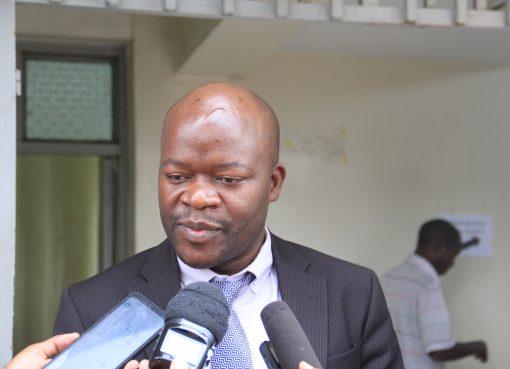
KWS Senior Assistant Director for the Central Rift Conservation Area, Gideon Kebati, explained that the new changes seek to ensure sustainable financing for KWS operations, which had been severely strained by rising costs, stagnated income and escalating threats to biodiversity.
The Director said the fee structure had remained unchanged since 2007, despite rising costs, evolving visitor expectations, inflation and increased threats to wildlife.
He explained that the push for revised fees goes beyond generating revenue and that the proposed changes were part of a broader revenue enhancement strategy, designed to support KWS’ core conservation activities, to guarantee survival of the country’s wildlife and the resilience of Kenya’s conservation systems.
Kebati spoke during a Public Participation forum, conducted by the KWS at the Old Town Hall in Nakuru Town, which was aimed at getting public views on the review of fees to be charged at various parks in the country.
The projected changes to the park access fees were gazetted on July 9, 2025 by Cabinet Secretary for Tourism and Wildlife, Ms Rebecca Miano.
KWS had previously maintained that the bold proposal to review park access fees for the first time in 18 years was aimed at addressing a Sh.12 billion annual funding shortfall and boost conservation efforts towards safeguarding Kenya’s iconic wildlife and natural heritage.
Last week KWS Director General Professor, Erustus Kanga, disclosed that in the 2024/2025 Financial Year, the State agency generated Sh.7.92 billion against a requirement of Sh.19.79 billion and underscored the urgency to close the funding gap.
He stated that the new fee structure, if approved, would strengthen its ability to respond to challenges such as poaching, human-wildlife conflict, and habitat degradation.
More than 90 percent of KWS’s internal revenue comes from tourism-related activities.
However, according to Professor Kanga, the current Fiscal Deficit threatens not only conservation programs, but also the livelihoods of over one million Kenyans who depend on the wildlife economy, including community scouts, rangers, tour operators, hoteliers and artisans.
During the Public Participation at the Old Town Hall in Nakuru Mr Kebati pointed out that the fee review was aligned with the organization’s 2024–2028 Strategic Plan, which aims to reduce reliance on National Treasury (Exchequer), improve institutional performance that build a self-sustaining conservation model and enhance the resilience of conservation systems that aligns with global practices.
The official further stated that an impact assessment conducted prior to drafting the new regulations guided the proposed pricing model.
“Under the new framework, park revenues are projected to increase to Sh16.58 billion by 2028, driven by realistic forecasts of tourism growth and spending behavior,” the Senior Assistant Director elaborated.
He added that all stakeholders, including local communities, tour operators, conservation partners and visitors were involved in the drafting of the framework, saying the future of the wildlife belonged to everyone.
Kebati said compared to neighboring markets in East and Central Africa, Kenya’s charges were not equivalent to the superior product it offers.
“We are the cheapest, and yet we are the best in terms of product. We are not an expensive destination the way our competitors want to portray us,” he said.
The new fees will see East African Community (EAC) citizens pay Sh1,500 from the current Sh860 to gain access into Amboseli National Park and Lake Nakuru National Park.
The entry to Nairobi Orphanage, Nairobi Safari Walk and Kisumu Impala will be Sh300 from Sh215 for EAC citizens and Sh3,250 from Sh2,860 for non-residents.
Kebati emphasized that the Agency was committed to serving the welfare of Kenyans, adding that they had done a comparative analysis with similar agencies in the neighboring countries and found that KWS was the best in ensuring the welfare of citizens.
“Compared to our neighboring countries, it is only in Kenya where the KWS compensates people who are killed by wild animals. This is a friendly Agency,” the Assistant Director said.
KWS projects that if the revised fees are adopted, annual park revenues will nearly double to Sh 16.58 billion by 2028, aligning Kenya’s conservation funding with global trends. Revenue will be channeled into habitat restoration, community compensation schemes, wildlife security, infrastructure upgrades and education programmes to foster conservation values among young people.
In the latest review of access fees for parks and conservancies under its management, KWS further plans new products, among them a wildlife translocation experience.
KWS has also introduced a new category of visitors, seeking to tap into the African Continental Free Trade Area (AfCFTA) and the recent scrapping of visa requirements for all African and most Caribbean nations.
Some of the new products will be offered through partnerships with the private sector. For example, under the animal translocation packages, tourists will have first-hand experience in the relocation of wildlife.
Other products include helicopter tours, balloon safaris, water sports and night game drives, which are already being piloted at the Nairobi National Park.
During the Public Participation in Nakuru, there were mixed reactions among participants with a section of the residents telling Kenya Wildlife Service (KWS), to review park fees, but with the responsibility of improving services to the people.
David Nyange, a tour operator, noted that due to current economic realities the increase in park fees was justified but called on policy makers to guard against a situation where the new park fees might bring short-term gains and have long-term damage to perception and accessibility and a drop in the number of visitors.
He explained that wildlife tourism was not just a luxury but the heart of Kenya’s national brand.
“KWS needs to make the initiative a more imaginative offering that makes every visit unforgettable. We need to reimagine, enhance experiences, build emotional connections, and let stories be our key selling point,” Nyange stated.
He stated that plans by Kenya Wildlife Service (KWS) to hike park entry fees should remain alive to the fact that the country’s ambition was to grow the number of international tourists to 5.5 million by 2027.
By Esther Mwangi and Dennis Rasto