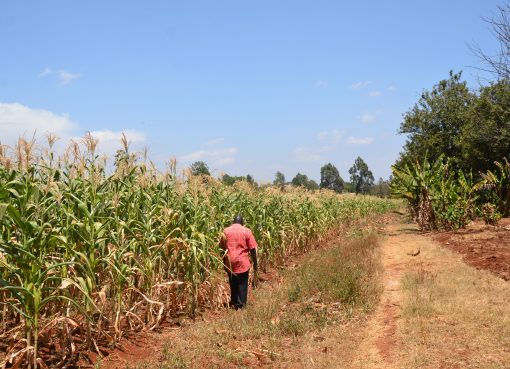
In a major step towards the realisation of food security and rural incomes, Kiambu County has formalised a critical memorandum of understanding (MoU) with the Korean government.
The agreement aims to revitalise the county’s agricultural sector.
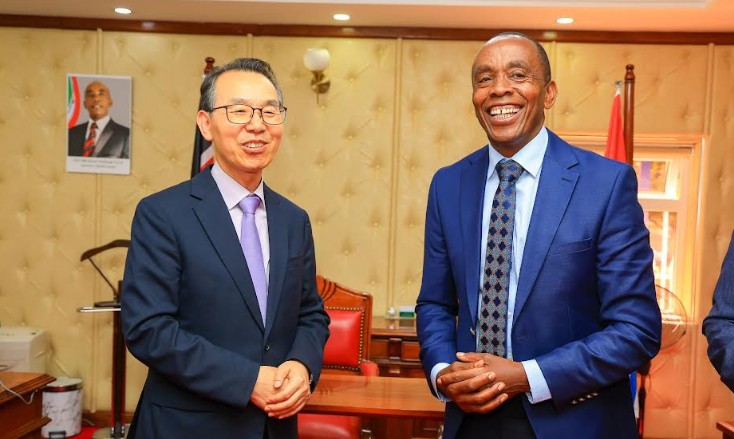
Governor Kimani Wamatangi and the Ambassador of the Republic of Korea to Kenya, H.E. Kang Hyung-shik, signed the pact on Monday, signalling a new era focused on technology transfer and skills exchange for local farmers.
The strategic collaboration is set to be implemented through the Korea Programme on International Agriculture (KOPIA) Kenya Centre, which is conveniently anchored in Muguga, Kiambu.
The location will serve as the hub for dissemination of knowledge and practical demonstrations.
The core objective of the agreement is to introduce cutting-edge farming innovations and expertise directly to the county’s agricultural community, helping them to modernise their operations and significantly improve both productivity and profitability.
The partnership will focus on technologies like smart farming, improved seed varieties and post-harvest management techniques, which are crucial for a climate-resilient economy.
Governor Wamatangi emphasised the profound impact this partnership will have, highlighting that agriculture is the economic backbone of Kiambu, contributing over sixty per cent of its gross county product.
This reliance makes the sector highly vulnerable to external shocks, a challenge the new technology is designed to mitigate.
“This partnership with Korea will empower our farmers with modern tools and technologies to enhance food security and rural incomes.” Stated the Governor.
He stressed that the initiative is specifically tailored to benefit the county’s numerous small-scale farmers, who make up the majority of the sector’s stakeholders.
The move aims to provide them with the practical knowledge and advanced techniques needed to increase yields and reduce vulnerability to farming challenges like pests and diseases.
Furthermore, the collaboration is expected to open up new market opportunities for high-value crops, giving farmers stable and better returns on their investment.
Training sessions will be practical and on-site, ensuring immediate application of the learnt skills.
The MoU marks a significant phase in the county’s broader strategy to transform agriculture into a modern sustainable and technology-driven enterprise capable of meeting both local consumption needs and export market demands.
By leveraging Korean technological expertise, Kiambu is set to fortify its agricultural resilience, stabilise household incomes and ensure a food-secure future for its residents.
Local administrators and cooperative leaders are expected to spearhead the adoption of these new practices, ensuring the benefits of this global partnership reach every corner of the county and truly revolutionize how farming is done.
By Hellen Lunalo