National Fund for the Disabled of Kenya (NFDK) has called for public-private partnerships towards empowerment of persons living with disabilities (PWDS) to enhance, enable and engage them economically to acquire decent skills and income so as to reduce their poverty.
NFDK Trustee Dr Julia Ojiambo noted that there was a growing need for PWDs to get education assistance, assistive technologies and devices, infrastructure and equipment grants to help them successfully run their start-ups and increase their employability prospects.
She stated that relevant agencies at County and National Government levels, donors, corporates and religious institutions, among others, should prioritize encouraging, promoting and supporting PWDs to become self-employed and develop their entrepreneurial capacity to make them economically independent and self-reliant.
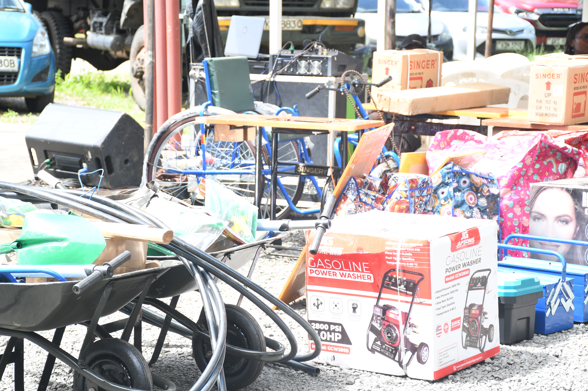
Dr Ojiambo indicated that NFDK had taken a lead role in economically empowering PWDs by giving them free of charge tools of trade such as shoe-making and repair kits, sewing machines, welding equipment, hairdressing machinery, farming implements, and carpentry tools, among others.
She made the remarks at the Rift Valley Regional Headquarters in Nakuru when NFDK presented cheques worth Sh4 million to 20 special needs institutions in the region to initiate income-generating activities.
During the occasion that was also graced by NFDK council member Dr Mike Kiswili and Nakuru County Commissioner Mr Loyford Kibaara, PWDS benefitted from assistive devices while 18 individuals received tools of trade valued at over Sh600,000.
She added, “More Kenyans need to be enlightened that NFDK is obligated to issue comprehensive tools of trade through application forms available at County Commissioners’ offices.
She explained that the core mandate of NFDK is to aid by funding and empowering persons with disabilities to realize their potential through socio-economic integration by supporting them with mobility enablers and business gear.
“As a fund, we empower persons with disabilities to realize their potential through socio-economic integration by providing mobility appliances like wheelchairs, crutches, white canes and hearing aids. But today, as you can witness, we are donating sewing machines, hairdressing equipment, barber kits, gear, among many others,” added Dr Ojiambo.
The NFDK was set up in 1980, declared the national year for the disabled persons in the country. The organization is steered by a Board of Trustees appointed by its patron, who is the sitting president of the Republic of Kenya.
Nationally, Dr Kiswili said NFDK is funding projects through grants to build classroom blocks, ablution units, dining rooms and drill boreholes in learning institutions set aside for PWDS.
He indicated that annually the fund assists 3000 individuals and 150 institutions.
Dr Kiswili pledged that NFDK will cascade the donation of assistive devices and tools of trade to county and sub-county levels in the Rift Valley region, targeting 330 individuals.
He urged financial institutions to consider providing interest-friendly loans and affordable credit to PWDs to start and expand businesses.
Dr Kiswili said NFDK wants to enhance the socio-economic empowerment of the special needs children for a ‘just and equal’ society.
He added, “Including PWDs in national political and economic conversations and mentorship programmes to make them able and capable of running viable and profitable projects. That will be a significant milestone towards achieving social, political and economic inclusion of PWDs according to Kenya Vision 2030 and Sustainable Development Goals (SDGs).”
Dr Kiswili said NFDK, as a stakeholder in the disability fraternity, is keen on implementing and raising awareness on the right to education of children with disabilities.
“Findings from research show enrollment and retention levels of persons with disabilities in learning institutions can improve if special schools provide supportive facilities like modernized dining halls and kitchens, boarding facilities and well-equipped classrooms,” he said.
In his remarks Mr Kibaara asked county governments to ensure public and private buildings were friendly to the disabled.
He said devolved units should not approve building plans that do not comply with Persons with Disability Act 2003 requiring structures to be built in a way that the disabled find it easy to access offices.
Nakuru County Commissioner Loyford Kibaara lamented that most persons with disabilities, particularly those in wheelchairs, find it hard to access buildings that have no lifts, ramps, or steep access ramps.
In some buildings, switches, cooking slabs, kitchen sinks, kitchen cabinets and taps are too high for disabled persons who have to ask for assistance when using them.
The washrooms too, he said, are not disability compliant, while other buildings have no support rails, and neither is there enough space to maneuver about.
Mr Kibaara said people also need to be educated on what the law says concerning accessibility rights of the disabled, particularly owners and developers who are the key decision makers.
According to the County Commissioner this should include a building approval process that ensures that buildings under construction are disability-friendly.
Bantenta Matheka, whose deaf son benefited with electrical working tools, said inadequate funding of special schools and units complicates the already existing challenges and called for a review of the low resources allocated to persons with special needs.
“We therefore call on all the stakeholders to lobby for increased funding to special needs institutions, as this will allow them put up accessible facilities which will encourage enrollment,” said Ms Matheka.
She expressed regret that persons living with disabilities are among the most economically disadvantaged.
“Experience shows the majority of them have inadequate or lack access to education, employment, health care and other necessities of life such as reliable water, food and clothing, which are basic means of livelihood,” said Ms Matheka.
She called on the public to join hands and empower children with disabilities with education and practical skills saying that it is the best sustainable gift we can give them for their future.
David Karanja, whose son was gifted with a haircutting kit, stated that teachers in special needs schools need to emphasize practical skills training to enable learners differently abled to be self-reliant once they complete their education.
Mr Karanja stated that through constant training and practice, both physically and mentally challenged individuals can learn and become responsible people.
He stated that due to lack of vocational skills, many special needs learners are left at the mercy of relatives or caregivers, once they complete education.
“We must think about a time when learners with special needs will not be in school, when they are back in their communities, and how they will survive. I have interacted with differently abled children who are geniuses or more talented than ordinary children. It is disappointing when a parent becomes disinterested in their education,” said the parent.
He added that differently abled youngsters have a way of turning their gifts, creativity and passion into a livelihood.
He further urged parents of learners with special needs to invest in their children’s talent and consider enrolling them for courses like fine art, tailoring, leatherwork, among others, depending on the child’s gifts.
“If this is not done, such gifted children will sit on their talent, which can stand in their way of achieving financial independence,” he observed.
Mr Karanja expressed regret that persons with disabilities (PWDs) have historically missed out on opportunities to be part of the workforce due to erroneous perceptions, fear, myths and prejudice that continue to limit understanding and acceptance of disability.
“Myths abound, including that PWDs are inefficient at work and that accommodating a PWD in the workplace is expensive. It is such notions that employers must overcome to tap into the value that the differently abled people can add to every value chain,” he observed
Mr Karanja stressed the importance of empowering PWDs, adding that, like other people, it is their human right to have a dignified and productive life.
NFDK also supports institutions for persons with disabilities through cash grants to improve their facilities and sustainable income-generating activities.
These institutions are special schools, units, vocational centres and rehabilitation centres.
These institutions have been receiving Sh300, 000 in every financial year to advance infrastructural development amenities like toilets and walking pavements to make the daily life of this group of persons a bit easy.
To qualify, both individuals and heads of institutions are required to fill NFDK Forms B and A respectively obtained from their website.
Applicants are also advised to obtain relevant endorsements from Government administration and for the case of individual PWD, one should be formally trained/apprenticed.
By Anne Mwale