Lewa Wildlife Conservancy (LWC) is advancing digital literacy in public schools neighbouring its conservation areas through sustained investment in modern classrooms, internet connectivity and teacher training.
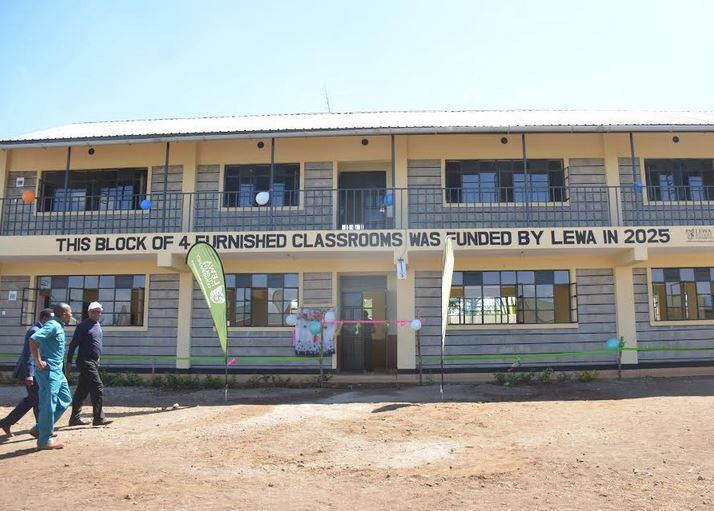
The latest milestone being the commissioning of five fully equipped digital classrooms at Rugusu Primary and Junior Secondary School in Meru County, which is part of a long-term public–private partnership between the conservancy and its sponsors, the community and the Ministry of Education.
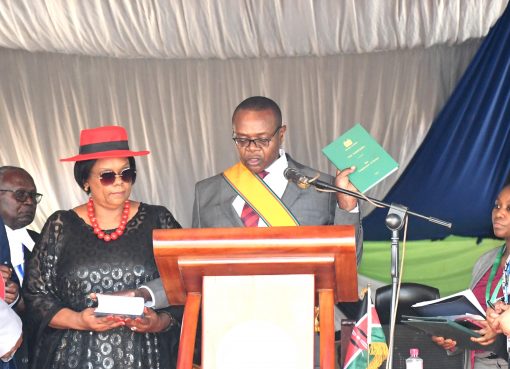
Speaking during a ceremony to handover the five classrooms to the community and the Ministry, Lewa’s Chief Programmes and Partnerships Officer, John Kinoti, said the initiative exemplifies the role of collaboration in driving sustainable community development.
“Education is central to transforming generations. Learners spend most of their formative years in classrooms, in fact six out of the eight hours in a day, and providing safe, well-equipped learning spaces is essential for meaningful learning and a better future,” Kinoti said.
The five classrooms, built at a cost of Sh8 million, are furnished with desks, tiled floors, electricity, water, and Starlink internet connectivity.
Further, they are fitted with interactive smart boards that allow learners to access digital content in line with the national education priorities.
Lewa’s Head of Education Programmes, Purity Kinoti, said the conservancy currently supports 28 schools across the three Counties of Laikipia, Meru and Isiolo, which are all located adjacent to the conservation landscape.
“At Rugusu school alone, we have constructed a total of 12 classrooms over the years. Across the 28 schools, Lewa has built 184 classrooms, and all these are digitally-enabled,” Ms Kinoti said.
Additionally, she added, Lewa has installed Wi-Fi in all the supported schools and pays monthly subscriptions to ensure uninterrupted access.
She said the programme has also seen the deployment of 81 smart boards across the schools, with Rugusu School receiving eight, and learners at Rugusu also use 120 tablets to support digital learning.
Beyond classrooms, Lewa has also supported additional infrastructure at Rugusu, including a kitchen and dining hall, boys’ and girls’ dormitories, an office block, a furnished staffroom and office equipment such as a printer used for examinations.
The conservancy also supported the acquisition of the piece of land for the new five classrooms, alongside contributions from parents, and drilled a borehole that supplies water to both the school and the surrounding community.
Ms Kinoti said the education programme places strong emphasis on capacity building, with teachers from the supported schools receiving annual training on how to integrate digital platforms into curriculum delivery.
“Education today must be digital. You cannot prepare learners for the modern job market without digital interventions. Our goal is to ensure children in government schools within our conservation areas are not left behind,” said Ms Kinoti.
The impact of these interventions has been evident at Rugusu School, where enrollment has grown from 112 pupils in 2008 when the conservancy was coming in, to the current more than 600.
Completion rates and transitions to higher levels of education have also improved, according to the conservancy.
County Director of Education, Joseph ole Maki, praised the initiative, saying it had addressed long-standing infrastructure gaps and boosted learner morale and attendance.
“Conducive learning environments enhance self-esteem, increase enrollment, and improve attendance. This partnership has significantly improved access to quality education in an area that has faced serious challenges before,” Mr Maki said.
By Dickson Mwiti