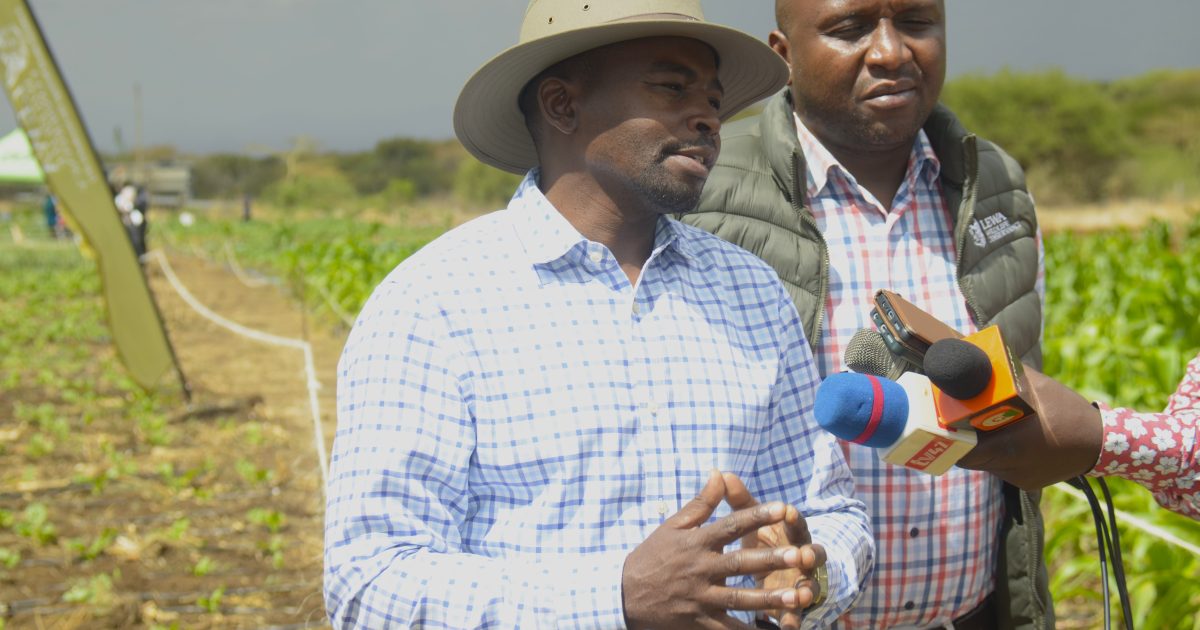
Lewa Wildlife Conservancy has intensified efforts to promote sustainable agriculture among communities in its conservation areas, while unveiling a comprehensive Climate-Smart Agriculture (CSA) program, aimed at enhancing resilience and food security in the face of
The conservancy is located in northern Kenya, on the Laikipia plateau in Meru county, bordering Laikipia and Isiolo counties.
The program is designed to equip farmers with practical knowledge and tools to adapt to erratic weather patterns and declining soil productivity.
Speaking during a farmers’ field day at Munanda primary school in Buuri East sub county, Meru county, Chief Programs and Partnership Officer, John Kinoti noted that the initiative goes beyond farming techniques, as it involves herders and farmers in knowledge-sharing to ensure food security within their conservation areas.
Kinoti emphasized that agribusiness is the only key to survival, given the scarcity of resources such as water and the fact that it generates more income compared to other conventional methods of farming.
He said Lewa has mobilized more than 8,000 farmers with tangible results already emerging.
“The adoption of CSA practices has led to increased yields including the production of approximately 20 tons of onions. The program also facilitates market linkages and post-harvest handling, ensuring farmers can store and sell their produce effectively,” said Kinoti.
He added that through the field days, stakeholders in pesticide production, irrigation systems, and organic farming have been connected directly with local farming groups for future interactions and advice.
“As Lewa Wildlife Conservancy, we are reaffirming our commitment to community-led development and environmental stewardship, positioning the CSA program as a model for climate adaptation and sustainable agriculture in Kenya,” said Kinoti.
Head of Community Development Programmes at the conservancy Lawrence Riungu, emphasized the urgency of the intervention, saying that farmers have long relied on rainfall, but with changing climate conditions, water is becoming scarce and crops are failing.
“We are teaching conservation agriculture techniques such as drip irrigation and soil testing to help them produce more with less,” he said.
According to Riungu, the CSA program promotes a wide range of technologies including soil health management, water harvesting, integrated pest management and the use of certified seeds.
Farmers are also being introduced to renewable energy solutions, such as biogas and solar power, alongside improved fodder varieties including Brachiaria grass, super napier, and Juancao grass.
by Dickson Mwiti