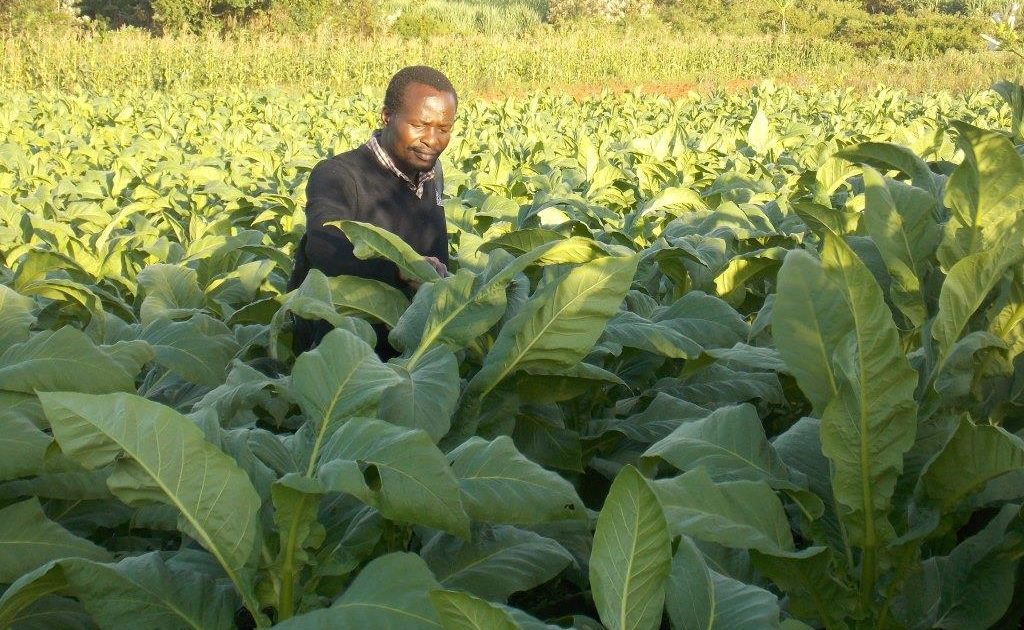
Despite mounting campaigns to reduce tobacco farming in Kenya, many farmers in Tharaka Nithi County continue to depend on the crop for their livelihoods, terming it more profitable than traditional food crops.
A farmer from Muraga village in Mitheru Ward, Peter Kinyua, said Tobacco cultivation has supported families for many years, adding, “Tobacco is more profitable than maize or beans, but curing it requires significant amounts of firewood, leading to reduced tree populations. Despite this, the crop is essential for survival,” he said.
Another farmer, Joyce Makena, highlighted that many local farmers cultivate tobacco without fully grasping its health and environmental impacts.
“Most of us only look at the money. We don’t know much about how it affects our health or the environment,” she admitted.
Another farmer, John Miriti, also from Mitheru, urged the government to educate farmers on safer practices and provide alternatives that can match tobacco’s income potential.
Many farmers remain uninformed about the risks related to cultivating and curing tobacco despite the Ministry of Health’s efforts to raise awareness about the dangers of tobacco use and exposure.
The curing process, which relies heavily on firewood, has contributed to deforestation in several parts of Tharaka Nithi.
The government, via the Tobacco Control Board and the Tobacco Control (Amendment) Bill, 2024, aims to reinforce tobacco industry regulations by improving public education, tightening advertising restrictions, and aligning Kenya’s tobacco policies with global health standards.
The amendment bill before Parliament aims to regulate new nicotine products, including electronic cigarettes and nicotine pouches, while strengthening existing tobacco control measures.
However, it does not directly address the challenges faced by small-scale tobacco farmers or the environmental impact of curing tobacco.
Meanwhile, awareness campaigns and alternative livelihood programmes have not yet reached many small-scale farmers in rural areas like Mitheru Ward, who depend on tobacco for their primary income.
By Dickson Mwiti and Christine Ngitori