The Women in Alternative Dispute Resolution (WADR)-Kenya organisation has urged citizens to embrace dialogue and mediation as the preferred methods of resolving disputes, warning that the continued reliance on adversarial approaches is undermining national unity and economic stability.
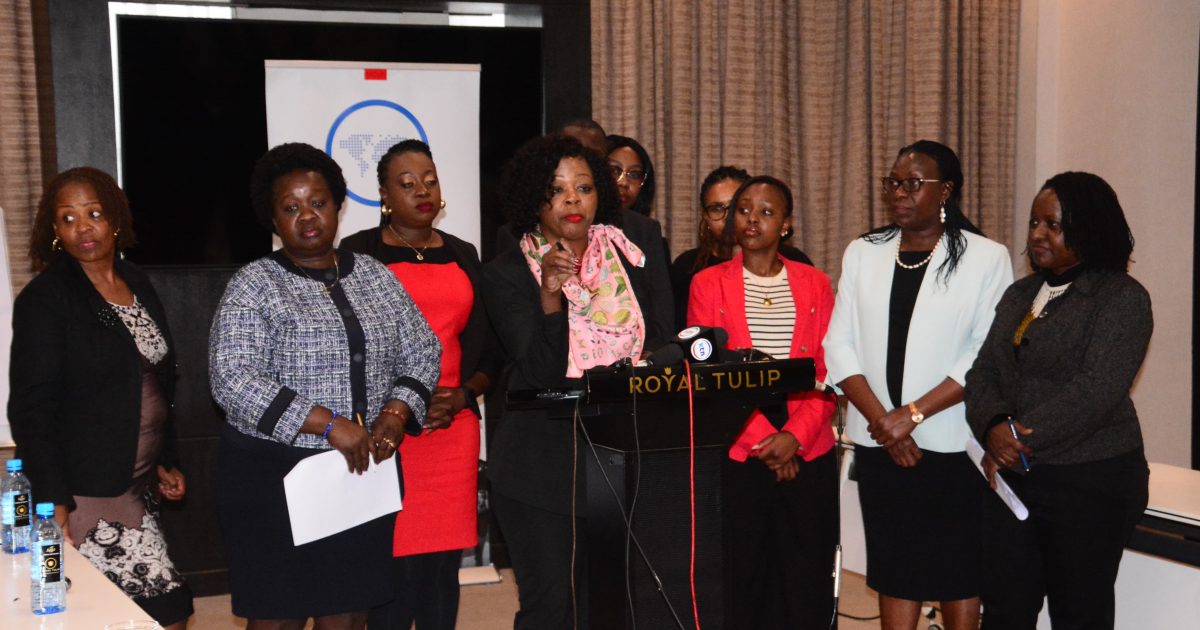
Speaking during a media briefing in Nairobi, WADR Chairperson Eunice Lumallas noted that Kenya stands at a critical point where political, social, and economic tensions must be addressed through constructive, inclusive, and sustainable means.
She added that a cultural mindset shift is urgently needed to avert deeper conflict and societal fragmentation.
Lumallas maintained that WADR, which brings together over 200 trained professionals from various fields, is advocating for the mainstreaming of Alternative Dispute Resolution (ADR) as a nationally accepted practice.
The Chairperson advised that everyday disputes, including those within families, businesses, and communities, can be resolved amicably if Kenyans adopt peaceful methods of engagement such as mediation and negotiation.
She stated that while political leaders have recently called for national dialogue, WADR’s mission is non-partisan and focused on the long-term peace and well-being of all Kenyans.
Further, Lumallas clarified that the organisation’s advocacy is rooted in the Constitution of Kenya, particularly Article 159, which recognizes mediation and traditional mechanisms as valid tools for justice.
“This call is not about partisan dialogue; it is a reminder that peaceful engagement must begin at the grassroots and be led by ordinary citizens, professionals, and institutions, not only politicians. We are urging Kenyans to de-escalate tensions, to listen to one another, and to resolve their grievances peacefully,” she said.
At the same time, the Chairperson warned that unresolved disputes and heightened rhetoric have the potential to erode the democratic and economic gains the country has made in recent years.
Lumallas emphasized that peace is not the absence of disagreement but the presence of mechanisms to resolve disputes constructively and fairly.
She added that peace is a precondition for meaningful trade, investment, education, and social services, stressing that without a predictable and harmonious environment, businesses cannot thrive, institutions lose public trust, and citizens lose hope.
“We urge Kenyans to take responsibility for peace; every citizen has a role in building harmony. Dialogue is not a weakness; it is a powerful tool for growth, healing, and justice,” insisted Lumallas.
Dr Dan Odaba, the Director for Southern Africa at the Institute for Economics and Peace, supported WADR’s position, citing data from the recently released 2024 Global Peace Index, which ranks Kenya at position 127 out of 163 countries.
Dr Odaba attributed the country’s drop to rising public unrest, political demonstrations, and lack of inclusive dialogue platforms.
He emphasized that peace is both a development goal and a national asset that must be protected and invested in.
The Director explained that peaceful countries tend to perform better economically and socially, noting that Kenya’s peace deficit could discourage investment and hinder regional competitiveness.
Dr. Odaba urged the country to strengthen institutions, promote fairness in governance, and build a culture of civic dialogue, warning that the cost of violence far outweighs the cost of peacebuilding.
Meanwhile, WADR highlighted the critical role of ADR in complementing the formal judicial system.
Through its Chairperson, the organization observed that with court backlogs continuing to delay access to justice, mediation provides a faster and more cost-effective alternative for resolving disputes.
Additionally, WADR is also partnering with the National Cohesion and Integration Commission (NCIC) to facilitate peace forums across counties, where communities can discuss underlying grievances and work collaboratively toward solutions.
Youth representative and WADR member Joy Gitao, emphasized the importance of introducing peace education and conflict management skills in schools and local institutions.
She reiterated that fostering a culture of dialogue from an early age is essential to building a resilient and inclusive society.
On the other hand, WADR clarified that while the initiative is led by women, it is not exclusive to them.
The organisation stated that its goal is to amplify women’s participation in peacebuilding and dispute resolution, sectors where women have traditionally been under-represented, while still working in collaboration with male professionals and institutions.
WADR further urged Kenyans to shun incitement, inflammatory rhetoric, and political manipulation, especially during times of heightened tensions.
In addition, WADR encouraged the public to consider professional mediation services as a constructive and peaceful alternative to resolving conflicts, both at personal and community levels.
The organization reaffirmed its commitment to promoting peaceful coexistence and providing platforms where individuals and communities can resolve disputes fairly, without resorting to litigation or violence.
By Naif Rashid