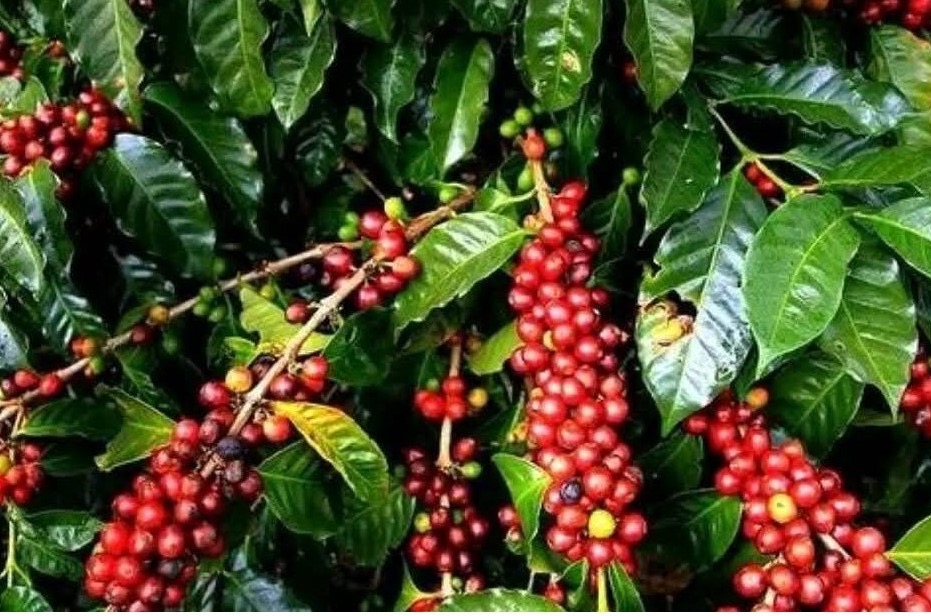
The Government, through the Ministry of Agriculture and Livestock Development has embarked on a process to map all the parcels of land under coffee farming in the country.
Currently, approximately 30% of the national coffee area in 16 counties out of 33 has been Geo-Mapped using satellite imagery, representing 32,688 Ha of coffee farms out of the total coffee area of 109,384 Ha countrywide.
In a statement today by the Agriculture Food Authority (AFA) Director General Dr. Bruno Linyiru on the status on the implementation of the European Union Deforestation Regulations (EUDR) in Kenya, this mapping exercise that they are coordinating is the exercise as a regulator of all scheduled crops, as mandated by the Crops Act, 2013.
“The exercise is expected to be completed in due time to meet the deadlines set in the EUDR,” he said, confirming that in the next two months several teams under the EUDR Data Committee will be mapping out the remaining part under coffee production countrywide.
Kenya is among other countries and companies that export products to the European Union market and is expected to fully adhere to the European Union Deforestation Regulations (EUDR) by 30th December 2025.
EUDR Data Committee team comprises of the State Department of Agriculture (SDA), State Department for Cooperatives, Kenya Forest Service (KFS), Kenya Space Agency (KSA), Directorate of Remote Survey and Remote Sensing (DRSRS) and Kenya Agriculture and Livestock Research Organization under the coordination of AFA.
Kenya exports 95 percent of its coffee, with approximately 55 percent exported to the EU, mainly Belgium, Germany, Sweden, and Finland.
Over the past five years, Kenya exported 122,699 Metric Tons (MT) of clean coffee to the EU, valued at USD 695.7 million, equivalent to about KES 90B. Smallholder farmers contribute approximately.
The EUDR requires all companies exporting to the EU to prove that all its agricultural products entering the EU were not produced as a result of deforestation as of 31st December 2020 and the products need to be traceable to land that has not been deforested.
The regulation applies to commodities viewed by the European Union as linked to deforestation, namely coffee, cocoa, soy, beef, palm oil, rubber and wood.
The regulation was set to be enforced by 30th December 2024; however, the EU passed a resolution to extend the deadline to 30th December 2025.
Generally, the EUDR aims to ensure that a set of key products traded and consumed in the EU and globally no longer contribute to deforestation and forest degradation.
By Wangari Ndirangu