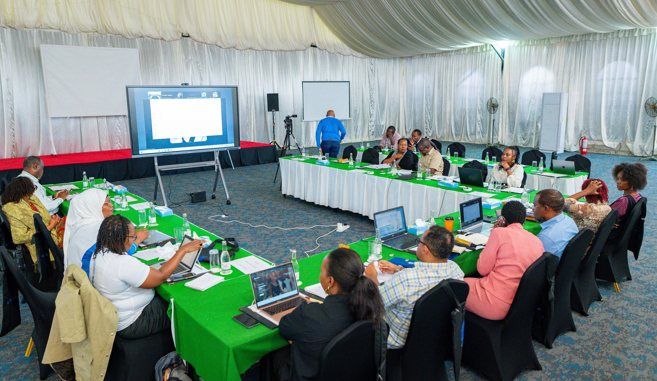
Maritime stakeholders drawn from across Africa convened in Mombasa physically and virtually to mark World Oceans Day with a renewed call for inclusive participation, indigenous knowledge, and policy reform in the governance of the Blue Economy sector.
The high-level roundtable, hosted by the Kilindini Campaign, brought together representatives from multiple countries, including Ghana, as well as regional actors from civil society, academia, and the private sector to deliberate on the theme “Our Ocean, Our Future: Protecting Blue Economies Through Collective Action.”
Kilindini Campaign convener Tandai Mtana challenged African nations to set their agenda for the ocean as a strategic frontier for sustainable trade, environmental stewardship, and socio-economic development.
“As people on the western edge of the Indian Ocean, and as Africans globally, we must move from being observers to becoming active players in defining the future of our oceans,” said Mtana, adding: “We are at a point of maturity where Africa can and must lead with its priorities for ocean governance.”
He emphasised that ocean-related discussions must go beyond port cities and beach tourism to include inland communities and marginalised voices.
“The question is how we take this conversation to the next level, reaching communities up to 60 kilometres inland and ensuring they see themselves not just as observers but as participants and stewards of the marine ecosystem,” he said.
He further noted that despite policy commitments, many communities remain disconnected from the decision-making and benefits of the Blue Economy.
“There has been limited real engagement by shoreline and inland communities. Without education and empowerment, public participation will remain a procedural box-tick instead of genuine involvement,” stated Mtana.
Gladys Munjama, representing the Jumuiya ya Kaunti za Pwani, a regional bloc representing the six Coastal counties, called for structural reforms on how local populations are integrated into the maritime sector.
“We want to see our people moving beyond casual jobs like cleaners and waiters. We’re pushing for engineers, entrepreneurs, and innovators in the maritime space,” said Munjama.
She highlighted the successes of the GoBlue project, which has supported over 40 fishing groups with boats, gear, and training across multiple counties.
“In Kilifi and Mombasa, we’ve introduced tuk-tuks with cold storage units to help fishers preserve their catch. We’ve also established cold storage facilities in Kwale and Kilifi,” she said.
She also raised concerns that marine policy development often takes place in isolation from local realities. “Policies and laws are drafted in boardrooms with little input from those living by and off the ocean. We must create platforms where their voices not only count but shape outcomes,” Munjama added.
Linda Shuma, a gender advocate and founder of a women and girls empowerment initiative, called for more women to be placed in leadership and technical roles in the Blue Economy sector.
“The full participation of women benefits entire communities. We should also explore integrating sports, such as diving, kite surfing, and beach volleyball, into the broader Blue Economy strategy,” she said.
By Sitati Reagan