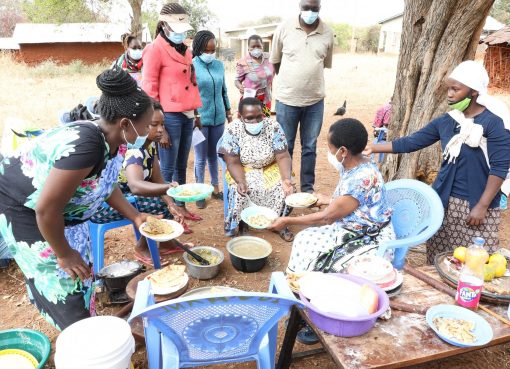
Mathenge Technical Training Institute in Nyeri has made history by becoming the first TTI in the country to host a graduation ceremony for graduands certified under the Recognition of Prior Learning (RPL) Programme.
During the ceremony held on Friday, a total of 61 graduands among them 39 artisans working in the Ruring’u Affordable Housing Project were awarded certificates in different trades, formally validating skills gained through years of hand-on work experience.
In a speech read on her behalf by the Director of RPL Delivery Unit in Kenya Dr Stanley Maindi, the Principal Secretary in the State Department for TVETs Dr Esther Muoria termed the graduation as a major milestone in recognizing Kenya’s informal workforce by formally certifying the workers who possess skills but lack academic papers.
The PS further noted that the programme would help restore the dignity of millions of the workers who have for a long time been excluded from job opportunities due to lack of academic certificates.
“Many informal sector workers in Kenya have valuable skills in areas such as tailoring, construction mechanics, carpentry, metal work, hair dressing, hospitality among others. However, without formal recognition, these talents often go unnoticed, limiting access to jobs and opportunities and societal recognition. RPL bridges this gap by validating these skills to restore dignity and unlock potential. It sends a clear message that your experience matters, your skills are valuable and you are seen. you are heard and you also belong,” she said.
While drumming up support for the programme, the PS said that the push by the government to roll out RPL is driven by the rapid technological change and the shifting global job market demands.
She said that the government has positioned RPL as a bridge between informal and formal learning by ensuring that the country is aligned with international labour standards as well as Sustainable Development Goal Number Four on life-long learning.
Dr Muoria noted that the RPL certificates issued in the Technical Vocational Education and Training institutions have a similar value to the ones acquired through formal study and are recognized.
“Through RPL, we are bridging the gap between informal and formal learning, promoting equity by recognizing marginalized groups and driving economic growth by expanding our skilled workforce and fulfilling global commitments and international labour recommendations. This occasion therefore reflects our collective commitment to strengthening Kenya’s skills development ecosystem and ensuring that every Kenyan’s knowledge and competencies which, whether acquired formally, informally or non-formally, are recognized and valued,” she said.
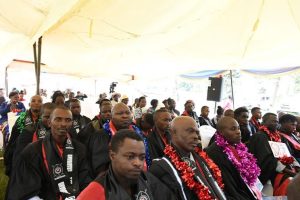
In his remarks, Dr Maindi said that the government is scaling up RPL in line with the Bottom-up Economic Transformation Agenda of uplifting skilled but disadvantaged Kenyans at the bottom of the economic pyramid.
He noted that over the last six months, more than 3,500 skilled workers have been assessed in the TVETs in the country with financial support from the International Labour Organisation and the African Development Bank adding that the government is working to put in place a budget to support assessment and certification by TVET institutions.
“The informal sector drives 85 per cent of our economy and the people who are driving it have skills but they do not have papers and so they are normally disadvantaged when it comes to job opportunities. That is why this policy has come out to identify, assess and certify. With the certificates, they can use it to enroll for other courses if they want to continue learning. They can use it to register a company, they can use it to lobby for higher pay so this is a programme that is meant to help them turn around their economic lifestyle and improve their livelihoods,” stated Dr Maindi.
The Director also revealed plans by the government to assess and certify some 6,000 refugees in Daadab and Kakuma refugee camps with funding from the United Nations High Commissioner for Refugees.
“We have also signed an MoU with UNHCR so that TVET institutions can assess refugees because many of them ran away with skills and because of the conflict they don’t have papers. So we are going to assess and certify them and this is going to be financed by the UNHCR,” he said.
The Institution’s Principal Catherine Gikonyo said that the institution was proud to host the first dedicated RPL graduation ceremony. She noted that the initiative supports the government’s agenda of strengthening TVETS as the driver of industrialization and job creation.
She added that the programme strengthens Competency-Based Education and Training (CBET) and helps produce innovators and job creators. She also challenged the graduands to be ambassadors of the programme to other members of the society.
“Today we celebrate not just individual achievements but a national milestone towards a more inclusive skills based economy as envisioned in Vision 2030. RPL marks a transformative shift by recognizing skills gained through experience, innovation, and self-learning. As we confer certificates, we affirm dignity, competence and the value of lifelong learning. May this programme continue to empower Kenyans and continue to build a globally competitive nation,” she said.
Central Region Affordable Housing Coordinator Alfred Gakuru noted that nearly two thirds of workers employed in the Affordable Housing Programme lacked formal recognition.
He said that the State Department for Housing and Urban Development is partnering with TVET institutions in the country to ensure that skilled workers in the Affordable Housing Programme receive formal recognition which he said would increase their employability in future.
“We have close to 400 workers in each of our sites but some of them do not have certificates despite possessing skills which is evident from the work they do. What we have done is to partner with the TVETs to certify these people so that they are formally recognized and when they wind up their contracts at the affordable housing project, they will be eligible to work at any other project, “said Gakuru.
“This is the programme that we are doing all over the country in all affordable housing sites and market sites for anyone who comes in and they have experience so that by the time they leave, they will also have a certificate that they can use out there. The certificate will give them power to negotiate for a better income,” he added.
Peter Maina, who received a certificate in General Agriculture said the certification had given him hope to seek employment opportunities in the field.
“My parents were not able to finance my higher education but I was able to acquire skills informally which I have been using to earn a living. I am happy to be certified in General Agriculture and I will now be able to present my certificate when seeking employment,” he said.
By Wangari Mwangi and Diana Odipo