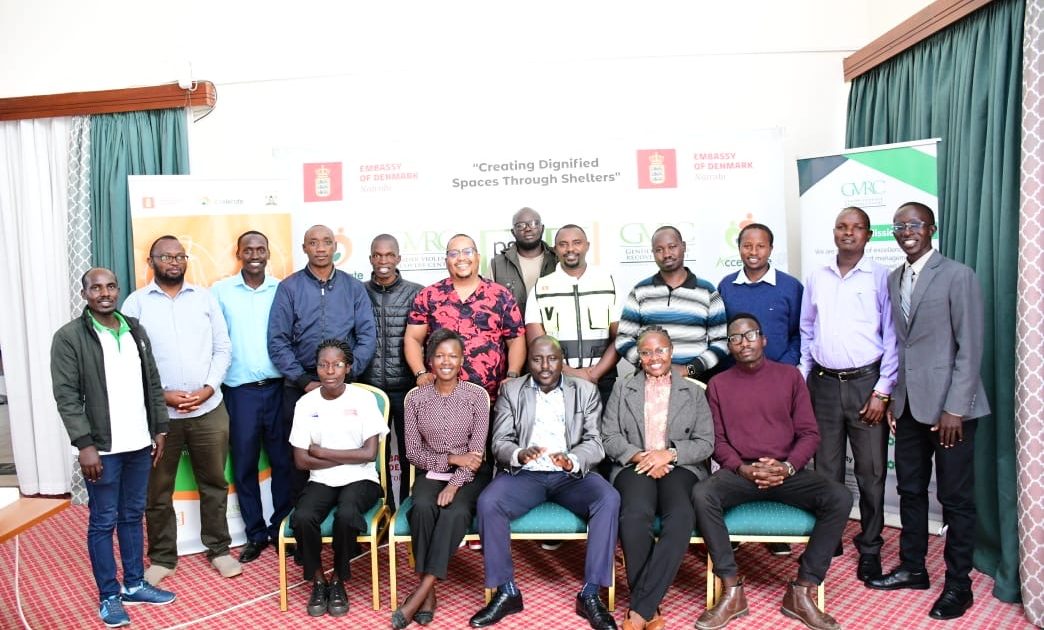
Media practitioners from Baringo County have been trained on effective and Strategic Gender Based Violence (GBV) reporting.
The one-day sensitization forum, organized by Gender Violence Recovery Centre (GVRC) under the ‘Accelerate program’and funded by the Embassy of Denmark attracted local journalists, officers from both national and county government as well as bloggers.
In his remarks, GVRC Programs manager Joel Muriithi said they intend to capacity-build media practitioners in a bid to decrease prevalence of GBV and its harmful effects.
Muriithi encouraged them to first prioritize the survivors’ safety and best interest when reporting on sexual and other forms of gender-based violence within the society.
“How to respond to a GBV survivor or colleague who has suffered violence is very important,” he noted.
The official who attributed GBV cases in Baringo to cultural practices, poverty and low education, called for concerted efforts from all stakeholders in addressing the challenge.
Muriithi added that his organization apart from advocating for free services at the Baringo County Referral Hospital, revealed that they also identified Sunrise Children’s home in Kabarnet town as a shelter for survivors of GBV within the county.
Baringo County Director of Youth Affairs and Gender, Daudi Aengwo, who presided over the training brought to the attention of the attendees a rise of FGM cases in the region, with special focus on Tiaty constituency, Mukutani, Illchamus and Mochongoi Wards in Baringo South, some parts of Mogotio as well as Barwessa and Bartabwa Wards in Baringo North where the retrogressive cultural practice is rampant.
Aengwo, at the same time indicated a worrying trend of defilement cases after Bartabwa and Barwessa Wards in Baringo North this year recorded a high number in school going children.
He urged parents and guardians to closely monitor their children and the media to team up with other stakeholders in providing advocacy.
Kipngeno Ronoh, a journalist commended the organizers for what he termed as a timely engagement especially in a county where most of them have undergone experiences that requires psychosocial support.
Ronoh requested the organization to also consider religious leaders in their next trainings because they are the ones who play a crucial role in advising people in the society.
His sentiments were echoed by Emmanuel Bett who called for information tips about GBV to be pinned at barbershops and saloons to create more awareness among area residents.
By Benson Kelio and Christopher Kiprop