Merck, a leading science and technology company from Germany, has signed an agreement with Universal Corporation Ltd, a pharmaceutical manufacturer based in Kikuyu, Kiambu County, for the large-scale local production of a new pediatric medication for schistosomiasis (commonly known as Bilharzia).
The partnership, announced during a Merck delegation’s visit to Kenya from October 27 to 31, is backed by the Ministry of Health and supports the government’s agenda to promote local pharmaceutical production and strengthen self-sufficiency in essential drug manufacturing.
The collaboration marks a major milestone in Kenya’s fight against neglected tropical diseases (NTDs), particularly schistosomiasis, which remains a significant public health challenge. More than six million Kenyans are currently infected, while a further 15 million remain at risk, especially those living around the Lake Victoria basin and western Kenya.
Children in fishing communities are among the most affected, often suffering from anemia, stunted growth, and long-term organ damage caused by the parasitic disease.
Merck has been at the forefront of global schistosomiasis elimination efforts for nearly two decades. Since 2007, the company has partnered with the World Health Organization (WHO) to donate over two billion tablets of praziquantel, enabling treatment for almost 900 million people across 47 countries.
The new pediatric formulation, also a praziquantel-based treatment, was developed by the Pediatric Praziquantel Consortium, co-founded and led by Merck. It targets preschool-aged children who are not yet included in mass drug administration programs.
The agreement with Universal Corporation now paves the way for large-scale rollout through local production, making Kenya a key hub in regional NTD elimination efforts.
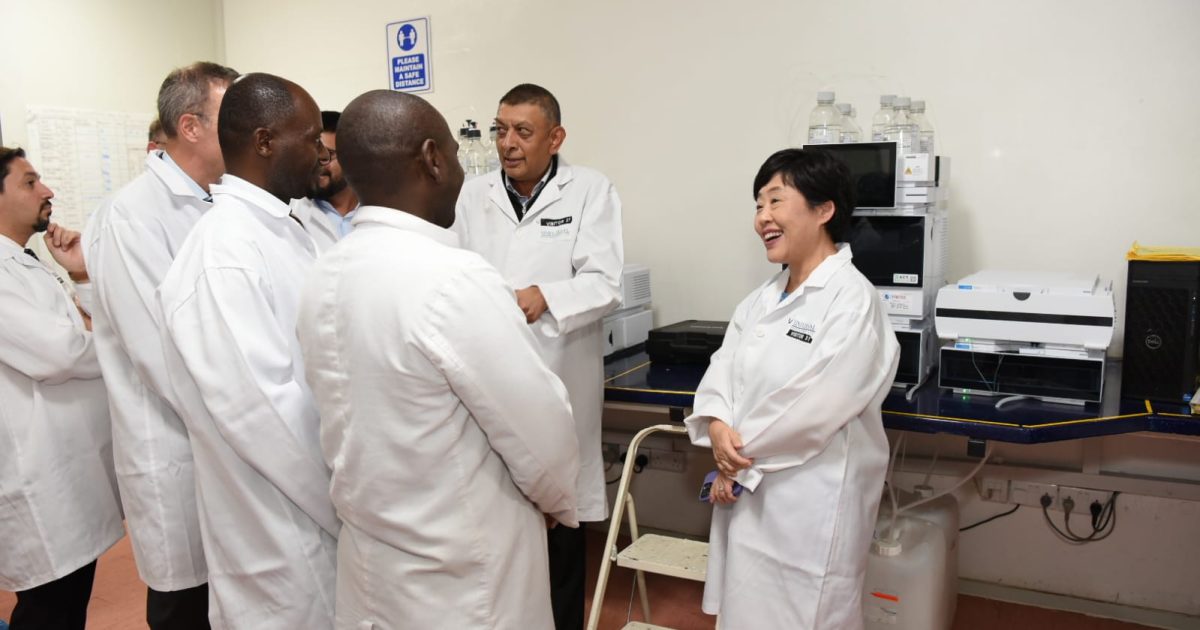
During the official event held at Universal Corporation Ltd in Kikuyu Sub-County on Wednesday, October 29, 2025, the Head of the Neglected Tropical Diseases Program at the Ministry of Health, Wycliff Omondi, welcomed the partnership, describing it as a vital step toward self-reliance in pharmaceutical manufacturing.
“This collaboration with Merck and Universal Corporation aligns with the government’s vision to build local capacity and ensure sustainable access to essential medicines,” Omondi said. “Through this partnership, Kenya is moving closer to achieving universal health coverage and eliminating diseases that have long affected our most vulnerable populations.”
Universal Corporation’s Chief Executive Officer, Palu Dhanani, hailed the agreement as a transformative milestone for Kenya’s healthcare and manufacturing sectors.
“Through technology transfer and skills development, we are building a foundation for the local production of life-saving medicines,” he said. “This collaboration not only supports public health goals but also contributes to job creation and industrial growth.”
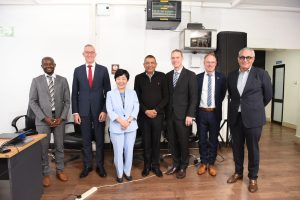
Merck’s Head of China and International, and member of the company’s Healthcare Executive Committee, Hong Chow, emphasized that the initiative demonstrates Merck’s long-term commitment to improving healthcare access across Africa.
“This partnership combines global innovation with local expertise to address one of the continent’s most persistent health challenges,” she said. “By enabling local manufacturing, we ensure that solutions are both sustainable and accessible to those who need them most.”
German Ambassador to Kenya, Sebastian Groth, who delivered the closing remarks, said the German government continues to support partnerships that strengthen healthcare systems and promote industrial development in Africa.
“We are stepping in to strengthen health partnerships like this one because external aid from key players such as USAID has been reducing in recent years,” he said. “Germany remains committed to working alongside Kenya to ensure that local manufacturing continues to grow and that communities have access to essential medicines.”
The envoy added that the collaboration between Merck and Universal Corporation represents practical cooperation that delivers both health and industrial benefits. “This initiative not only addresses a pressing medical need but also contributes to Kenya’s economic and technological advancement,” he noted.
The local production of the pediatric Bilharzia medicine will support the government’s Universal Health Coverage (UHC) program and the National Neglected Tropical Diseases Master Plan 2023–2027, which aims to eliminate schistosomiasis and other NTDs through prevention, treatment, and health system strengthening.
Hong Chow reaffirmed Merck’s long-term vision for Africa, saying the company’s focus extends beyond medicine donations to sustainable development.
“Our mission is to build resilient health systems by investing in local manufacturing capacity and empowering countries to tackle diseases independently,” she stated.
The partnership is expected to position Kenya as a regional pharmaceutical manufacturing hub, combining public health priorities with economic growth while reinforcing long-term collaboration between Kenya and Germany.
By Grace Naishoo