The Ministry of Energy has rolled out a Sh1.4 billion rural electrification project in Kericho County, confirming the government’s commitment to extending electricity access to remote parts of the country.
The initiative, implemented under the Rapid Results Initiative (RRI), is set to connect more than 14,000 households to the national grid by the end of 2025.
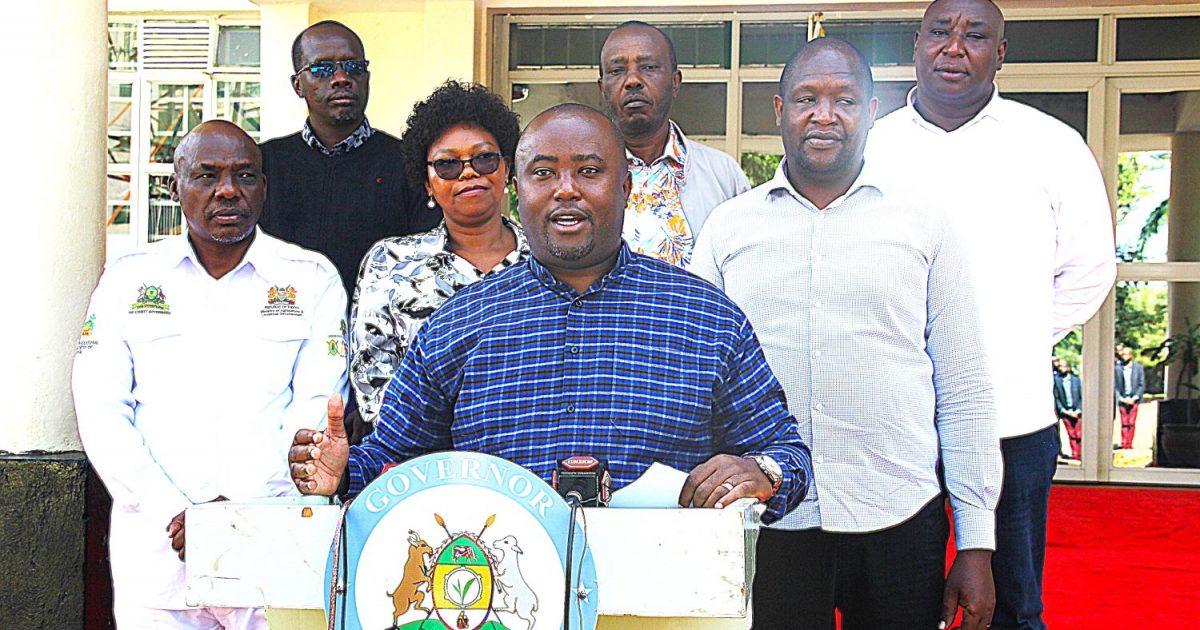
Speaking during the official launch of the Kericho County Electricity Master Plan at the county headquarters, Energy Principal Secretary Alex Wachira said the programme represents the government’s commitment to translating policy into meaningful progress.
“This project is not merely a policy commitment on paper. It represents tangible action taking shape on the ground. Kericho is among the priority counties identified for the immediate rollout of the Last Mile Connectivity Project, and we are here to oversee the commencement of this vital investment,” said Wachira.
The electrification effort, which commenced in April, began with wayleave acquisition, material procurement, and the mobilization of contractors, Wachira revealed.
The energy PS confirmed that fieldwork has already started in Ainamoi, Kipkelion East, Kipkelion West, and Soin/Sigowet constituencies, where additional symbolic launches are expected in the coming weeks.
While briefing Kenya News Agency (KNA), Wachira asserted the government is working under strict timelines to fast-track access to electricity and stimulate socio-economic growth in rural areas, noting that the target is to have all identified households metered by the end of the year.
He emphasized that electricity supply transform lives through ripple effect by enhancing education, healthcare, small businesses, and agricultural productivity.
Wachira confirmed that the Kericho project will connect 14,630 households and is part of a wider national strategy that includes ongoing electrification efforts in 35 other counties adding that the remaining 12 counties, mostly in arid and semi-arid regions, will be covered under the Climate-Resilient Off-Grid Solar Access (COSA) programme, expected to be introduced soon.
“We still have about 4.8 million households without electricity. We aim to connect at least one million more by December 2026, bringing that number down to 3.8 million,” Wachira noted.
In addition to new connections, the Ministry is working to strengthen the reliability of existing infrastructure. A recent audit by Kenya Power found 48 non-functional transformers in Kericho County. Wachira said these would be replaced in the next one month under a separate RRI programme.
“We are not only focusing on new connections—we are also fixing what has broken down,” he said.
However, the PS expressed concern over growing cases of vandalism targeting electricity infrastructure, warning that it could derail development.
“I echo the Governor’s sentiments—this must stop. Unscrupulous individuals are destroying public assets. We are working with law enforcement to ensure they are apprehended. This is sabotage, and it won’t be tolerated,” he warned.
He called on local communities to take responsibility for safeguarding infrastructure, emphasizing the importance of public ownership in sustaining development gains.
“Electricity is not a luxury—it is a fundamental right. What we are doing here today reflects the government’s promise to deliver inclusive, transformative development. Kericho County is now firmly on the national power map,” said Wachira.
The Kericho County Electricity Master Plan, launched during the event, is expected to serve as a long-term blueprint for energy development in the region. It aligns with the national drive to achieve universal electricity access and supports the government’s Bottom-Up Economic Transformation Agenda (BETA).
By Gilbert Mutai