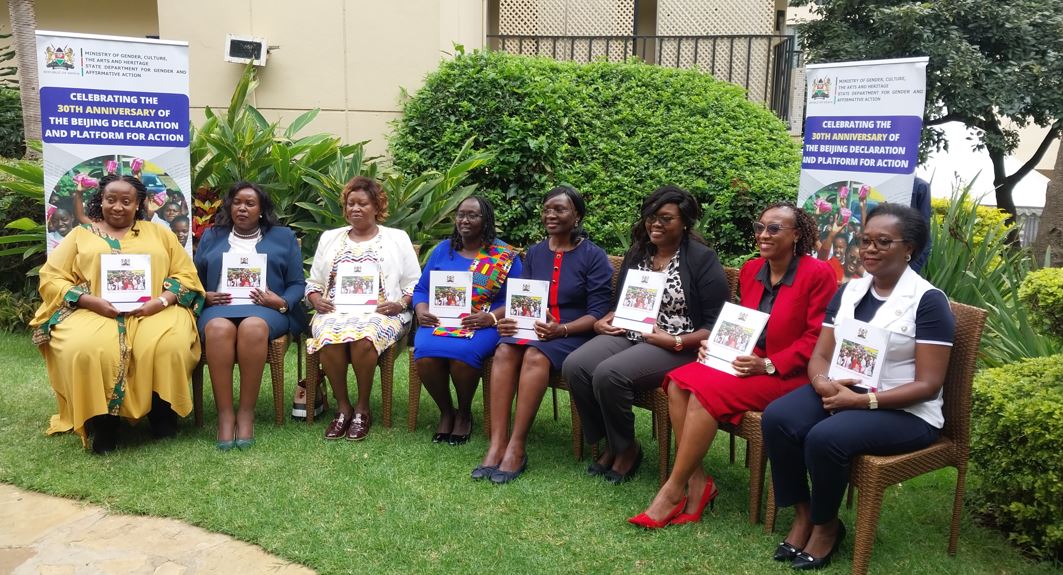
The Government of Kenya has reaffirmed its unwavering commitment to achieving gender equality and eliminating Female Genital Mutilation (FGM), aligning its national agenda with the outcomes of the 69th United Nations Commission on the Status of Women (CSW69).
Speaking during the event in Nairobi, Cabinet Secretary for Gender, Culture, the Arts, and Heritage Hannah Wendot Cheptumo emphasized the urgency of translating global commitments into local action.
“This forum is not just a reflection point but a platform for catalyzing implementation. We must go beyond conversations and ensure the voices of women and girls inform policy and drive change at all levels,” said Cheptumo.
She stressed the need for stronger partnerships, improved data systems, and targeted investments to address entrenched inequalities and harmful practices, particularly FGM.
“Today’s meeting offers a unique opportunity to reflect on our achievements, share lessons, and push forward with the goal of leaving no one behind in the journey towards gender equality,” she added.
Bernadette Loloju, CEO of the Anti-FGM Board, expressed concern over the persistence of FGM, especially among refugee populations and displaced communities.
“Even with declining national statistics, some communities still report FGM rates above 90%. What’s more alarming is the rising trend of medicalization and cross-border FGM,” she cautioned.
Loloju called for integrated, community-led interventions and stricter enforcement of anti-FGM laws.
“A woman who has not been cut is less likely to cut her daughter. Breaking intergenerational trauma is key. Survivor voices and Gen Z champions must lead this movement,” she stated.
Highlighting initiatives like the “Dear Daughter” campaign and the Survivor Movement, Loloju reaffirmed the need for a multi-sectoral approach involving the health sector and regional collaboration through mechanisms such as the East African Community FGM Bill.
Verity Mganga, Director of Gender Policy, Research, and Documentation in the State Department for Gender and Affirmative Action and Kenya’s CSW69 coordinator, provided an overview of Kenya’s engagement in the global gender discourse.
“The CSW69 was a landmark session. Kenya submitted its sixth national Beijing+30 review, which shaped both regional and global outcome documents,” she said.
Further, Mganga outlined the six priority areas of the Beijing+30 Action Agenda: poverty eradication, freedom from violence, inclusive development, gender-responsive institutions, climate resilience, and meaningful youth participation.
“We are not just reviewing commitments. We are domesticating them. A national action plan has been drafted, and moving forward, all actors, state and non-state, must align their programming with these priorities,” she affirmed.
The Ministry of Gender committed to circulating the draft national action plan for stakeholder input, aiming for its integration into national strategies.
As Kenya commemorates 40 years since hosting the 1985 Nairobi World Conference on Women, it positions itself as a regional leader in gender justice, determined to eradicate FGM and ensure gender equality by 2030.
By Brenda Oluoch and Amina Bakari