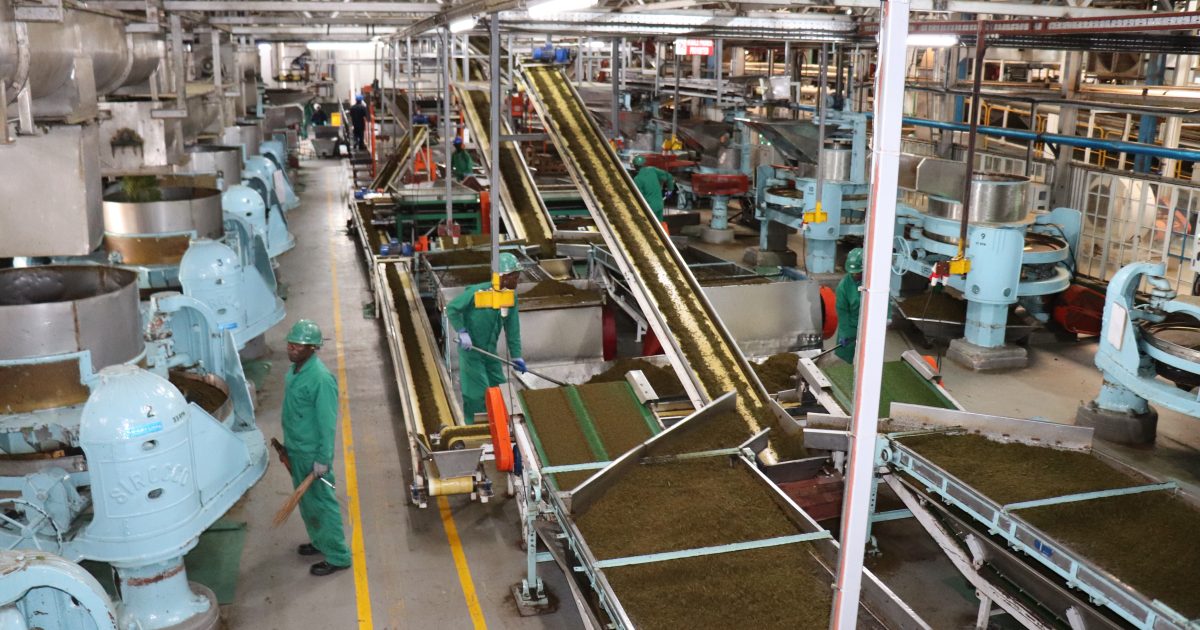
A multinational tea company headquartered in Kericho County has commissioned an upgraded Orthodox tea setup in one of its tea factories that is set to produce 3 million kilograms of premium orthodox tea every year.
Browns Plantation Kenya Limited launched the new line at its Kitumbe Factory under the Milima mark signaling a significant shift towards high-value specialty teas that will strengthen Kenya’s position in the global premium tea market.
In a press report sent to newsrooms, Browns Plantation Kenya Limited Chief Executive Officer (CEO) Mr. Dushanth Ratwatte noted the expansion signals a clear focus on value addition.
“Our investment in Orthodox tea capacity is a strategic decision to maximize the value of tea grown in Africa.” he said.
The Browns Plantation Kenya Limited CEO added that the company plans to continue increasing capacity across its factories.
“By expanding our Kitumbe Factory and commissioning more additional capacity in other factories along the way, we enhance product quality and market competitiveness. This benefits our customers with premium products, uplifts local smallholder farmers, supports their livelihoods and contributes to the sustainable growth of the Kenyan tea industry.” observed Mr. Ratwatte.
The development gives Kenya an opportunity to compete more effectively with traditional Orthodox producers in Asia in addition to targeting international buyers who pay more for specialty teas than for the black CTC varieties.
According to market data contained in the report, Orthodox teas often fetch between $ 3 and $10 per kilogram at the specialty auctions in comparison to an average of $2.28 per kilogram for black CTC teas which dominate Kenya’s tea exports.
The milestone comes shortly after the Milima Estate Black Orthodox (OP) Tea secured second place at the 2025 Gold Medal Tea Awards during the North American Tea Conference held in September at Charleston, North Carolina.
Browns Plantations Kenya Limited is drawing on extensive expertise from its parent company’s Sri Lankan operation that has been a pioneer in cultivating and processing specialty teas.
Sri-Lanka is well renowned for Orthodox tea and the report notes that Browns Plantations Kenya Limited has been a pioneer in cultivating and processing specialty varieties.
This expertise enables the company to implement world-class agronomic practices, quality control systems and innovative processing techniques, ensuring that every leaf meets the highest global standards.
By applying these best practices in Kenya, Browns Plantations can accelerate the growth of its premium tea portfolio, enhance product consistency and deliver teas that compete on international specialty markets while simultaneously supporting local small holder tea farmers through knowledge transfer and sustainable farming practices.
Browns Plantations Kenya produces a range of teas, including CTC, Orthodox black, green and purple teas.
Its tea products are exported to markets such as UK, Egypt, Pakistan and the United States. Some of their globally sought after specialty brands include Chemase that is Kenya’s first organic tea, Milima, Bondet and Masingi which is 100 per cent plucked leaf from smallholder tea farms.
The company operated more than 5,000 hectares of tea and 2,000 hectares of forestry with four tea factories, nine estates and a sawmill while promoting sustainable and socially responsible practices, including community empowerment, diversity, inclusion and child safety.
It is co-owned by the local community which holds a 15 per cent stake through the Kipsigis Highlands Multipurpose Co-operative Society.
CTC Tea that stands for Crush, Tear and Curl is created using machinery and it produces a strong, fast brewing black tea in granular from that is frequently consumed tea in Kenya while Orthodox tea is created using a more traditional method where the leaves are rolled by hand or with less intense machinery resulting in larger whole leaf tea that has a more complex flavor.
by Sarah Njagi