Farmers in Murang’a County are increasingly turning to fruit farming, citing higher yields and improved profitability.
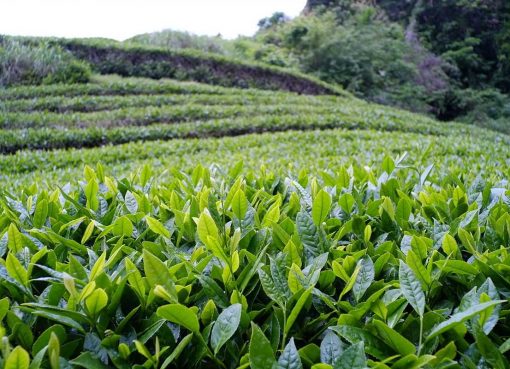
They say fruit farming offers better returns compared to traditional tea and coffee farming, which has long dominated the region.
Across various parts of Murang’a County, fruit farming is emerging as a profitable alternative, with farmers reporting improved incomes and more stable returns.
The farmers say the shift is driven by rising market demand for fruits and the need to diversify income sources amid fluctuating earnings from tea and coffee.
They are now calling for the formation of cooperative groups to help them access affordable farm inputs, receive technical support, and collectively penetrate larger markets.
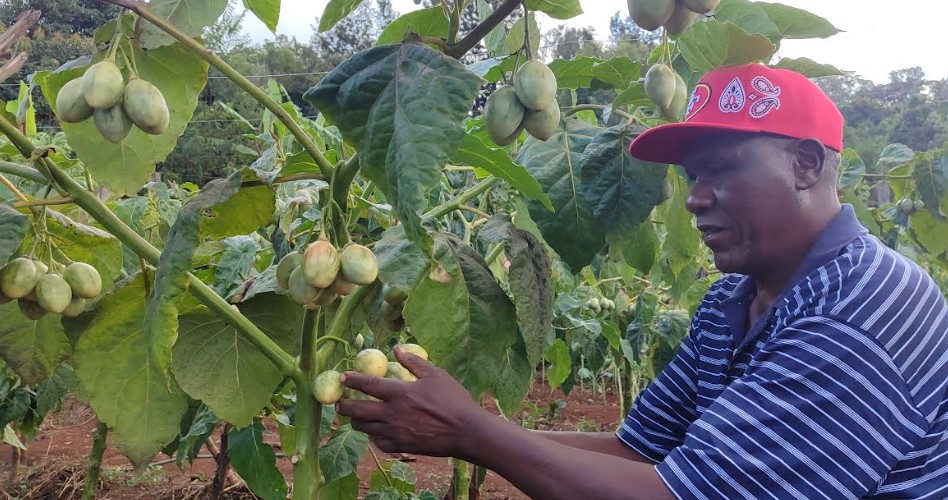
In Kamune, Mathioya Constituency, farmers have embraced the cultivation of fruits such as tamarillo and passion fruit, locally known as karakara, alongside the avocado fruit, Mangoes and macadamia.
Kenya News Agency visited Fredrick Muya’s farm, a retired teacher whose vast experience in farming goes way back to 2003.
He says the move followed the identification of a market gap and growing demand for the fruits both locally and beyond the county.
“We realised there was a ready market for these fruits, and the returns are much better compared to what we were getting from tea and coffee,” he adds.
From Hass avocados to coriander, passion fruits, and a variety of herbs like rosemary, lemongrass, mint, and hibiscus to vegetables and now the blossoming mouthwatering tamarillo fruit and passion fruits, Muya not only grows crops but also champions healthy soil and ecosystems by using natural inputs.
“I am keen on producing crops that I can encourage my family to consume by eradicating overuse of synthetic fertilisers to avoid degrading the environment and compromising on the soil health,” he says.
Muya, who farms alongside his wife, noted that soil testing before planting has been critical to the success of the venture, as it helps determine soil nutrient levels and guides proper crop management.
“Testing the soil helps us understand what nutrients are required for better production.
It has helped us improve both quality and yield,” he explained before taking us through the process of planting to harvesting of the tamarillo fruit.
Tamarillo (solanum betaceum) requires moderate, well-distributed rainfall, temperatures of between 15 to 20 degrees Celsius and a soil pH of five to 8.5.
“There are over six varieties of the tree tomato but what we have planted on our farm is the Ruby Red variety, which is fast maturing and quite resistant to pests and diseases,” he says.
Other varieties include the Ecuadorian orange, gold mine, Inca gold, Red oratia, Rothame, Solid Gold and Yellow and are differentiated by colours ranging from yellow and orange to red and purple.
Planting holes should be dug 30 to 45cm deep with a diameter of 60cm to accommodate a sufficient volume of manure.
Transplanting is done when the seedlings are between 60 to 70 days old or when the seedlings are 20 to 30cm long the crop should be planted in deep holes to protect them from winds.
“After planting, the fruits are ready to be harvested from 9 months but commercially from one year and can be harvested all year long for up to seven years,” he says, adding that, “Each fruit tree produces an average of 60-100kg of fruits annually and we sell a kilo locally at Sh200 at the nearby Othaya market and its environs.”
Tree tomatoes require regular watering, which is a major challenge to this venture, especially with the changes in climate and low rainfall patterns.
He has over 1000 tamarillo fruits on his 5-acre piece of land.
Muya reckons that adoption of organic farming practices has helped address crop diseases while reducing production costs.
Common pests include aphids, whiteflies, and spider mites, but the Muyas do not use synthetic fertilisers to curb this.
“We use the locally available natural materials to make botanical pesticides like the Sodom apple, Mexican marigold, tigonia, garlic, rice husks and tobacco,” he observes.
“For the fruit whiteflies, we use cow milk, either fresh or fermented (Mala) to get rid of them at the early stages before they become widespread.”
He, however, has called on agricultural extension officers to intensify training on modern and sustainable farming techniques.
“Organic farming has helped us manage pests and diseases more effectively, but we need more training from extension officers to fully embrace modern production methods.”
He advises farmers to avoid overuse of synthetic fertilisers, which make the soil too acidic and this gives the fruits a bitter-sour taste and subsequent losses.
The transition to fruit farming has also attracted many young people, who view it as a viable opportunity for self-employment and a reliable source of income.
Some of the youth involved say they are already seeing positive results and renewed hope through fruit farming.
“Fruit farming has given us hope. It is creating jobs for young people and showing us that agriculture can be profitable,” said a young farmer, Moses Mwangi, who had visited the Muya farm to learn more about the crop management.
Mwangi has 300 stems of tamarillo fruit and over 200 passion fruit crops on his farm at Kieni village, Kamune.
He emphasised the importance of forming cooperative societies, saying collective action would enable them to buy inputs at lower prices, access expert advice, and negotiate better prices in larger markets.
“Working as groups will help us reach bigger markets and reduce the cost of inputs. It also gives us a stronger bargaining power,” added Mwangi.
By Florence Kinyua