Murang’a County has emerged among the top-performing counties in the absorption of development funds during the first quarter of the 2025/2026 financial year, according to a report released by the Controller of Budget (CoB).
The report shows that Murang’a ranked seventh nationally after spending 16.6 per cent of its total expenditure on development projects during the period under review.
The county joined a select group of devolved units that demonstrated strong commitment to financing development initiatives despite prevailing fiscal pressures.
According to the report, Isiolo County led nationally after allocating 26.6 per cent of its total expenditure to development projects in the first quarter.
Isiolo was followed by Nyandarua at 23.0 per cent, Kirinyaga at 21.9 per cent, Taita Taveta at 18.8 per cent, Nyamira at 18.1 per cent, Elgeyo-Marakwet at 17.8 per cent, and Murang’a at 16.6 per cent.
The Controller of Budget noted that the performance of these counties stood out at a time when many devolved units continue to struggle to strike a balance between recurrent and development expenditures.
The report underscored that prioritising development spending is critical in achieving long-term economic transformation at the county level.
During the reporting period, county governments collectively received Sh13.94 billion from their own revenue sources, representing 15 per cent of the annual own-source revenue target of Sh93.89 billion.
Despite the relatively low revenue inflows early in the financial year, the top-performing counties demonstrated prudent planning and efficient utilisation of available resources.
The report highlighted that development expenditure plays a central role in driving economic growth, infrastructure expansion, job creation and improved service delivery, which are core objectives of devolution under Kenya’s Constitution.
“Development spending is critical in driving economic growth, infrastructure expansion, job creation and service delivery, which are core objectives of devolution,” read part of the report.
The Controller of Budget further emphasised that high absorption of development funds depends on effective planning, timely procurement processes and disciplined financial management.
Counties that commence project implementation early in the financial year tend to realise better value for money and minimise the accumulation of pending bills.
In addition to development expenditure, the report also assessed county performance in own-source revenue collection.
Samburu County led in this category after achieving 40 per cent of its annual revenue target, followed by Garissa at 36 per cent and Narok at 35 per cent.
Kitui and Mombasa counties recorded 22 per cent each, while Vihiga and Baringo stood at 21 per cent.
Homa Bay and Lamu counties each achieved 20 per cent of their respective targets.
However, the report also revealed persistent challenges across several counties, noting that 20 devolved units, including Baringo, Bomet, Kilifi, Kisumu, Wajir and West Pokot, recorded zero development expenditure during the same period.
The data highlighted ongoing difficulties in initiating and implementing capital projects early in the financial year.
Commenting on the report, Murang’a Governor Irungu Kang’ata called for cautious interpretation of development expenditure data, noting that such figures do not always capture the full scope of impactful public spending at the county level.
Speaking to KNA via phone, Governor Kang’ata cited expenditures on bursaries, hospital drugs, Early Childhood Development and Education (ECDE) feeding programmes and other social interventions, which are classified as recurrent spending despite their significant social and economic impact.
“Some expenditures which are not directly under the development category have a much greater impact on the people.
Counties with low development expenditure should not be vilified without examining all the facts,” said Kang’ata.
He explained that under Public Sector Accounting Standards and the Controller of Budget framework, several social programmes are categorised as recurrent rather than development expenditure.
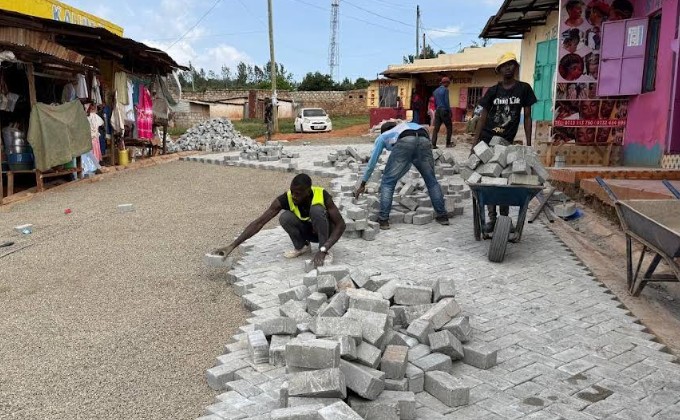
The governor further stated that Murang’a County has invested heavily in programmes such as the smart city initiative, including the tarmacking of markets, youth empowerment programmes, and the distribution of certified maize seeds and fertiliser to support farmers.
He also noted that some county projects are implemented through government-to-government arrangements, which do not require conventional procurement processes and may not immediately be reflected in development expenditure reports.
Governor Kang’ata additionally pointed out that the initial implementation challenges associated with the national e-Government Procurement (e-GP) system have slowed development procurement across many counties.
“The e-GP system is important for transparency, but its early implementation phase has delayed procurement and, consequently, development spending in many counties,” he observed.
By Bernard Munyao