

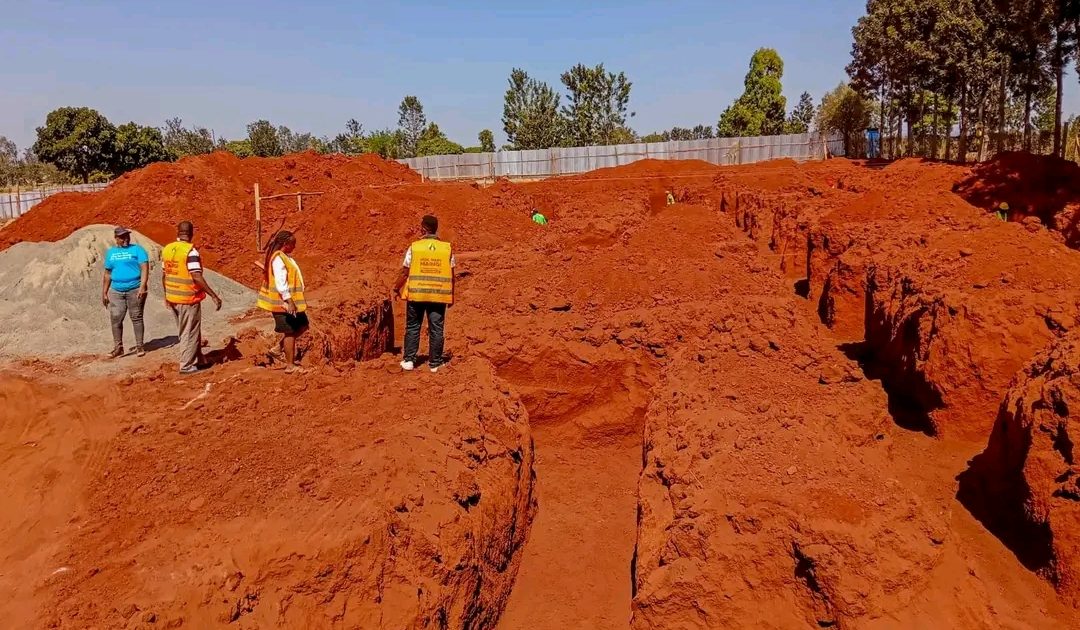
The construction of the Mwea Technical and Vocational Education and Training (TVET) hostel facility has officially begun, marking a significant milestone in strengthening technical education infrastructure in the region.
With foundation works already underway, the project represents a major investment in the future of young people pursuing practical and skills-based training.
Once completed, the modern hostel facility will provide more than 630 housing units, accommodating over 1,000 students.
This development is expected to greatly improve access to safe, affordable, and convenient accommodation for learners, many of whom currently face challenges securing suitable housing near the institution.
By offering on-campus or nearby residential facilities, the hostel will reduce commuting time, enhance student safety, and promote academic focus.
The new hostel is designed to create a conducive and stable learning environment that encourages innovation, enterprise, discipline, learner-collaboration and personal growth.
With improved living conditions, students will be better positioned to concentrate on their studies and fully participate in training programs. The facility will also include essential amenities aimed at promoting comfort, hygiene, and overall well-being.
Education stakeholders and community leaders have welcomed the project, describing it as a timely intervention that addresses a critical gap in student welfare. For many learners, especially those from disadvantaged backgrounds, access to affordable accommodation remains a major barrier to completing technical training.
The Mwea TVET hostel seeks to bridge this gap and ensure that no student is left behind due to housing challenges.
Beyond improving student welfare, the project is expected to generate positive economic impact for the surrounding community. During the construction phase, local workers, suppliers, and service providers are benefiting from employment and business opportunities.
Once operational, the hostel will continue to stimulate economic activity through increased demand for goods and services.
The development aligns with the government’s broader agenda of promoting technical and vocational education as a key driver of economic growth. Investing in technical skills is a strategic step toward in addressing unemployment and preparing young people for the demands of the modern job market.
Through hands-on training and industry-relevant programs, TVET institutions equip learners with practical competencies that enhance their employability and entrepreneurial potential.
As the country continues to focus on industrialization and innovation, skilled technicians, artisans, and technologists remain essential to sustaining development. Facilities such as the Mwea TVET hostel play a vital role in creating an enabling environment where these skills can be nurtured and refined.
The project stands as a symbol of commitment to youth empowerment, education, and sustainable development. Upon completion, the hostel will not only transform student accommodation but also reinforce Mwea TVET’s position as a center of excellence in technical training.
By David Wandeto

