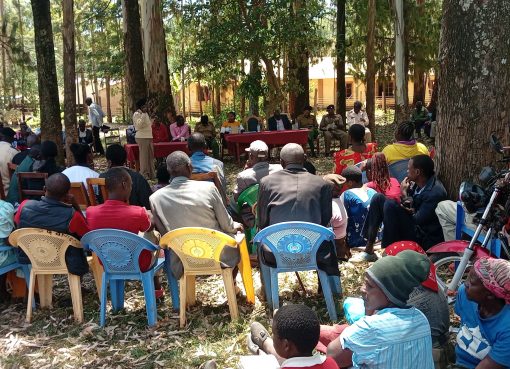
The Nakuru County administration is implementing various tax reforms, including reforms in the tax regime, through harmonization of fees and elimination of non-tariff barriers to trade, to boost the region’s attractiveness for investors.
The devolved unit has been reviewing a multiplicity of levies and taxes that are affecting the intra-county and inter-county trade, thereby discouraging investments while increasing prices for the end consumer.
Deputy Governor David Kones stated that growing agribusiness and small-scale trade were fueling new demand for financial services as farmers and entrepreneurs seek fairer access to credit.
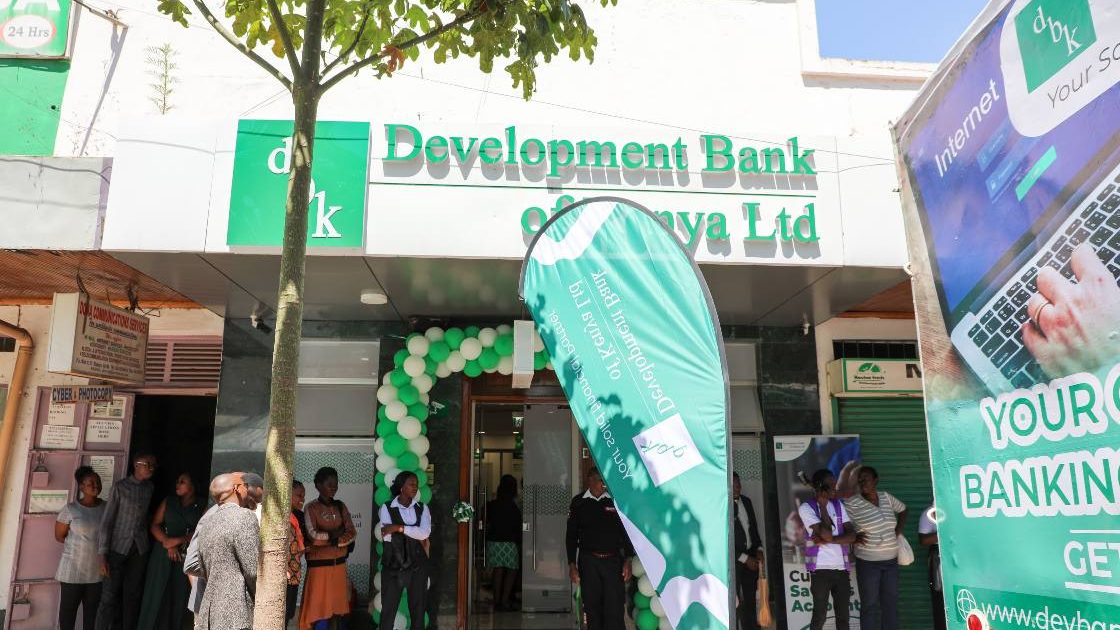
Speaking when a mid-tier lender, Development Bank of Kenya (DBK), opened its branch in Nakuru, Kones said that the financial institution will support farmers and traders by making banking services more accessible to enterprises.
The Deputy Governor said improved access to loans would help unlock the county’s economic potential.
“By supporting Micro, Small and Medium Enterprises (MSMEs) and farmers, the Development Bank of Kenya is becoming a partner in Nakuru’s journey of transformation,” he said.
Emphasising that Nakuru is regarded as a key food basket in Rift Valley, Kones said the County was keen to lure investors to its vibrant agricultural sector to add value to its products and gain direct sales of its farm produce to foreign markets, including East African countries.
The county is one of the leading producers of potatoes, carrots, milk and vegetables, among other crops.
DG Kones added that the County was solidifying her position as a prime investment destination through the creation of a conducive environment for business growth adding that the vibrant economy and deliberate policies were meant to attract investors to continue bearing fruit, with the latest entry being the Development Bank of Kenya (DBK).
Kones noted that the County was further committed to averting situations where businesses incur costs in multiple permits and licenses over and above the single business permit.
He added that they were committed to actively pursuing interventions that would make Nakuru the economic powerhouse of the region, thereby positioning it as the destination of choice where trade and investment thrive.
Kones indicated that Governor Kihika’s administration had mapped its trade and investment prospects, adding that it was pursuing active partnerships to unlock its potential.
The Deputy Governor indicated that the expansion underscores Nakuru’s growing significance as a regional hub for commerce, investment, and innovation.
He welcomed DBK’s arrival, highlighting its timely entry as a vital complement to the county’s development agenda.
The opening of the DBK Nakuru branch marks the third location for the bank after Nairobi and Mombasa.
Kones said the partnership was essential in building resilience among the local entrepreneurs, promoting value addition in agriculture, supporting industrial growth, and ultimately creating employment opportunities for the residents.
He added that the expansion underscored Nakuru’s growing significance as a regional hub for commerce, investment and innovation.
The Deputy Governor indicated that traders across the county were set to benefit from easier business operations with the implementation of the County Licensing (Uniform Procedures) Act, 2024.
He explained that the legislation aimed at standardizing licensing procedures across all 47 counties, eliminating current inconsistencies and bureaucratic hurdles that often hinder business growth.
Kones said the State Department for Investment Promotion (SDIP), in collaboration with the Council of Governors (COG) and key stakeholders, was currently developing comprehensive regulations and guidelines for the effective implementation of the crucial Act.
The Deputy Governor pointed out that the successful implementation of the County Licensing (Uniform Procedures) Act, 2024, would be a crucial step towards creating a more business-friendly environment in Kenya and unlocking the country’s economic potential.
He affirmed that the new legislation is targeted to improve the working environment for business people and traders at the county level by creating an equal and efficient means of paying for licenses across all counties.
“When devolution came into being in the country, it did not provide a uniform way of licensing traders thus licensing procedures, methods and fees vary from one county to another,” Mr. Kones said.
He noted that sometimes business people could own similar businesses in different counties but are charged differently, even owning different licenses,, which contributes to the country being ranked low in terms of ease of doing business.
Mr Kones indicated that the law serves to direct the county government to come up with regulations that will serve within those specific counties.
He said the county will aim to create a good working relationship between licensing officers and vendors in order to reduce the high incidences of harassment and intimidation experienced by members of the public.
The deputy governor said the amended law is beneficial to the consumer and the government, as it will ease the cost of doing business and further enable young people to get licenses at affordable prices.
Among the areas where the county assemblies may enact further legislation on this Act include singular license application framework, categorization of licenses, forms of license application and fee payment or refund for the applicants.
County Director for Trade, John Macharia, pointed out that attracting and retaining investments entailed businesses partnering with the county government to enhance development through building infrastructure, restoration of natural resources and offering productive jobs in order to raise the living standards for every resident throughout the devolved unit.
He noted that economic survey findings by various institutions show Nakuru was fast rising to become the most preferred investment destination for local and international investors.
It is projected that the county has an economic potential worth Sh200 billion in agricultural value addition, manufacturing, geothermal exploration, tourism, and real estate.
Results of a survey released by the Institute of Economic Affairs show it is easier to start a business in Nakuru town compared to five other populous urban areas.
Economists attributed this mainly to the reduced tax burden that has made it more attractive to investors. The study gave the county an overall score of 89 in the tax sub-cluster, followed by Eldoret (78) and Machakos (67).
The bottom three in the category were Kisumu (64), Nairobi and Mombasa at 56 and 54 respectively. The county saw its land prices rise by an average of 12.7 percent in 2017, according to the 2018 County Land Price Report.
In addition, the economic potential of the county was captured in a 2015 World Bank survey, which showed the county’s gross domestic product per capita at $1,413, the fourth-highest in Kenya after Kiambu, Nyeri and Kajiado.
Mr. Macharia pledged that toward transforming Nakuru into a more economically vibrant city that will rival Nairobi, the county administration had embraced smart master planning.
This, he added, involves properly designating outlying areas for new industrial locations, residential estates for both the higher and middle classes and other institutions and provision of supporting infrastructure.
Mr. Macharia affirmed that the county government would continue to leverage the economic activities with natural resources in the county like the lakes and the game parks.
DBK Chief Executive Officer Mr. Johnson Kiniti emphasized Nakuru’s strategic importance within Kenya’s “financial corridor” that stretches from Mombasa to Kisumu.
He affirmed the bank’s commitment to transforming potential into tangible growth by providing much-needed capital to Small and Medium-sized Enterprises (SMEs) and supporting agricultural value chains.
Mr Kiniti also noted that the bank will collaborate with the County Government to identify other priority areas for capital injection, effectively addressing the county’s financial needs.
Nakuru is also banking on geothermal energy to bolster its economy, where the Director said due to the ongoing geothermal production, they were anticipating a boom in the geothermal industry in the county, which will in turn open some of the most exciting investment opportunities for investors.
“Various investors have shown interest in putting up industries in the county because of affordable power. We want geothermal energy to support the economic fortunes of Nakuru,” said the Director.
In Naivasha’s Olkaria area, the state-controlled Kenya Electricity Generating Company (KenGen) is putting up several power plants to produce more energy. And in Menengai, 20 kilometres from Nakuru Town, the state-owned Geothermal Development Corporation (GDC) has completed drilling several geothermal wells.
The geothermal steam wells at the crater have a capacity of 105 megawatts with the potential to attract easy ‘green’ funding for new investments.
Investors are expected to tap into areas such as large-scale greenhouses, meat processing plants, and the manufacture of geothermal gases such as carbon dioxide and hydrogen sulphide among other areas.
The national government in August 2019 gazetted 1,000 acres of land at Satellite near Maai Mahiu as an industrial zone, which will host the much-awaited Naivasha Industrial Park.
Nakuru also boasts tourism sites like Lake Naivasha, Lake Nakuru National Park, Hell’s Gate National Park, Lord Egerton Castle, Mount Longonot National Park and Crescent Island, among others. Naivasha and Nakuru towns are also sailing on their global fame as conference centres with companies flying in to hold corporate meetings, creating an insatiable demand for new hospitality facilities that can cater to large delegations of people.
By Esther Mwangi