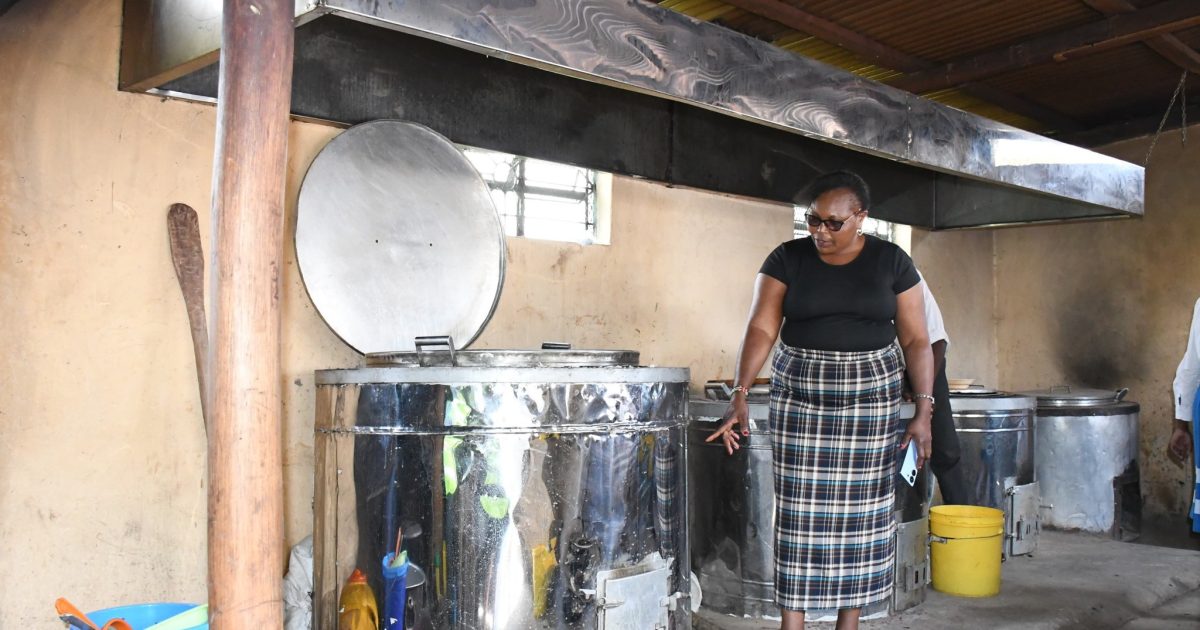
The County Government of Nakuru is stepping up efforts to accelerate adoption of modern clean cooking technologies to mitigate effects of climate change and reduce cases of diseases caused by dirty fuels.
Deputy Director of the County Delivery Unit, Mr Clement Ndung’u, said the County government was conducting a public awareness campaign on promotion of clean cooking as a way of supporting the national government’s Clean Cooking Strategy that was formulated by the Ministry of Energy and Petroleum
The Clean Cooking Strategy is meant to improve Kenya’s access to improved clean cooking solutions in addition to keeping Kenya on track to achieving its target of universal access to clean energy by 2028.
The Deputy Director explained that the devolved unit had already rolled out a programme to install modern and environmentally friendly cookstoves in learning institutions, adding that overreliance on traditional fires and traditional cookstoves and fuels was one of the most pressing health and environmental problems that call for urgent action.
Speaking after overseeing installation of environmentally friendly cooking stoves at Saint Peter’s Engashura Primary School, Nakuru Workers Primary School, Central Primary School and Rurii Primary Schools, Mr Ndung’u indicated that the initiative was delivering value by supporting school operations, safeguarding the health of staff and promoting sustainability through reduced fuel use.
He noted that the World Health Organization (WHO) estimates that 84 per cent of Kenyan households primarily rely on solid fuels such as wood, charcoal and crop residues that emit toxic fumes and contribute immensely to indoor pollution.
“The World Health Organization identifies household air pollution as a global environmental risk, causing some 1.6 million premature deaths per year worldwide,” he added.
The County Official appreciated that cooking had become faster, cleaner, and more efficient in all schools where they had installed the modern, environmentally friendly cook stoves, with Kitchen staff saying to report that fuel consumption had dropped significantly and meals were prepared on time.
“Health issues for schools’ workers are no longer a concern and workloads for teachers have been lightened, leading to a more productive environment for both staff and learners,” the Deputy Director elaborated.
Mr Ndungu noted that Governor Susan Kihika’s Administration was carrying out the ‘Clean Cooking Awareness Campaign’ in all the 11 Sub-counties in collaboration with public and private sector players.
He said the initiative to promote clean cooking included climate friendly efficient biomass stoves and fuel switching from solid biomass and kerosene to clean and environmentally friendly options.
These options, he elaborated, also includes biogas, bioethanol, liquefied petroleum gas (LPG), solar photovoltaic (PV) and electric cooking
Modern cooking stoves, the official explained, were highly efficient and could reduce fuel use by up to 60 per cent, resulting in fewer emissions of greenhouse gases.
The Ministry of Health estimates that about 23,000 deaths in Kenya are attributed to household air pollution annually, with 59 per cent of households in Kenya said to use traditional fireplaces for cooking, while only 30 per cent are said to have access to clean cooking solutions.
Indoor pollution disproportionately affects women, girls and children who spend extended time looking for fuel and cooking meals, thereby bearing the brunt of exposure to long hours of a smoky kitchen environment.
Ndung’u noted that modern cooking fuels alleviate the need to extract biomass energy sources such as wood fuel from forests and ecosystems, thus contributing to the preservation of the environment.
He stated that the campaign will be useful in positively influencing public knowledge, attitudes and social norms related to cooking behaviour in households with respect to climate-friendly cooking solutions.
Ndung’u said over 93.2 per cent of rural households use wood fuel (fuelwood or charcoal) as their primary fuel, while 30 per cent of the population use Liquefied Petroleum Gas (LPG), with only 3 per cent of households owning an electric cooking appliance.
“Statistics show that cooking contributes to 70 per cent of the GreenHouse Gas emissions in Kenya,” added the official.
Article 42 of the Constitution guarantees Kenyans the right to a clean and healthy environment, achieved through legislative and other measures.
The County Efficiency Monitoring Officer, Mary Wachera, observed that while some Kenyans know the negative impact of cooking smoke, many were not aware of how clean and efficient cook stoves and fuels could benefit them on a daily basis.
She explained that smoke from dirty fuel contributes to a range of chronic illnesses and acute health impacts such as early childhood pneumonia, emphysema, cataracts, lung cancer, bronchitis, cardiovascular disease, and low birth weight.
She encouraged all stakeholders to embrace clean cooking innovations to ensure the government strategy was achieved, adding that the national government had committed to reducing its greenhouse gases by 32 per cent by 2030.
By Esther Mwangi