The County Government of Nakuru is drafting a workplace policy aimed at enhancing the psycho-social and mental wellness of employees.
The policy seeks to ensure sensitivity to workers’ needs by establishing sustainable mental health interventions for improved quality service delivery.
The draft policy is being crafted to set standards for workplace counselling and wellness services among the employees, establish a coordinated framework for such programmes, and operationalise counselling and wellness services across the departments.
County Executive Committee Member (CECM) for Public Service, Training and Devolution, Mr Ambrose Ngare, indicated that the proposed policy seeks to align mental health services with the Constitution of Kenya, National and Global health agendas.
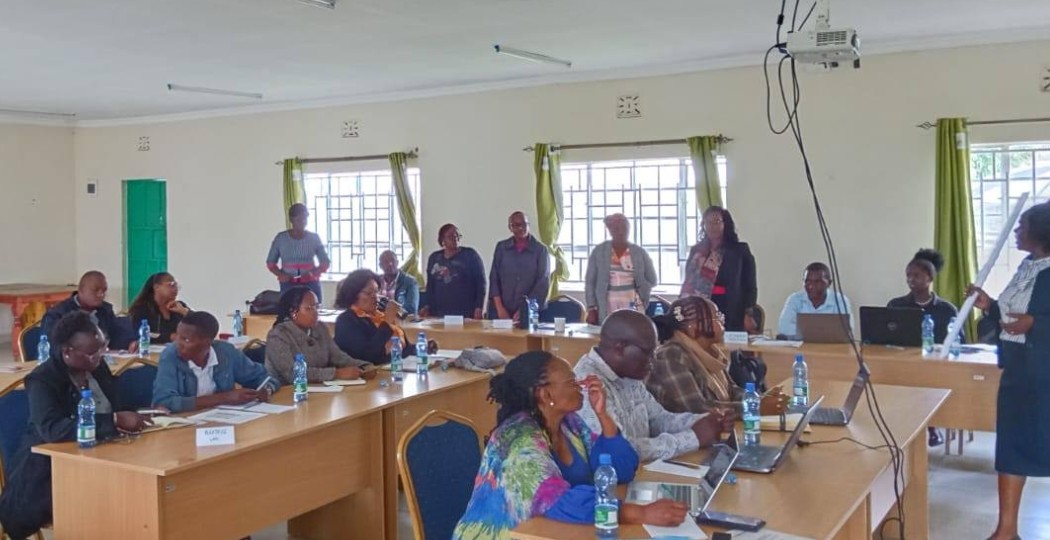
While addressing a panel that is developing the comprehensive ‘Nakuru County Public Service Counselling and Wellness Policy’ at the Agricultural Training Centre (ATC), Mr Ngare said the policy is being prepared to address the systemic challenges, respond to emerging trends and mitigate the burden of mental disorders in the workplace.
“Prioritising employee welfare is essential to boosting productivity and ensuring efficient county operations. We envision a public service where every officer steps into their workplace feeling supported, not sidelined by health worries. That is the Kenya we want to build together,” he said.
He reaffirmed Governor Susan Kihika administration’s commitment to creating a conducive work environment and promoting the overall wellbeing of county staff.
The draft document that recognises the importance of employing a multi-sectoral approach in addressing mental health issues in the devolved unit also proposes integration of mental health services within all levels of the healthcare system and promotes respect and observance of the rights of persons with mental health challenges.
In line with global evidence-based practice, the CECM indicated that it is important to adopt the use of counselling and wellness services in dealing with mental health issues to maximise productivity of public servants for effective and efficient service delivery.
Mental health challenges are a global concern, with the World Health Organization estimating that at least 15 per cent of working-age adults had a mental disorder.
The Kenya Mental Health Investment Case (2021) showed the Mental Health conditions cost the country Sh62.2 billion, where the majority of this cost was attributed to absenteeism at 49 per cent and presenteeism (30 per cent).
Mr Ngare disclosed that the County Government is already implementing a range of preventive and promotional measures to address mental health challenges in the workplace in a move aimed at improving the well-being of its employees.
The CECM acknowledged that mental health posed a challenge across all departments and underscored the need for immediate action.
Mr Ngare indicated that they were investing in several mental wellness initiatives that were friendly to employers while creating an environment that allows workers of all cadres to freely share their personal problems and challenges at workplaces.
He said the county government was providing psycho-educational support to its workers, as there was an increasing demand for the services.
“Mental health challenges have a significant impact on productivity within the public service and there is a need to take urgent actions to reverse the worrying trends,” explained the CECM.
He suggested that once a mental health problem was detected or suspected among employees, supervisors should act immediately, bearing in mind that such cases ought to be treated as an emergency and not a disciplinary or human resource issue.
While acknowledging that mental health was a serious predicament in the country, he encouraged health workers to consult their superiors, peers, and family members when faced with difficult times, adding that all issues, irrespective of their magnitude, could be addressed.
He cited some of the Mental health issues, such as depression, stress, burnout, anxiety disorders, substance abuse, attention deficit hyperactivity, schizophrenia and bipolar disorder, among others, adding that the disorders were a silent pandemic afflicting public servants in large proportions and that the majority of them were triggered by both work-related and social issues.
To create a healthy workspace, Mr Ngare advised supervisors to understand the unique opportunities and needs of individual workers and interventions and good practices that protect and promote mental health in the workplace.
He said Governor Kihika’s administration had opened up channels of communication among all cadres of employees as part of ways of detecting any form of stress among them and was always keen to detect any trigger that may lead to depression, stress or mental illness and act immediately.
Mr Ngare at the same time warned that putting the mental health of workers on the back burner could lead to an increase in reported violent crimes, homicides, suicides, gender-based and sexual violence, and other crimes.
“Observations with regard to changes in personality of junior staff should be taken seriously by their superiors,” he advised.
According to the CECM, offering access to counselling services and mental healthcare and incorporating employee assistance programmes can aid employees in their struggles.
One of the most visible manifestations of the mental health challenge is suicide, estimated at about four cases per day by the World Health Organization.
Director of Human Resource Management, Ms Jackie Kangogo, underscored the importance of developing a comprehensive plan for training staff on prevention and identifying problems that will help in reviewing the mental wellness of the affected cases.
She indicated that holding regular inclusive and cohesive meetings, training staff, and offering psychosocial support will improve mental health among staff at the workplace and reduce mental disorders that sometimes lead to suicidal tendencies.
Ms Kangongo affirmed that employers have a responsibility to create a supportive workplace culture that promotes the well-being of the mind.
She added that offering flexible work arrangements could reduce stress by providing options like remote working, which allows employees to better manage their work-life balance.
Organisations, she suggested, should also provide mental health training for managers and employees to recognise signs of distress and know how to respond to them.
Principal Administrator Mr Gitonga Kinyanjui highlighted the need to embrace open and honest conversations within the family unit.
He explained that seeking professional counselling would help in navigating the complex emotions such as grief.
Mr Kinyanjui noted that addressing mental health required a multi-pronged approach that involves policies and community initiatives.
Recent studies have revealed that many middle- and top-level organisations in Kenya, including Government departments and agencies, are populated by workers who are suffering unattended from a wide range of mental illnesses, including depression, stress, anxiety, suicidal thoughts and anger.
By Jane Ngugi