Health professionals, caregivers, faith leaders and community organizations have called for a coordinated, medically led, and rights-based approach to disability management, warning that stigma, delayed intervention and inadequate caregiver support continue to undermine the wellbeing of Persons Living with Disabilities.
The call was made during Persons with Disabilities (PWDs) Day celebrations and an early Christmas event held at Reformed Baptist Church, along the Brooke–Kericho Road.
The Forum brought together children with disabilities and their caregivers for psychosocial support, medical sensitization and community engagement, with the children enjoying recreational activities, including trampolines and bouncing castles, as part of holistic care.
From a medical perspective, Ministry of Health physiotherapist Dr. Milka Wachuma said disability should be addressed as a public health issue, requiring early diagnosis, professional assessment and continuous rehabilitation, rather than ad-hoc charitable responses.
“Disability remains highly stigmatized in our communities, and many families are still hiding their children instead of seeking medical attention, yet when people remain hidden, we cannot assess them, guide them, or provide interventions that can significantly reduce the severity of disability,” Wachuma said.
She said the Ministry of Health used the Kericho Forum to sensitize families on the constitutional and health rights of persons with disabilities, while also registering individuals with special needs in order to prioritize them for medication, rehabilitation services and appropriate assistive equipment.
“When persons with disabilities are properly registered, it allows us to plan, prioritize and respond, based on medical evidence, so that each case receives care that is specific to their condition,” she said.
In an interview with Kenya News Agency (KNA), Wachuma cautioned donors and well-wishers against distributing assistive devices without medical input, warning that ill-fitting equipment can lead to postural deformities, pressure sores and increased dependency.
“Assistive devices must be prescribed after proper medical analysis and correct measurements because when the right equipment is provided, it improves mobility, reduces complications and in many cases enables children to access education and adults to participate productively in the economy,” she said.
She further emphasized prevention, noting that a significant proportion of disabilities can be avoided through skilled birth attendance, early screening and full childhood immunization.
“Preventive care begins before birth and continues in early childhood, and when mothers deliver in hospitals and ensure their children complete immunization schedules, we significantly reduce preventable disabilities,” Wachuma said.
Caregivers at the event gave a sobering account of the realities of daily care. Rahab Karemi, a caregiver, said families raising Persons with Disabilities face persistent emotional, physical and financial strain, often with minimal support systems.
“Caregiving is a full-time responsibility that comes with enormous challenges, including the high cost of medication, specialized diets, transport to health facilities and constant supervision, yet many caregivers have little or no source of income, because they cannot leave their loved ones unattended,” Karemi said.She said caregivers are also confronted with social stigma, isolation and psychological stress, as some community members still associate disability with shame or superstition.
“Many caregivers suffer in silence because of negative attitudes and lack of understanding, and this isolation affects not only the caregivers, but also the emotional development of Persons With Disabilities,” Karemi said.
Karemi called on families to come out and register persons with disabilities, so that they can access medical and social support, while urging schools and learning institutions, to adopt inclusive education policies.
“Children with disabilities deserve education like any other child, and schools must understand their needs and accommodate them rather than turning them away,” she said.
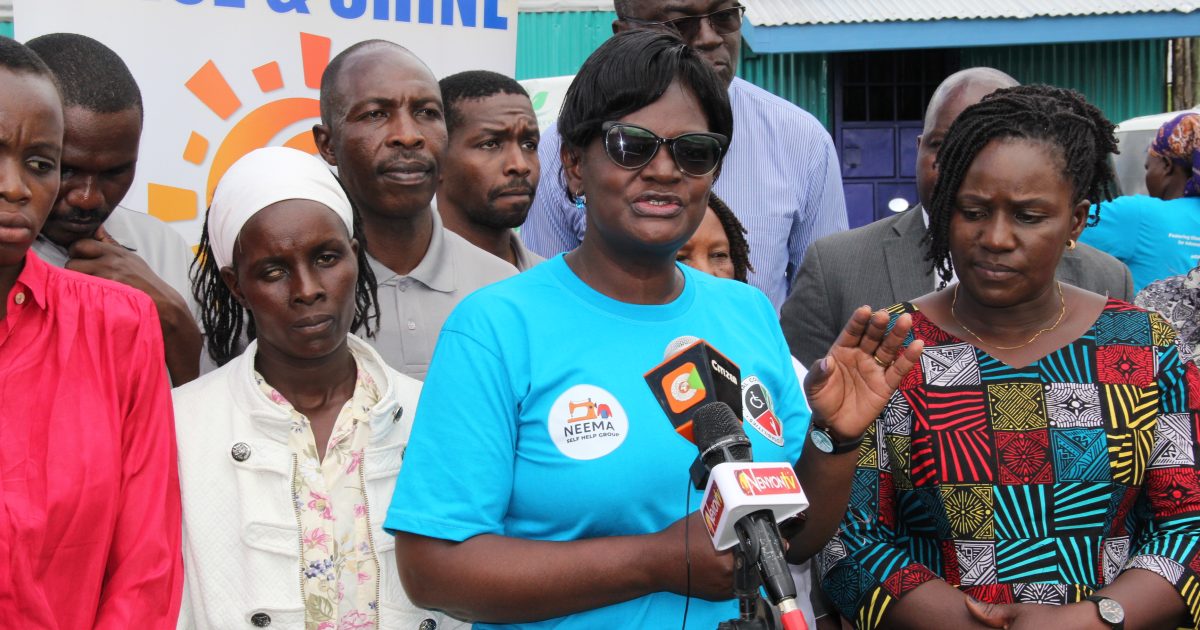
Providing organizational context, ‘Arise and Shine’ Community-Based Organization Founder Paulina Keno, said the initiative was founded in 2023, to respond to the growing needs of families caring for Persons With Disabilities, adding that the early Christmas celebration was meant to promote inclusion and dignity.
“Since the establishment of ‘Arise and Shine’ in 2023, many Persons With Disabilities, have benefited from our interventions, and today we found it necessary to come together with partners and well-wishers, to hold an early Christmas, so that these special brothers and sisters can feel included, supported and valued,” Keno said.
She said caregivers continue to struggle with the high cost of food, medication and essential supplies such as diapers, and appealed to both national and county governments to strengthen identification and structured support for households with members living with disability.
“Caregivers are under immense pressure, and we are appealing to the two levels of government to help identify these families and provide targeted assistance so that no one is left behind,” Keno said.
Faith leaders also underscored the need to abandon harmful cultural beliefs surrounding disability. Pastor Sam Oluoch of Reformed Baptist Church, Nairobi, urged the society to embrace informed and compassionate support, guided by professional advice.
“These are Kenyans who deserve dignity, care and opportunity, and we must shun stereotypes while seeking guidance from professionals who understand disability from a medical and social perspective,” Pastor Oluoch said.
In Kenya, Ministry of Health data indicate that early screening, skilled birth attendance and full childhood immunization can prevent or significantly reduce up to one-third of disability cases, while timely rehabilitation and appropriate assistive devices can markedly improve functional outcomes.
Stakeholders called for strengthened community-level screening, routine registration of Persons with disabilities, expanded access to physiotherapy and rehabilitation services, and closer collaboration between government, medical professionals and community organizations.
By Gilbert Mutai