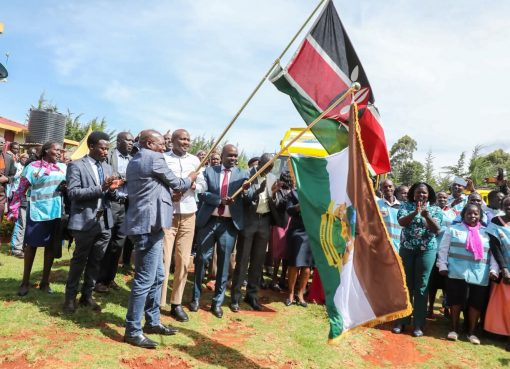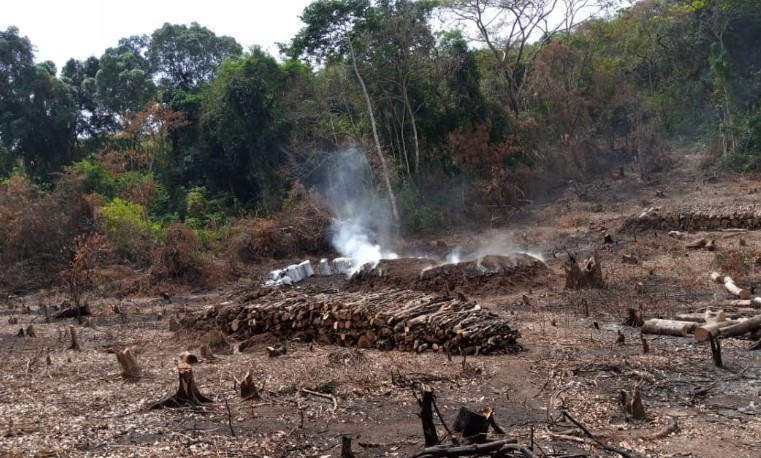
The National Council of Churches of Kenya (NCCK) has raised concern over illegal sand harvesting and charcoal burning within the lower eastern counties of Kitui, Makueni, Machakos and Kajiado.
The council lamented that continued charcoal burning and sand harvesting are major threats to livelihoods in the lower eastern region, as they have gradually had negative impacts, including deforestation leading to drying of water sources.
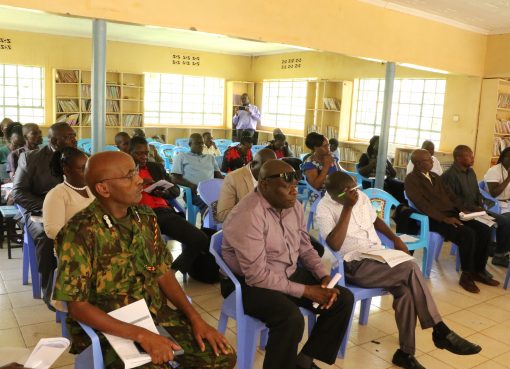
Speaking in Kitui, the lower eastern region NCCK chairman Major Leonard Kasyoka called upon Members of respective County Assemblies to swiftly enact laws that would help regulate both sand harvesting and charcoal burning across the four counties.
“Without a proper law in place, even the local security authorities have nothing to enforce, thus giving way to the malpractice,” Kasyoka said, adding that the church is committed to ensuring local communities protect the natural environment.
The lower eastern region NCCK chairman appreciated Makueni County government for being the only county amongst the four counties in the lower eastern region that has a working legislation on sand harvesting aimed at the protection of local rivers, which are mainly water sources for the area residents.
Kitui County early this year enacted a bill on sand harvesting in an effort to regulate its harvesting as well as protect the massive destruction of local rivers.
The national religious umbrella organisation has expressed concern over recent incidents involving the use of force against unarmed protestors during nationwide demonstrations.
NCCK Chairman Rev. Dr. Elias Ogola, while addressing the issue, noted with regret the rising tensions in the country and urged security agencies to exercise restraint. He affirmed the church’s commitment to advocating for the protection of constitutional rights, including the right to peaceful assembly and protest.
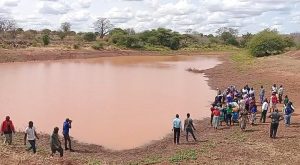
Ogola was speaking during the official commissioning of the Kaloyo Earth Dam water project at Kiseve village in Athi Ward, Kitui South Constituency. The church umbrella body is on a weeklong development visit in Kitui county.
Alongside Kaloyo dam, which was desilted at a cost of Sh2 million, the Council has also initiated several other projects, including sinking boreholes and constructing water kiosks for efficient supply of water to the local communities. The Council targets to spend Sh500 million to implement various water projects across Kitui South Constituency.
The NCCK is among several development actors in the private sector that have been working jointly with the national and Kitui county governments in the implementation of water projects aimed at alleviating water scarcity in Kitui county.
Aside from bringing water closer to the people for domestic use and livestock as well as small-scale farming, NCCK also directs efforts into the mitigation of gender-based violence (GBV) and teenage pregnancies that are quite prevalent across the vast Kitui South Constituency.
The county is among Kenya’s counties with high cases of GBV and a high number of teenage pregnancies.
In Kitui County, the pregnancy rate among girls aged 15-19 was 30 per cent, according to the Kenya Demographic and Health survey, 2022. This means that three out of every ten girls in that age group in Kitui County had experienced pregnancy.
By Denson Mututo