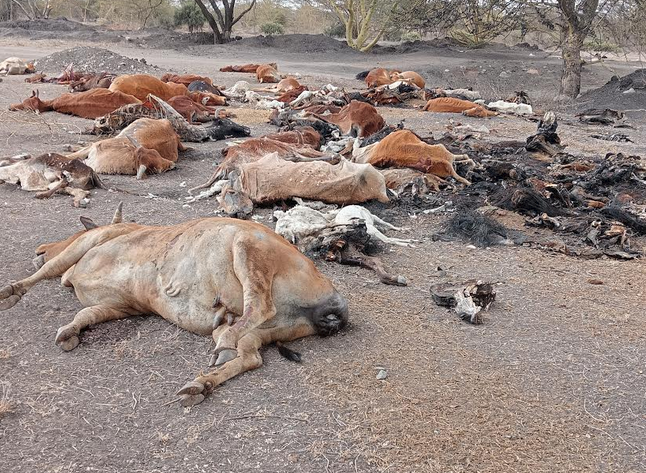
The National Drought Management Authority (NDMA) has raised alarm over worsening drought conditions in parts of the country, attributing the situation to the poor performance of the ongoing short rains season.
In its latest drought update, the Authority reports that Mandera County has escalated to the Alarm Phase, while nine other counties, Kajiado, Wajir, Garissa, Kilifi, Kitui, Marsabit, Kwale, Isiolo and Tana River, are now in the Alert Phase, requiring close monitoring due to emerging drought indicators and the growing risks to food security and water access.
Thirteen counties, including Samburu, Narok, Baringo, Turkana, Taita Taveta, West Pokot, Tharaka Nithi, Makueni, Laikipia, Embu, Nyeri, Meru and Lamu, remain classified under the Normal Phase but are showing a worsening trend. NDMA notes that several key livelihood zones in the counties are under increasing stress, particularly in relation to water availability and livestock conditions.
According to the update, an estimated 1.8 million people in the Arid and Semi-Arid Lands (ASALs) are currently food insecure.
The figure is projected to rise to about 2.14 million by January 2026 if the short rains continue to underperform.
The highest food insecurity burden is concentrated in Mandera, Turkana, Garissa, Wajir, and Marsabit counties, where residents are in urgent need of assistance.
NDMA adds that ongoing food support, both in-kind and cash transfers, is underway across all ASAL counties, with plans to scale up interventions in February 2026 should conditions deteriorate further.
Some of the livestock farmers in Kajiado County have already relocated their livestock in search of water and pasture, while some are already buying hay, a situation they say won’t be sustainable if the drought persists.
Kajiado West and Kajiado Central constituencies are the worst hit.
NDMA is closely monitoring the drought situation and disseminating drought early warning information to vulnerable communities to support timely preparedness action.
The Agency recommends development and implementation of early action protocols, with emphasis on anticipatory action, to reduce potential drought impacts.
by Diana Meneto