Suna West Member of Parliament Peter Masara has reaffirmed the government’s commitment to expanding access to higher education in the country.
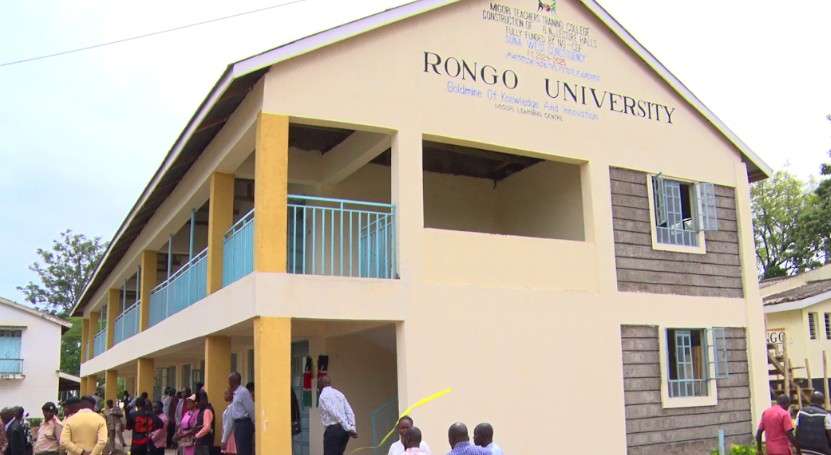
He cited the establishment of Rongo University’s campus within Migori town as a key example of this effort.
The new campus satellite in Migori town will stimulate the local economy besides creating employment for hundreds of the local people.
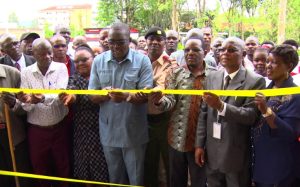
The MP stressed over the weekend during the official commissioning of a new storey tuition block constructed by Rongo University at Migori Teachers Training College (TTC).
Masara said the idea of bringing a university campus closer to the people was a long-standing vision of former county leaders to bring university services closer to residents of Migori Town and neighbouring sub-counties.
“I inherited this vision from our forefathers. Migori is the county headquarters, and it deserves a university within town for the benefit of civil servants, business people, and local residents,” Masara said.
The legislature encouraged residents to enrol their children at the campus, explaining that the proximity of the institution would significantly reduce the cost of university education by eliminating the need for accommodation.
“Bringing a campus closer to town reduces the cost of university education because students can attend classes and go back home. Accommodation takes the biggest share of university expenses,” he noted.
He also added that the presence of more learners in the town would stimulate the local economy through increased demand for housing, food services, transport, printing, and other student-related activities.
“When we have 2,000 or 3,000 students within Migori Town, they will need accommodation, food, transport, and other services. The local economy is going to change,” he said.
Masara confirmed that the TTC and Rongo University partnership followed all legal procedures, including approval by the institution’s board, the Ministry of Education, and Parliament.
He dismissed as untrue concerns that hosting the Rongo University campus at Migori TTC would interfere with the operations of the teachers’ college, stating that policy guidelines do not allow the closure of one learning institution to establish another.
“This project is not killing the TTC. The Ministry of Education policy is clear, and you cannot close one learning institution to create another. Both institutions will continue to operate,” he affirmed.
Further, he urged members of the public with reservations about the project to seek clarification from the relevant education offices, adding that the initiative is intended to benefit both the current and future generations.
“Those who have reservations should consult the TTC principal or the university administrator. This project is beyond politics; it is for the current and future generations,” he said.
The project, funded through the National Government Constituency Development Fund (NG-CDF) at a cost of Sh15 million, is expected to ease pressure on learning space and support the growing demand for university and diploma programmes in the county.
“This project received Sh12.5 million in the previous financial year, with an additional Ksh 2.5 million allocated this year to complete wiring, tiling, and the ceiling installation, bringing total investment to Ksh 15 million,” he outlined.
During the event, Prof. Wilson Otengo, the administrator in charge of the Rongo University Migori Learning Centre, said the campus operates under an open, distance, and e-learning model that accommodates students with work or family responsibilities through evening, weekend, and online classes.
Prof. Otengo said the institution is offering a range of degree, diploma, and certificate courses drawn from the university’s four schools.
“We have Bachelor of Arts, Bachelor of Commerce, and Bachelor of Science in Health Records and Health Systems currently running. Admission is ongoing for all these programmes,” he said.
He added that certificate programmes in library studies and information technology are also available, in addition to bridging opportunities for learners who may not qualify for direct entry into degree programmes.
Currently, there are more than 100 students already admitted in the current semester, and the January intake remains open, he said, revealing that examinations at the centre will be conducted between December 4 and 15.
He expressed optimism that the campus will gradually introduce full-time programmes as infrastructure and enrolment continue to grow.
By Polycarp Ochieng and George Agimba