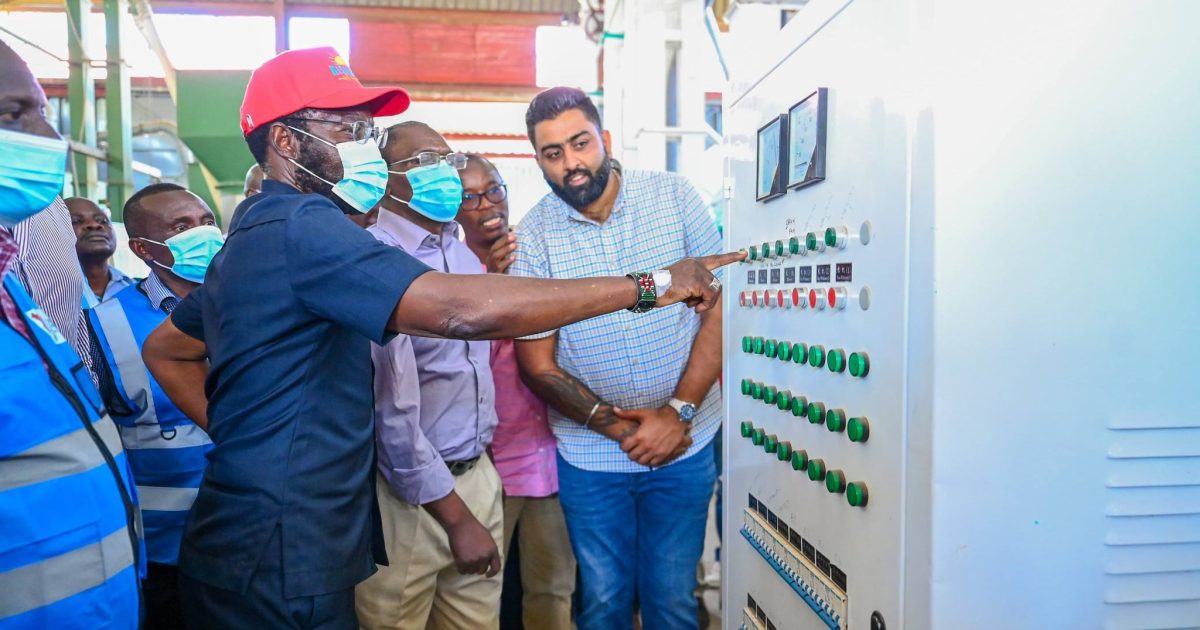
The National Irrigation Authority (NIA) has commissioned a 2.5 metric tons per hour rice milling facility in Ahero, Kisumu County.
The state-of-the-art facility is equipped with advanced automation systems, high-efficiency process design, and quality control technologies to produce high-grade quality rice of international standard.
Speaking during the commissioning, Kisumu County Governor Anyang’ Nyong’o, described the move as a step forward in marking a significant milestone in addressing food insecurity.
He explained that the investment would offer improved milling efficiency and reduced post-harvest losses, hence, a catalyst in the region’s economic growth.
“This is a milestone that represents a bold and strategic investment in our farmers and the economy. It offers a reliable, modern processing centre right at the heart of the production zone,” Prof Nyong’o remarked.
He noted that the ultra-modern multistage County Rice Mill with an output capacity of 2.5 metric tons per hour and approximately 60 tons per day comes timely as the government continues to exert efforts to boost domestic production and reduce reliance on imported milled rice.
The Governor observed that the new mill targets to link local rice farmers with quality inputs and services and influence sustainable development in the Ahero Irrigation Scheme – a food basket for the region.
Prof Nyong’o lauded rice farmers for their lifelong dedication and resilience highlighting their ability to withstand challenges such as fluctuating market trends and climate-related difficulties over the past years.
“Today’s commissioning exercise of a rice mill here, marks a shift from primary production to value addition; From subsistence farming to commercial agriculture; from vulnerability to competitiveness,” he assured.
The County boss added that the development will create significant employment opportunities for young people across the entire rice value chain from production and aggregation to packaging and distribution.
by Robert Ojwang’