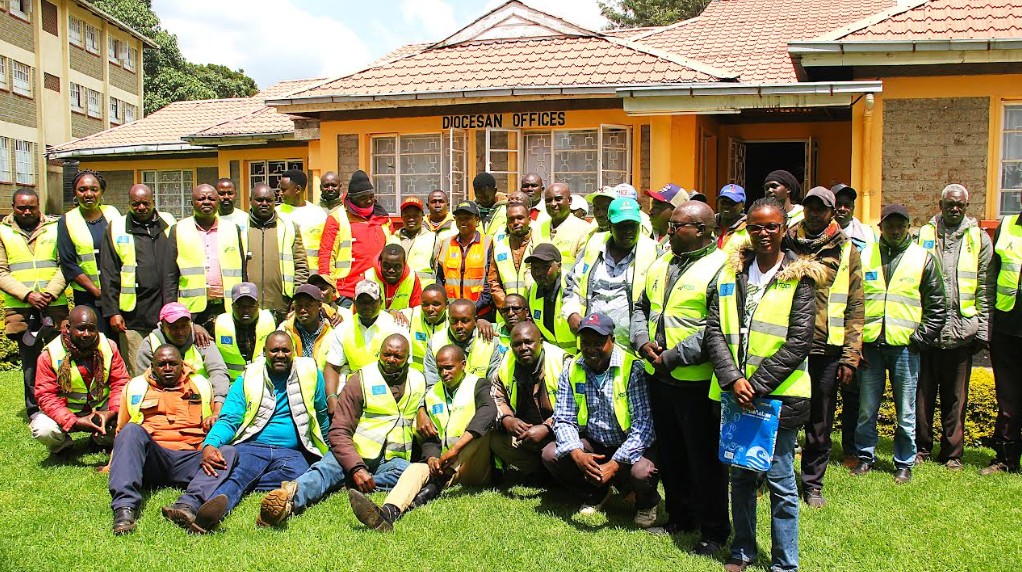
The National Transport and Safety Authority (NTSA) has, in partnership with Kericho County Transport and Safety Committee embarked on a structured engagement with boda boda riders across the county to facilitate a peaceful transition of leadership while strengthening adherence to road safety regulations
Speaking during a consultative meeting held at ACK Conference Hall in Kericho, NTSA Regional Manager Ascar David underscored the pivotal role that boda boda leaders played in promoting discipline and safety consciousness among riders.
Ascar noted that the sector has grown exponentially, becoming an essential player in the transport ecosystem, thus necessitating organised leadership and active involvement in county safety initiatives.
“We recognise that boda boda riders are at the heart of the county’s transport system, providing employment and critical mobility services. However, leadership within the sector must be well-organised and accountable to address challenges such as road safety compliance, which remains a priority for NTSA and the County Safety Committee,” she said.
Ascar further emphasised that the leadership transition process should be peaceful and transparent, adding that the engagement forums were designed to empower boda boda leaders with the knowledge and capacity to guide their members effectively.
Meanwhile, the Chairman of the County Boda Boda Operators Association, Edwin Koros, emphasised the association’s commitment to overseeing a smooth and orderly leadership transition aimed at fostering unity within the sector.
Koros noted that a well-managed transition is vital in promoting discipline and accountability among operators, emphasising the need for stage chairpersons to fully grasp their leadership responsibilities, particularly in enforcing road safety regulations and guiding riders on best practices.
He further commended NTSA and county authorities for their unwavering commitment to strengthening the capacity of boda boda leaders through continuous training and sensitisation programmes, noting that these initiatives have been instrumental in equipping sector leaders with essential skills and knowledge on governance, safety compliance, and effective rider management, thereby fostering a culture of responsibility and professionalism within the industry.
Also present at the forum was the County Emergency Services Coordinator Florence Wekesa, who echoed similar sentiments, emphasising the importance of rider safety, particularly during adverse weather conditions.
Wekesa urged operators to consistently wear protective gear, including helmets and reflective jackets, and to seek immediate medical assistance when involved in road accidents.
“As a county, we have established an emergency response centre at the Kericho County Referral Hospital, equipped with 12 ambulances ready to respond to accident scenes. Boda boda riders can reach us through the emergency hotline 0724 035 036 for immediate assistance,” Wekesa revealed.
She further noted that once registered under the Social Health Authority (SHA) scheme, riders are entitled to free emergency services, including evacuation and treatment for accident-related injuries, adding that the SHA package is designed to cushion operators from the high cost of emergency medical care while simultaneously promoting a culture of safety and responsibility among road users.
Wekesa observed that over the past five years, Kericho County has recorded a steady decline in boda boda-related accidents, attributing the positive trend to collaborative efforts between NTSA, the County Transport and Safety Committee, and boda boda leaders in promoting road safety education and enforcing traffic regulations.
“From an alarming average of over 20 cases per week five years ago, we are now reporting about five cases weekly. This is a significant milestone, but we believe there is still more to be done,” Wekesa added.
By Hillary Kemei