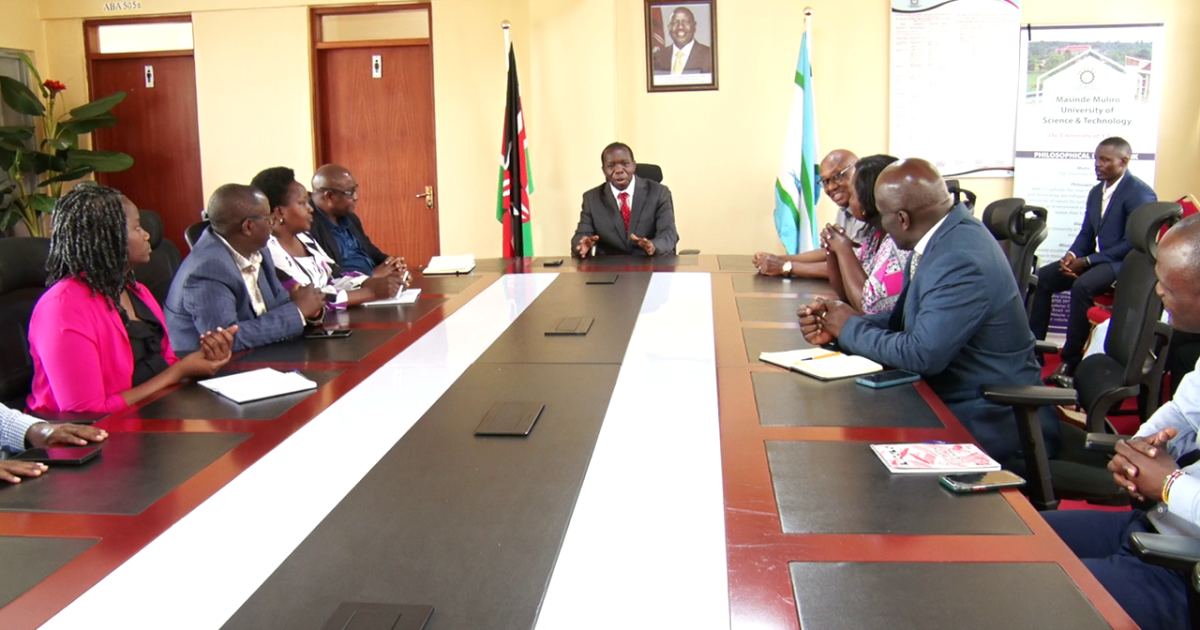
The Nuclear Power and Energy Agency (NuPEA) has kicked off negotiations with Masinde Muliro University to roll out a training programme for the nuclear energy workforce.
The construction of the nuclear power plant is expected to start in 2027 and will require over 10,000 workers in the nuclear industry including plumbers, masons, engineers among others.
NuPEA Chairman, Eng. Prof. Lawrence Gumbe together with CEO Justus Wabuyabo led a team from the agency to meet the Vice Chancellor of Masinde Muliro University of Science and Technology Prof. Solomon Shibairo on Wednesday in preparation for signing of the MOU.
Prof. Gumbe noted that the collaboration is a long-term initiative that will include partnership in carrying out research on nuclear programmes in more areas of its application like agriculture, medicine, engineering and weather forecasting.
“NuPEA has the legal mandate in Kenya of implementing the government’s nuclear power programme and also carrying out research in the areas of energy and petroleum,” Prof. Gumbe added.
The CEO, NuPEA pointed out that the collaboration will provide opportunities for Kenyans to train in nuclear energy technology to support the rollout of the programme in the country, giving an assurance that nuclear energy was safe as its construction is undertaken under the guidance of the International Atomic Energy Agency (IAEA), which puts in place very stringent safeguards.
Wabuyabo noted that they have already signed an MoU with Pwani University and are set to engage Jaramogi Oginga Odinga University, Kisumu National Polytechnic and other tertiary institutions to start preparing the workforce needed in the nuclear power plant.
He said the Agency is also actively engaging the public through public participation forums about the nuclear power plant urging the University management to be an ambassador of the programme.
“We are also going to engage with youth groups, church groups and also use the national leadership structures, so that we can get up to the grass root level and have a conversation with the people to let them know about this technology and assure them that it is safe and secure,” the CEO added.
MMUST Vice-Chancellor (VC), Solomon Shibairo, said the University has the capacity to start training students with the expectation that the university will roll out a diploma programme in nuclear technology in January 2026.
He said they will start with at least 25 students before growing the programme to a degree in future.
“We are crafting a diploma programme which takes a short period of time. If NuPEA wants it fast, then we will roll out the programme in January and we anticipate to enroll new students and in the long term, we shall also prepare masons, carpenters and many other specialists,” he explained.
The VC said nuclear technology is widely used in everyday life and that most people have at one time interacted with the technology during x-ray services, CT scan or Magnetic Resonance Imaging (MRI) through Nuclear Magnetic Resonance (NMR).
by Moses Wekesa