The Government has reopened the application window for the NYOTA Programme’s On-Job Experience (OJE) component in a renewed push to expand skills training and employment opportunities for vulnerable young Kenyans, Principal Secretary for Youth Affairs and Creative Economy Fikirini Jacobs has said.
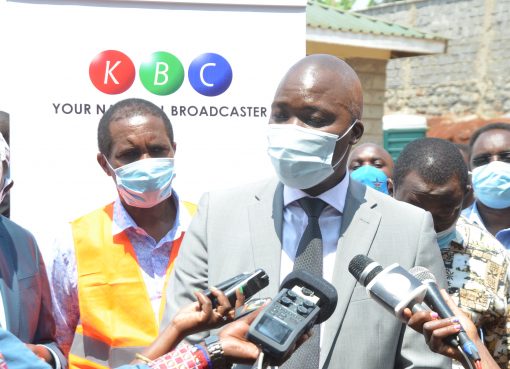
Speaking during a media briefing at the Talanta Plaza, Jacobs said the reopening targets young people who missed the initial intake under the multi-billion-shilling NYOTA Project, which aims to empower 820,000 youth nationwide at a total estimated cost of Sh20 billion.
He said the programme prioritises young people with low levels of education, including those who did not complete secondary school and those with no formal education, as well as refugees and youth facing multiple vulnerabilities.
“The NYOTA Project is one of the most significant youth empowerment initiatives in Kenya’s history. It is a Government project coordinated by the State Department for Youth Affairs and Creative Economy and funded through Government resources, including development loans,” Jacobs said.
The PS noted that the programme maintains a gender-balanced approach, with 50 per cent of beneficiaries drawn from male youth and 50 per cent from female youth, alongside a five per cent allocation through peer review mechanisms.
He added that the project also prioritises youth from refugee-hosting communities and those experiencing double vulnerability.
Under the OJE component, the Government plans to train 90,000 youth through a structured programme that combines technical skills development with workplace exposure.
Participants undergo a six-month training period, beginning with an induction that includes life skills and social-emotional learning, before being placed under experienced master craftsmen and women for hands-on training.
During this period, beneficiaries receive a monthly stipend of Sh6,000, aimed at supporting their participation and covering basic costs such as transport.
“These young people will be assessed and certified through the National Industrial Training Authority and NYOTA. By the end of the programme, they will have both skills and certification, improving their chances of securing employment locally or internationally,” Jacobs said.
After completing training, participants will be placed in employer organisations for an additional six months of apprenticeship, giving them a full year of combined training and workplace experience.
“By the end of this programme, a young person who previously had no skill or formal education will now have a recognized skill and one year of experience, significantly improving their employability,” he added.
Although 267,000 youth applied during the initial OJE application phase, Jacobs revealed that turnout during induction in some regions fell below expectations.
In counties including Homa Bay, Kisii, Nyamira, Bomet, Narok and Nakuru, only 6,000 out of an expected 16,000 applicants reported for training.
He said this shortfall informed the decision to reopen the application window, allowing more young people to benefit from the programme.
The reopened application process is accessible through the *254# financial inclusion platform and will remain open for two weeks.
“Young people interested in skill areas such as mechanics, cosmetology, construction and other technical trades now have another opportunity to apply,” Jacobs said.
He added that the move will also benefit youth who applied for the Business Support Component, which attracted more than two million applicants competing for 100,000 available slots.
“Young people who may not qualify for business grants can still gain employable skills through OJE and strengthen their economic prospects,” he said.
Jacobs also highlighted the Recognition of Prior Learning (RPL) component, which targets 20,000 youth who have acquired skills informally but lack formal certification.
“These are young people who can repair vehicles, construct buildings or perform technical tasks but cannot prove their competence. Through RPL, they will be assessed, certified and better positioned to compete for jobs,” he said.
He noted that more than 1,000 workers in the Affordable Housing Programme have already been certified under this framework.
“With Kenya expanding labour mobility opportunities abroad, certification is critical. Skilled youth without papers should not remain trapped in poverty,” he added.
The NYOTA Programme also includes training for 600,000 youth on Access to Government Procurement Opportunities (AGPO), equipping them to benefit from the 30 per cent procurement quota reserved for youth, women and persons with disabilities.
Jacobs cautioned that many young people have previously been exploited as proxy company directors by older business operators and said the training will help youth benefit directly from public procurement opportunities.
In addition, 10,000 youth-led social enterprises will receive training, equipment and business support to help them generate income and build sustainable ventures.
He said the NYOTA Programme builds on lessons from the earlier Kenya Youth Employment Opportunities Project (KYEOP), noting that NYOTA operates on a larger scale, covers all 47 counties, and emphasises transparency and public engagement.
“Unlike KYEOP, NYOTA involves county governments in implementation, conducts public disbursements and maintains open communication with stakeholders,” Jacobs said.
He added that several county governments have committed to waiving business licensing and trade fees for youth beneficiaries for periods ranging from one to five years, helping to reduce the cost of doing business.
Jacobs urged young Kenyans to take advantage of the reopened application window and encouraged the media to continue supporting awareness efforts around the programme.
“This project is transforming lives and creating pathways out of poverty for thousands of young people. Eligible youth should apply and seize this opportunity,” he said.
He described NYOTA as a major long-term investment in Kenya’s future, aimed at addressing youth unemployment, poverty and economic exclusion.
By Naif Rashid