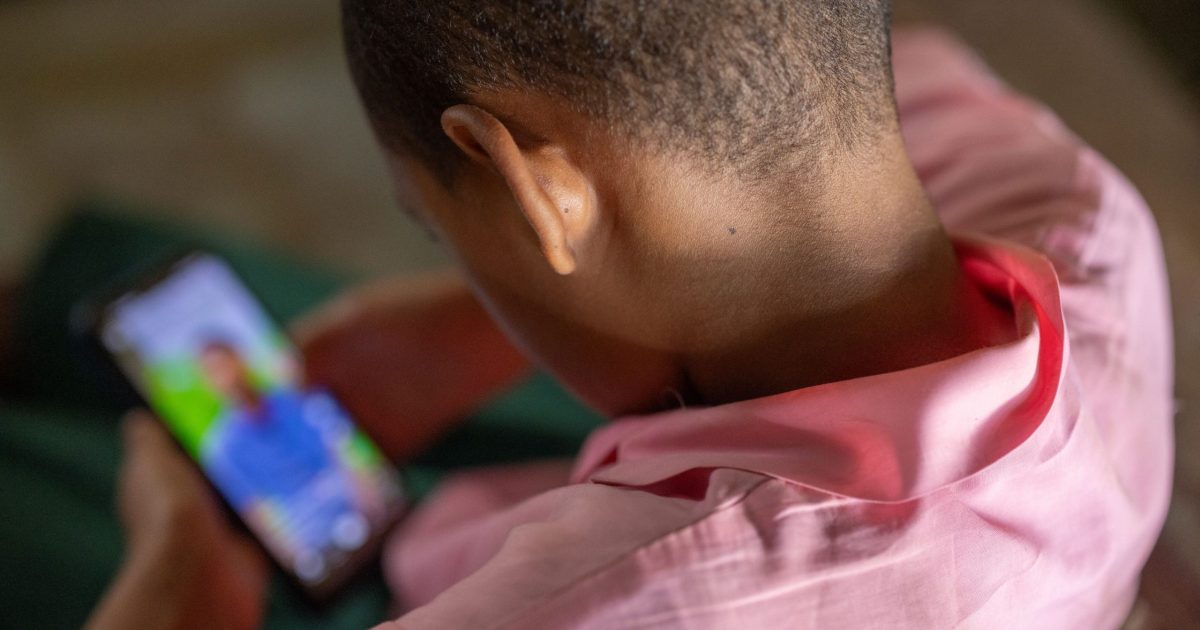
At just 23 years old, Irene Kinuthia has become a quiet force in the fight against online child exploitation in Kiambu County.
But behind her voice of courage lies a story of pain, fear, and an incident that changed the course of her life.
“I was 15. A stranger started sending disturbing messages to my mother’s phone,” Irene recalled, her voice steady but firm.
“He asked for photos. He said things that scared me. I didn’t know what to do. I thought I had done something wrong.”
With the support of her parents, Irene blocked the perpetrator and reported the case.
That experience, though traumatic, became a turning point. Today, she uses it as a rallying cry for action.
“I know how it feels to be confused and afraid. I want children to know it’s not their fault. There’s always someone who can help,” she told Kenya News Agency during an interview in Kikuyu Constituency.
Irene now works with local child protection organizations, leading awareness campaigns in schools and community gatherings. Her story is deeply personal—but sadly, not unique.
As digital access grows across Kenya, so do the risks. Children, often unsupervised and unaware, are vulnerable targets of online predators who use platforms like TikTok, WhatsApp, and Instagram to initiate harmful contact. Irene’s case underscores a disturbing trend that experts say is still vastly underreported.
“Online exploitation doesn’t always leave bruises. It leaves emotional wounds, shame, fear, and anxiety,” said Lucy Wanjiku, a children’s officer at Imani Children’s Center in Kikuyu.
And the worst part? Many children never report it.
A 2024 study on child trafficking in Kiambu County revealed that four percent of 109 confirmed cases involved online sexual exploitation. Nationally, the Disrupting Harm report found that an estimated 350,000 children aged 12–17 had experienced some form of online exploitation in the previous year. Alarmingly, fewer than five percent of these cases were reported.
Sometimes, the threats come not from strangers but from within the home. Henry Njau, Director of Children Services in Kikuyu, issued a strong warning to parents.
“When you give a child a smartphone but don’t teach them how to use it safely, it’s like handing them a knife,” he said. “We’ve even seen cases where parents exploit their own children online for financial gain. This is a crime and must be reported.”
Ignorance of digital tools is proving to be a major challenge. A national survey conducted earlier this year found that 39 percent of children believe their parents do not understand how digital platforms work.
In the same study, over 60 percent of parents admitted to lacking knowledge of online risks facing their children.
In response, child protection advocates are urging the government and civil society to scale up digital literacy efforts—particularly for parents, caregivers, and teachers.
“Technology itself isn’t the enemy,” said Lucy Wanjiku noting: “But it becomes dangerous when children use it without guidance or protection.”
Stakeholders at the recent Day of the African Child commemoration held in Kikuyu among them parents, community leaders, civil society groups, and government officials emphasized the need for stronger partnerships between schools, tech platforms, law enforcement, and families.
For Irene, sharing her story is not just about healing; It’s about preventing the next child from going through what she did. “Surviving that experience gave me a mission,” she said, “To protect others, to educate communities, and to show that speaking out can save lives.”
As she continues her work across schools and neighborhoods, Irene hopes her voice will inspire not just awareness but action.
By James Guchu