The Collaboration of Women in Development (CWID), a public benefit organization, is intensifying its advocacy efforts to combat entrenched corruption at the grassroots level through feminist networks.
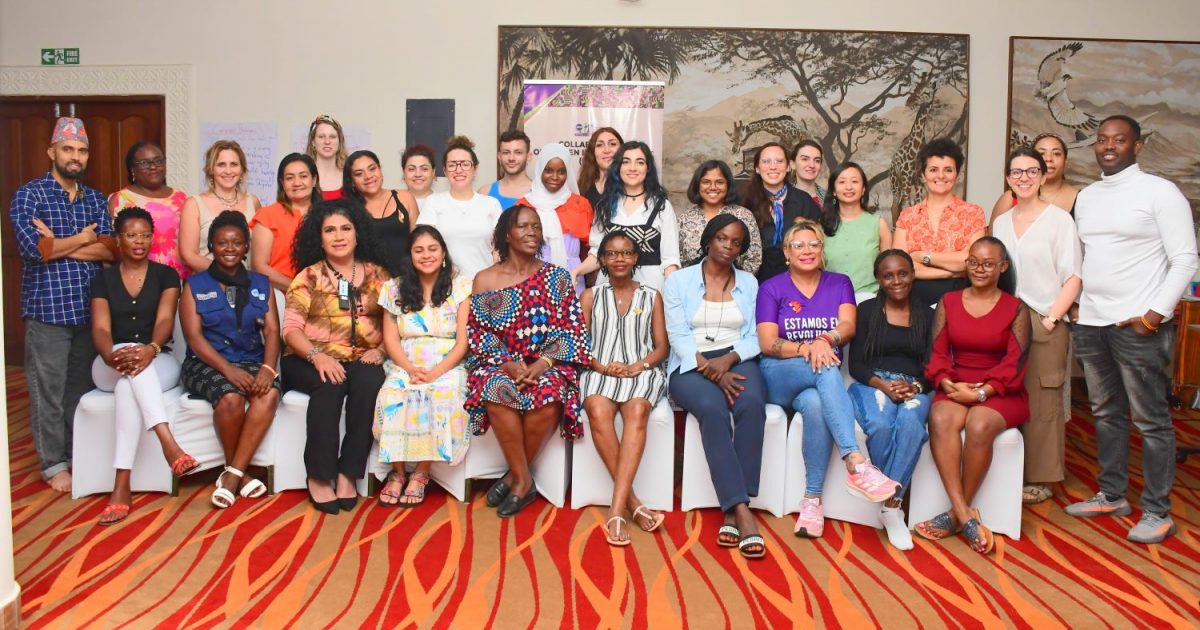
Speaking in Mombasa during a three-day workshop convened by the Global Fund for Women, with participants from Syria, Uganda, Kenya, Nepal, Armenia, Guatemala, and Mexico, the CWID ED, Betty Sharon, says they had a training and an exchange learning program on how to effectively deal with corruption.
Ms. Sharon explained that the participants are keen to know how corruption affects their organisations in their countries and how best they can stop corruption through the exchange of best practices, leveraging grassroots feminist networks.
“In many cases, when we talk about corruption, we only see corruption at the highest level, but we are forgetting that at the low level, we support corruption knowingly and unknowingly,” she said.
She noted that they have come up with an effective strategy of starting at the grassroots, as corruption mostly affects the common man, woman and child at the bottom of the pyramid.
“They don’t realise they are enabling corruption. They’re doing it unknowingly, but it strengthens corrupt systems. Corruption cuts across sectors and borders. It affects not only Kenya but also the other countries represented here, especially through gender-based violence,” Ms. Sharon added.
She further noted that women are disproportionately affected by both corruption and sexual violence. Many reports of sexual and gender-based violence (SGBV), she said, are dismissed or never make it to court due to corruption.
“People are corrupted left, right and centre, not the Police, the person handling that case and sometimes the guardian or the parent of the victim,” alluded Ms. Sharon.
On her part, the Executive Director and co-founder of the Syrian Female Journalists Network, Rula Asad, described the workshop as insightful, as they learned how different countries are doing to address corruption from a feminist perspective, and their focus on marginalised groups in the community.
According to the 2023 National Ethics and Corruption Survey conducted by the Ethics and Anti-Corruption Commission (EACC), 57.3% of the 5,100 respondents perceived the level of corruption in Kenya as high. Notably, 24.7% attributed this to the rising cost of living.
“Most respondents (44.7%) felt that corruption is increasing. The key reasons cited were: high cost of living (29%), more corruption cases being reported (20.7%), and lack of action to reduce corruption (8.1%),” the report stated.
The survey identified the Ministry of Interior and Coordination of National Government (47.1%), the Ministry of Health (13.2%), and the Ministry of Transport, Infrastructure, Housing, Urban Development and Public Works (5.8%) as the institutions where corruption is most likely to be encountered.
Among government departments and agencies, the Police (60.6%), the Immigration Department (4.4%), and the Registrar of Persons (4.0%) were perceived as most prone to corruption.
At the county level, County Health Services (39.1%), County Transport (11.9%), and Trade Development and Regulation (10.0%) were viewed as the most corruption-prone departments.
Government Departments and Agencies perceived to be most prone to corruption were: Police (60.6%), Immigration Department (4.4%) and Registrar of Persons (4.0%).
While in the County governments, County Health Services (39.1%); County Transport (11.9%) and Trade Development and Regulation (10.0%) were perceived to be the most corruption-prone County Government departments.
By Sadik Hassan