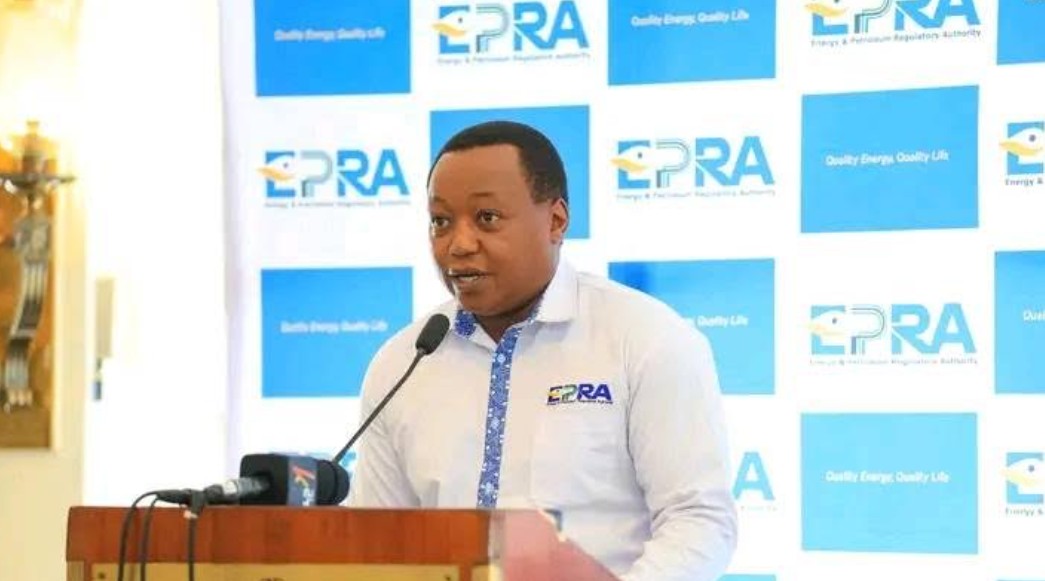
The Energy and Petroleum Regulatory Authority (EPRA) has initiated nationwide public consultations on a proposal by the Kenya Pipeline Company (KPC) to review Pipeline Transportation and Secondary Storage Tariffs for the 2025–2028 control period.
EPRA Director General Daniel Kiptoo said the exercise aims to promote transparency and inclusivity in determining new tariffs, in line with the Energy Act 2019 and the Constitution of Kenya 2010.
“Our Agenda is to discuss the Pipeline Transportation and Secondary Storage Tariffs as proposed by the Kenya Pipeline Company.
The review seeks to reflect changes in the operating environment, while maintaining a balance between cost recovery for Essential Infrastructure and Affordable Petroleum products for consumers,” said Kiptoo, in remarks delivered on his behalf by EPRA’s Head of Pricing and Tariffs, Waweru Karanja, during a Stakeholder Forum in Nairobi.
He revealed that EPRA had received an application from KPC seeking approval for a 2.4 per cent increase from the current tariff of Sh5.44 per cubic metre per kilometre, which was approved in September 2022 for the period ending June 2025. The new proposal, he said, will cover the next three-year period from July 2025 to June 2028.
Kiptoo emphasised that stakeholder consultations are a legal and constitutional requirement designed to ensure that all voices are heard before any tariff adjustments are made.
“This process embodies our shared commitment to transparency, accountability, and participation in regulatory decision-making,” he added.
The DG disclosed that KPC operates a 1,342-kilometre pipeline network, transporting petroleum products from Mombasa through Nairobi to Nakuru, Eldoret, and Kisumu, serving oil marketing companies under tariffs regulated by EPRA.
He noted that the current tariff had been extended beyond its original term to allow completion of the review process.
EPRA’s main objective, he explained, is to ensure cost recovery for infrastructure investments and operations while safeguarding consumer interests.
Kiptoo said that tariffs are influenced by several factors, including transportation distance, asset utilisation, operational costs, and Capital Investments. KPC’s proposed adjustments, he said, are intended to support Capital Expenditure, Operating Costs, and Maintenance needs for the 2025–2028 control period.
Among the key projects to be financed through the proposed Tariff, include the Eastern Pipeline Capacity Enhancement Project, construction of new storage tanks and flow-rate upgrades in Western Kenya, replacement of the ageing Enterprise Resource Planning (ERP) system, the establishment of a modern data and Control Centre (SCADA), and upgrading of obsolete Automatic Tank Gauging Systems.
“These projects are critical to meeting growing demand, enhancing efficiency, safeguarding assets, and ensuring business continuity,” Kiptoo said, noting that pipeline transportation remains 42 to 53 per cent cheaper than road transport, offering consumers a cost-efficient alternative.
He clarified that the consultations were based solely on KPC’s proposal and not a final decision. “EPRA, will assess the proposal fairly using the information and feedback from stakeholders before making a final determination,” he assured, urging participants to engage constructively and share views that would help balance operational sustainability with consumer welfare.
Speaking at the event, KPC Head of Corporate Planning, Elizabeth Akinyi, reaffirmed that KPC, remains fully government-owned and has operated since 1978, when the first Mombasa–Nairobi Pipeline was commissioned.
She explained that KPC’s mandate includes handling imported petroleum products from the Kipevu Oil Terminal into Primary Storage Facilities at the Kipevu Oil Storage Facility (KOSF) and Kenya Petroleum Refineries Limited (KPRL) before transporting them to inland depots in Nairobi, Nakuru, Eldoret, and Kisumu.
Akinyi added that KPC also fuels aircraft through hydrant systems at Jomo Kenyatta International Airport and Moi International Airport and supplies neighbouring countries via the Kisumu Oil Jetty on Lake Victoria.
She noted that KPC currently operates a 20-inch Mombasa–Nairobi line, built in 2018 to replace the 1978 pipeline, with the capacity to move up to 10 million cubic metres annually. The Company also runs multiple lines linking Nairobi to Eldoret and Kisumu, enhancing supply reliability.
KPC’s storage capacity, Akinyi said, has grown from 887,000 cubic metres to 1.138 million cubic metres over the last three years, following the rehabilitation of idle tanks at the KPRL and the construction of a new 10,000-cubic-metre AGO tank in Kisumu.
She further highlighted key improvements implemented by the Company, including a leak detection system across the entire pipeline network, construction of bottom-loading facilities in western depots, replacement of obsolete electrical equipment, and ongoing flow-rate enhancement projects in Kisumu and Eldoret.
“We have continued to invest in safety and efficiency systems, including replacing the SCADA system, installing oil spill containment dykes, and upgrading the power supply in Kisumu to support new equipment,” she said.
Akinyi explained that KPC’s application to EPRA, submitted in June 2025, is based on the revenue requirement methodology, which considers the regulated asset base, operational expenditure, depreciation, taxes, and an allowable return on equity and debt.
She disclosed that KPC’s regulated asset base currently stands at Sh77 billion, projected to reach Sh101 billion by 2028, with operating expenses expected to rise by 7.5 per cent annually, from Sh15.7 billion to Sh19.3 billion.
Petroleum throughout is also projected to increase from 5.8 million cubic metres in 2024–25 to 6.4 million cubic metres in 2027–28, reflecting both domestic and export market growth.
Based on these projections, Akinyi said, the composite tariff is expected to rise gradually from Sh5.44 to Sh6.61 per cubic metre per kilometre by 2028. The transportation component will increase from Sh4.00 to Sh4.93, while the storage tariff will grow from Sh982 to Sh1,184 per cubic metre.
Even with these adjustments, she reassured stakeholders that KPC’s pipeline rates will remain significantly cheaper than road transport, which averages Sh9.12 per cubic metre per kilometre.
“Even with the proposed increase, our tariffs will remain between 46 and 55 per cent below road transport costs,” Akinyi reiterated.
She added that the expected effect on fuel pump prices would be minimal — approximately 12 cents per litre in Nairobi, 13 cents in Nakuru, and 15 cents in Eldoret and Kisumu.
“The impact on consumers will be marginal, but the investment benefits to the country’s energy infrastructure will be substantial,” Akinyi assured, reaffirming KPC’s commitment to safety, efficiency, and reliability in petroleum transportation and storage.
By Darlene Kuria and Samuel Kivuva