Environment Cabinet Secretary (CS), Dr. Deborah Barasa, Wednesday, delivered a firm call for global environmental action as she honoured the legacy of Nobel Laureate Prof. Wangari Maathai at Karura Forest and urged countries to back a strong legally binding plastics pollution treaty during UNEA-7 side events in Nairobi.
Speaking at the commemoration of the 20th Anniversary of Prof. Maathai’s Nobel Peace Prize, Dr. Barasa described the late environmentalist as a courageous African trailblazer whose advocacy transformed Kenya’s environmental governance and inspired global movements for climate justice, women’s empowerment, and democratic freedoms.
“Prof. Maathai taught us that the environment is the basis of our survival, her work demonstrated that the fight for forests was a fight for dignity, democratic space, and the livelihoods of ordinary people, especially women,” she said.
The ceremony, attended by members of the diplomatic corps, UN officials and the Maathai family led by Wanjira Maathai, took place at Karura Forest, one of the most enduring symbols of Maathai’s resistance to environmental destruction.
Dr. Barasa recalled the late laureate’s resilience, noting that she endured hostility and violence but remained committed to defending Kenya’s natural heritage.
“She ignited a revolution that planted over 30 million trees, but more importantly, she planted hope and environmental consciousness across communities in Kenya and Africa,” the CS said.
Invoking the iconic hummingbird story that Maathai often shared, Dr. Barasa urged Kenyans and the international community to take personal responsibility in responding to the climate and biodiversity crises.
“Prof. Maathai reminds us to do the best we can, no matter how small the effort may seem. That is how she lived, and that is how she moved millions,” she added.
The CS reaffirmed that the government, under the leadership of President William Ruto, has placed environmental restoration and climate resilience at the heart of its development agenda.
She cited the 15 billion national tree-growing program, strengthened forest governance laws, increased community-led forestry and the integration of nature-based solutions across national planning as key pillars reflecting Maathai’s environmental ethos.
However, Dr. Barasa issued a stern warning to individuals and groups undermining environmental conservation.
“Anyone who destroys forests, pollutes rivers, grabs public land, or weakens environmental governance stands in direct opposition to the legacy of Wangari Maathai, forests, wetlands and biodiversity hotspots will not be sacrificed for short-term gains-not under our watch,” she said.
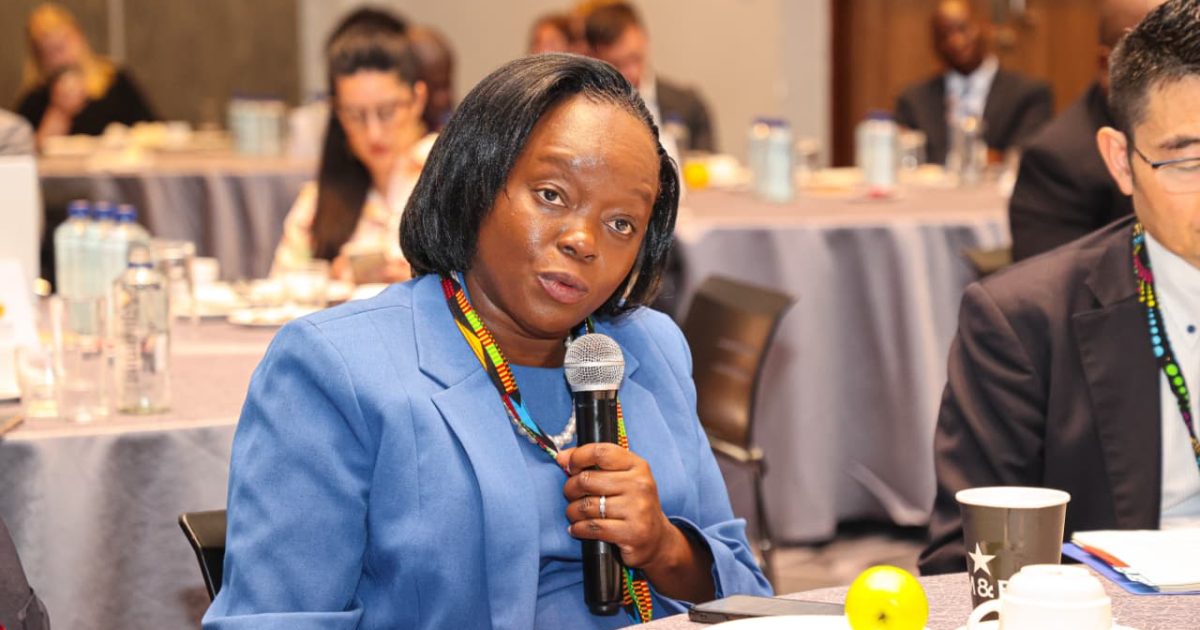
Dr. Barasa also addressed the 7th Ministerial Meeting of the High Ambition Coalition (HAC) and Friends at a Nairobi hotel, where she called for unified global leadership toward an ambitious plastics treaty.
“Kenya remains fully committed to a robust, ambitious and implementable global agreement on plastic pollution,” she said, referencing Kenya’s landmark 2017 plastic bag ban and ongoing investments in circular economy solutions.
The CS urged HAC members to support a leader with strong diplomatic skills, scientific grounding and the ability to build trust among divergent negotiating blocs, noting that negotiations have entered a decisive phase ahead of the February 2026 election of a new Chair of the Intergovernmental Negotiating Committee (INC).
She stressed the need to safeguard the UNEA-mandated ambition for an internationally legally binding instrument that addresses all stages of the plastic life cycle.
“We must guard against over-dilution of the treaty text. The world expects an agreement that meaningfully tackles production controls, chemicals of concern, microplastics, financing and the full life-cycle approach,” she said.
Dr. Barasa encouraged proactive bilateral and plurilateral engagements to narrow gaps exposed during previous negotiation rounds.
She reaffirmed Kenya’s readiness to act as a “bridge-builder” and urged HAC member states to leverage their diplomatic networks to avoid stalemate in the process.
Dr. Barasa underscored the need for the best available science to guide treaty implementation, noting that an independent global science advisory body may be necessary to support long-term monitoring and compliance.
Delegates were invited to Kenya’s side event, “Bridging Divides, Building Consensus: Towards an Ambitious Global Plastics Treaty,” scheduled for December 11, at the UN Wellness Centre.
As UNEA-7 progresses, Dr. Barasa’s message remains clear: honour the legacy of Prof. Wangari Maathai by safeguarding the environment at home and championing bold, globally coordinated action to end plastic pollution.
by Naif Rashid