The Government has reinforced its commitment to building resilience and sustainable livelihoods in Arid and Semi-Arid Land (ASALS) counties with the official flag-off of a major camel restocking programme in Marsabit County.
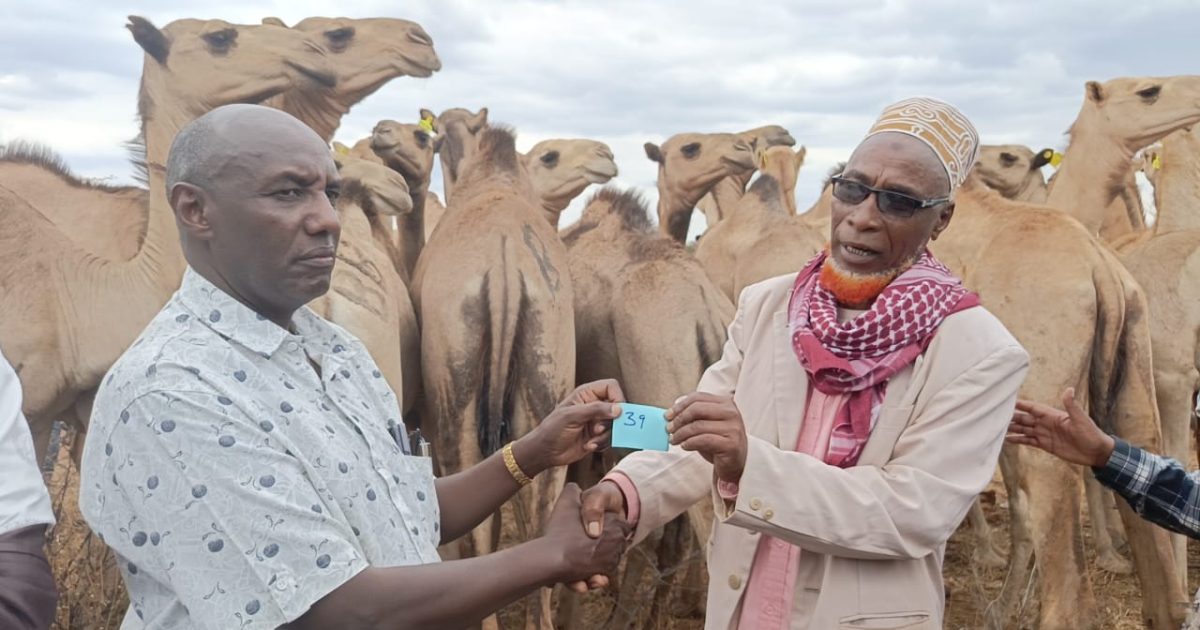
In a colourful ceremony held in Butiye ward, Moyale Sub-County, Principal Secretary for the State Department for the ASALs and Regional Development, Kello Harsama, launched the distribution of 100 camels to pastoral households. The event marked the start of a countywide exercise that will see 400 camels distributed, 100 each to the Moyale, Saku, Laisamis, and North Horr constituencies.
Coordinated by the National Drought Management Authority (NDMA), the programme targets households hardest hit by the devastating 2021–2023 drought, which wiped out large herds and left many families without a source of income and food. Beneficiaries were identified through a rigorous vetting process involving National Government Administration Officers (NGAO), NDMA officials, and village elders, ensuring that the most vulnerable families are reached.
Speaking during the flag-off, PS Harsama emphasised that the camel restocking programme is a practical and sustainable approach to rebuilding livelihoods in ASAL areas.
“In total, 400 families across Marsabit will each receive a camel. This is not just an aid initiative; it is an investment in resilience. Camels are drought-tolerant, provide milk, generate income, and serve as reliable transport in harsh terrain,” he said.
The initiative aligns with President William Ruto’s vision of a food-secure, self-reliant, and climate-resilient Kenya. Under his administration, targeted interventions have been prioritised to help communities adapt to the realities of climate change, especially in drought-prone regions. The President has consistently underscored that empowering communities with the means to sustainably produce food and generate income is central to achieving long-term economic stability.
Similar livestock restocking efforts have been rolled out in Turkana, Samburu, Isiolo, Garissa, and Wajir, where NDMA has complemented camel and goat distribution with training in herd management, animal health, and feed support to improve survival rates.
Local leaders, including Moyale MP Prof. Guyo Waqo Jaldesa and Butiye Ward MCA, welcomed the Marsabit initiative as a timely intervention that will not only provide immediate relief but also serve as a foundation for long-term economic recovery. Beneficiaries in Butiye expressed optimism that the camels would help them rebuild their livelihoods, restore their herds, and secure a better future for their families.
The Kenya Kwanza Government’s broader strategy for ASALs anchored in resilience, adaptation, and sustainability is steadily transforming drought-hit regions into zones of opportunity. Through initiatives like this, the administration is not only responding to emergencies but also equipping communities to thrive despite the challenges of a changing climate.
By Charles Matacho