Kenya’s State Department for Broadcasting and Telecommunications Principal Secretary Stephen Isaboke has been elected as Chairman of the African Preparatory Process for the World Radiocommunication Conference 2027.
The announcement came on August 12, 2025 during the 2nd African Preparatory Meeting for the World Radiocommunication Conference 2027 (WRC-27) and the 10th Sub-Sahara Spectrum Management Conference
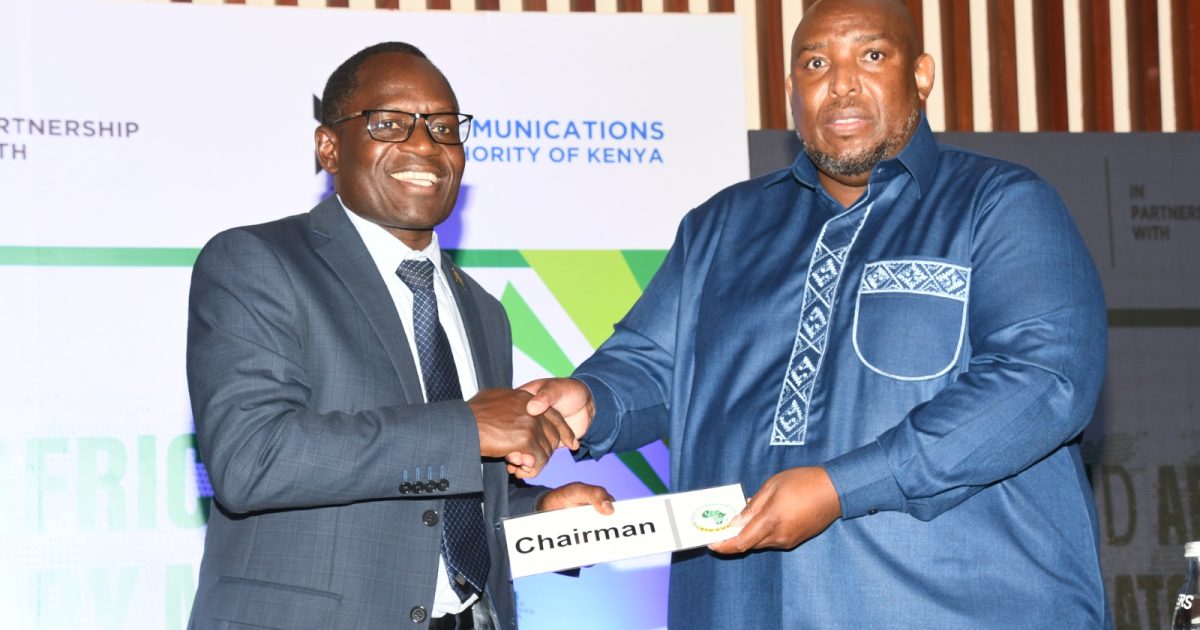
PS Isaboke took over from Mr Kanono Ramashamole, Principal Secretary for ICT of the Kingdom of Lesotho, during the 2nd African Preparatory Meeting (APM27-2) currently underway in Nairobi.
As Chairman, Mr Isaboke is tasked with leading Africa’s strategic and technical coordination, including harmonising regional positions and advocating for Africa’s interests in the global spectrum and satellite orbit negotiations.
Speaking during the handover, Isaboke said that strengthening Africa’s Position for WRC-27 will ensure the continent is well-prepared to influence decisions that impact global spectrum and satellite orbit allocation, critical resources for broadcasting, telecommunications, and economic development.
He said that the Nairobi meeting will also reflect on Africa’s performance in WRC-23, identifying lessons learnt and refining strategies for the upcoming conference.
“Today, we advance the progress initiated during APM27-1. We assess our gains, consolidate common positions, and chart a unified way forward together,” he said, adding that the Government and other stakeholders recognises spectrum’s potential to unlock participation in the digital economy and enhance livelihoods.
Isaboke said that key focus areas for APM27-2 include prioritizing the protection and acquisition of high-value spectrum bands and orbital slots to expand broadband, support remote services, and drive digital inclusion by exploring the potential of D2D technologies that enable satellites to connect directly to mobile phones.
He further noted that the conference will address Africa-specific spectrum issues, including efficient spectrum refarming, harmonization of mobile broadband bands, for 5G and future 6G, expansion of satellite broadband and broadcasting services and protection of critical services tied to national security and socio-economic resilience
Principal Secretary for ICT of the Kingdom of Lesotho Mr Kanono Ramashamole expressed confidence in the leadership of PS Isaboke, noting that APM27-2, with the steadfast support of stakeholders, will deliver even greater outcomes.
“As I pass the baton to the incoming Chair, I do so with optimism. A connected Africa, empowered by technology and united by purpose, is ready to lead on the global stage,” he said while also recognising the members of the Bureau for their support, collaboration, and guidance throughout this cycle.
He said that they have laid a strong foundation, but the road to APM27-2 will require focus, innovation, and determination to ensure that Africa’s spectrum and satellite ambitions translate into tangible benefits for our people — from affordable connectivity to inclusive digital transformation.
“I acknowledge the leadership of ATU Secretary General John Omo, whose stewardship in coordinating ATU’s work has been instrumental in safeguarding Africa’s interests and ensuring the implementation of WRC-23 outcomes,” he said.
On his part, Communication Authority of Kenya Director General Mr David Mugonyi disclosed that Kenya has engaged diverse stakeholders, ranging from government, industry and community leaders towards developing a clear, inclusive plan to bring WRC-23 decisions to life.
“Over the years, our licensing frameworks have evolved to be transparent, flexible, and investor friendly, and we are pioneering initiatives like dynamic spectrum access and private enterprise networks that open new frontiers for technology and growth,” he said.
Mugonyi pointed out that challenges and opportunities in spectrum management go beyond national borders and that the conference is important because it brings us together, giving us a chance to share ideas, build common positions, and move forward as one African community.
“The 2027 World Radiocommunication Conference is approaching and will bring new challenges, such as direct-to-device connectivity, growing demand for mid- and high-band frequencies, and the need to protect essential broadcasting and safety services,” he said.
By Anita Omwenga