The State Department for Micro Small and Medium Enterprises (MSMEs) Principal Secretary (PS), Susan Mang’eni, has urged the residents of Busia County to embrace the farming of edible oil crops.
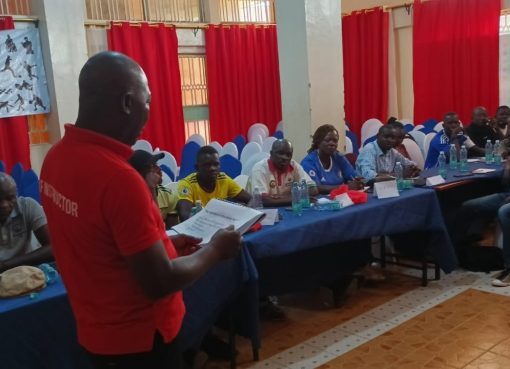
Speaking at Nasewa County Aggregated Industrial Park after meeting with the Nasewa Cooperative societies, saccos and agripreneurs from the area, Mang’eni said embracing this farming will help the government to reduce the money it spends to import oil.
“Busia County has a lot of potential for the farming of edible oils. In our country, we spend close to Sh150 billion yearly to import edible oil raw materials, which does better in this region. If we can embrace that farming, a lot of this money can remain with us here,” she said.
The PS said the County has the potential to contribute significantly to the growth of the country’s economy and change the living standards of people in the county.
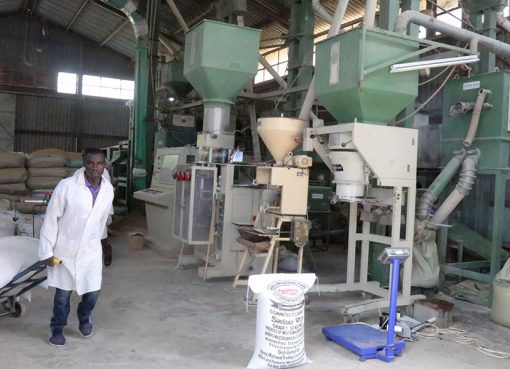
“We have seen the progress of the Export Processing Zone (EPZ) and the County Aggregated and Industrial Park (CAIP) are almost done. The remaining work is to stimulate production and this calls for the farmers to embrace and venture into this value chain. This is what will help us to achieve the threshold of the production level that we need. This place is going to be a big industrial area in the country,” she said.
Mang’eni indicated that the completion of many stalled projects calls for more engagement in the production of agricultural products which will serve as raw materials.
“We need to put much effort into agriculture for us to have enough raw materials that will help to attract investors. There is a lot of competition out there for the investors so our failure will lead them to look for another opportunity elsewhere. This will lead us to losing many job opportunities for our youth and our people,” she said.
She lauded the German Corporation for International Cooperation (GIZ) for their efforts in helping the ministry develop the value chain and enterprises along that value chain.
“We are taking these opportunities to the people by sensitising them to come up and maximise on available opportunities. We are working on market access between Kenya and Germany. The two governments have unlocked the barriers that will enable our young people to work in Germany,” she said.
The Country Programme Director of GIZ, Dr. Christoph Zipfel, said they are working to support the growth of the MSMEs, especially the value chain.
“We see great potential in this region and most importantly, we need to create linkages between the farmers and large companies, buyer and supplier linkages between the two to drive quality and productivity. We are there to support that by capacity building, working with farmers to identify takers and identifying the market outside,” he said.
He also said they have implemented a dual TVET approach where the student spends 50% of the time in school and the other 50% in companies where they gain skills that are needed in the job market.
“Creating linkages is the only way that will transform the economy of the country. Farmers need to be able to produce and deliver on time the right quality, failure to which the takers will move on.”
By Salome Alwanda and Rodgers Omondi