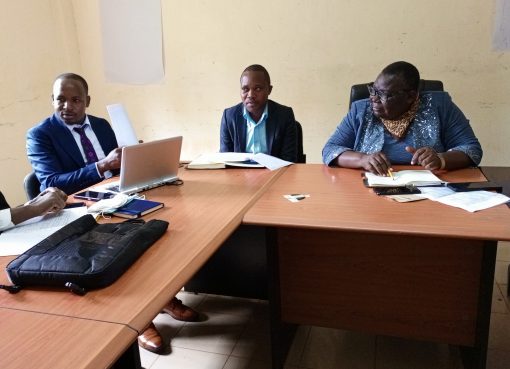
Principal Secretary for the State Department for Technical and Vocational Education and Training (TVET), Dr. Esther Muoria, has urged TVETs institutes in Universities to fully embrace Competency-Based Education and Training (CBET) as Kenya deepens reforms to align education with industry needs and global labour market trends.
Speaking while officially opening a Capacity Building Workshop on Modular CBET Delivery for University TVETs, Dr. Muoria said the reforms are anchored in strong legal and policy frameworks that continue to shape Kenya’s transformation into a skills driven economy.
The PS lauded the TVET Act of 2013, which created a unified governance system and established the TVET Authority for accreditation and quality assurance and policy frameworks which positioned TVET at the heart of realization of Vision 2030 goals on industrialization, job creation and youth empowerment.
“The journey of CBET has been deliberate and transformative. It was adopted to address inequalities in the education system and ensure the development of human capital that is responsive to the labour market,” Dr. Muoria said.
Dr. Muoria noted that CBET curricula are anchored in occupational standards, with training and assessment conducted from industry, with industry, and for industry. This design, she noted, ensures graduates gain practical competencies directly demanded by employers, making them not only knowledgeable but also employable.
Since the adoption of CBET in 2023, the PS said TVET institutions have witnessed exponential growth in both enrollment and assessments. Currently, over 100,000 trainees are pursuing modular CBET curricula, with 80,000 in public institutions and 20,000 in private TVETs, Vocational Training Centres (VTCs), and university based TVET programmes. During the July–August 2025 assessment series, 45,000 candidates were examined, with results expected soon, she revealed.
These assessments, she added, are coordinated by the TVET Curriculum Development, Assessment and Certification Council (CDACC) alongside national polytechnics serving as Qualification Awarding Bodies.
Dr. Muoria acknowledged that the initial rollout of CBET faced challenges, including delays in programme completion, inconsistencies in training delivery, and weaknesses in assessment planning. However, she said these gaps had informed the launch of the Modular CBET Curriculum, which has streamlined delivery, reduced duplication, and enhanced progression pathways across institutions.
“Currently, 311 curricula have been modularized, standardized guidelines for assessment tool development introduced, and training schedules disseminated to ensure alignment with approved occupational standards,” she explained.
The PS underscored that capacity building workshops are critical for addressing persistent challenges, including lack of standardization in training plans, reliance on traditional teaching methods, limited resources, and inadequate industry involvement in curriculum development and delivery.
“The CBET journey is one of bold reform, resilience, and innovation. It is transforming TVET institutions into centres of excellence, equipping our youth with the skills to thrive in a competitive labour market,” she observed.
She further acknowledged the growing role of universities offering TVET courses, saying this had helped shift public perception and reduce the stigma that has long branded vocational skills as inferior.
“The responsibility now rests with all of us. I urge you to be champions of this transformation. Consolidate the gains of CBET, scale up best practices into university curricula, and above all, build an education system that produces competent, innovative, and employable youth,” she added.
The PS also highlighted the strong demand for Kenyan skilled workers abroad, particularly in Europe and the Middle East, where opportunities continue to expand.
“The world is hungry for skills. Kenya must rise to the occasion by equipping young people who can deliver quality work anywhere,” she said.
In support of her remarks, Prof. Kisilu Kitainge, CEO of the Curriculum Development, Assessment and Certification Council (CDACC), underscored the importance of modular training in broadening opportunities for learners.
He explained that CDACC develops competency-based curricula, conducts assessments, and issues three levels of certification: full qualifications, partial qualifications, and micro-credentials.
“The essence of modularization is to give people tangible skills they can use to sustain themselves within months of training,” Prof. Kitainge said, citing practical courses such as catering, tailoring, and hairdressing which have already enabled young people to earn a living and contribute to their communities.
The Kenya National Qualifications Authority (KNQA) Director General, Dr. Alice Kandie, reaffirmed the Authority’s role in safeguarding quality through the National Qualifications Framework.
She explained that the framework provides progression pathways and recognises all skills and knowledge acquired in credible ways, whether through formal, informal, or non-formal learning.
“It is about consistency, credibility, and recognition of qualifications across all training levels. This framework ensures learners are not locked out of opportunities and that their competencies are valued both locally and globally,” Dr. Kandie said.
During the workshop, stakeholders agreed that collaboration among universities, TVET institutions, industry, and regulators remains essential to sustaining transformational momentum in the country’s skills development agenda.
By Joan Ogolla