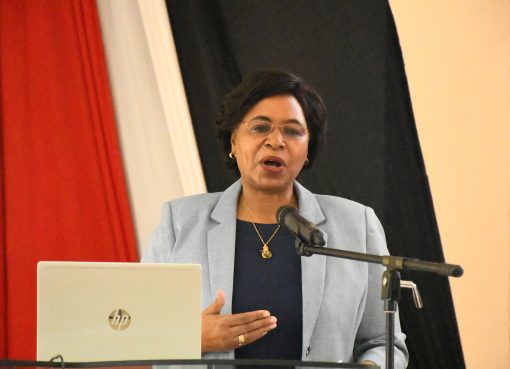
The Principal Secretary (PS), State Department for Research, Science and Innovation, Prof. Shaukat Abdulrazak, has called for integration of research and innovation to drive socio-economic transformation through the blue economy.
Speaking in Mombasa during the closing of a three-day Blue Economy Innovation and Investment Summit organized by Sote Hub, Prof. Abdulrazak emphasised the need for concrete strategies to translate the sector’s potential into tangible benefits.
“We have been talking about the importance of the blue economy in the growth of our economy, job creation but in my opinion, there is room for improvement,” stated the PS.
“We need to have a master plan to see how we can bring all players in this ecosystem to be able to contribute from the institutions of higher learning, the academia, the research institutions, the policy, partners and collaborators,” he added.
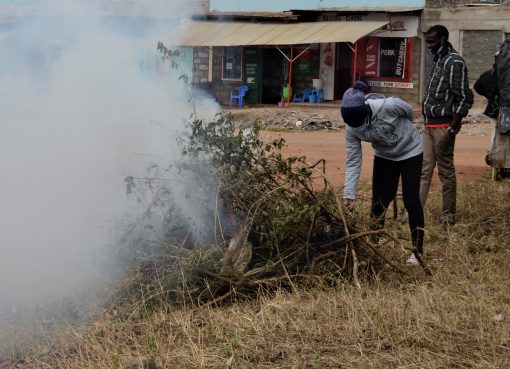
Prof. Abdulrazak noted that while the blue economy holds immense potential, much of it remains untapped. He also highlighted the urgent need to address plastic waste, which is threatening marine life.
“If urgent action is not taken, in the future people will be consuming more microplastics than fish. This calls for consolidated efforts,” he cautioned.
“As a government we have relevant policies in place and others that are in the pipeline, we want to enhance and be able to see how we can bring the startups, the incubations, hubs and innovations centres and be able to create that space for the talent that we have in our youth,” he stated.
He added that the youth need space for expanding their knowledge and ideas into prototypes and research into commercialization. The PS also advised innovators to ensure their works impart the society calling for blending of research and innovations for commercialization.
The PS also called for protection and sustainable exploitation of the 630 Kilometers Kenya’s coastline and over 200 nautical miles in the Exclusive Economic Zone in the Indian Ocean.
“We must be able to safeguard; this area is not protected enough at the moment. It is only one percent by estimation that is being protected. We need to move to 30 percent, so we need to develop more policies and mechanisms to protect the resources that we have for the benefit of Kenyans,” he stated.
Youths were urged to seize funding opportunities from the Kenya National Innovation Agency, the National Research Fund, and financial institutions.
On his part, UN Habitat Assistant Secretary General Michal Mlynár noted that the blue economy is a transformative opportunity for Kenya. He called for the exposure to blue economy from the school level to prepare learners for the opportunities.
“Our joint responsibility is really to make it work to put together the research, innovations the creativity of the people but also the necessary support that we can offer to them either from the National Government or from International Community including United Nations to ensure the ideas and traction and energy they have can turn into tangible results for the people,” he said.
Sote Hub Director David Ogiga added that the organization plans to rally more than 100 innovation hubs across the country to partner with the government and create an enabling environment for startups and innovators to thrive.
By Sadik Hassan