The Public Administration, Intergovernmental and International Relations (PAIR) sector has outlined its financial plan for the 2026–2027 cycle, highlighting progress in governance, service delivery, foreign relations and intergovernmental coordination, while calling for expanded funding to sustain capital-intensive national priorities.
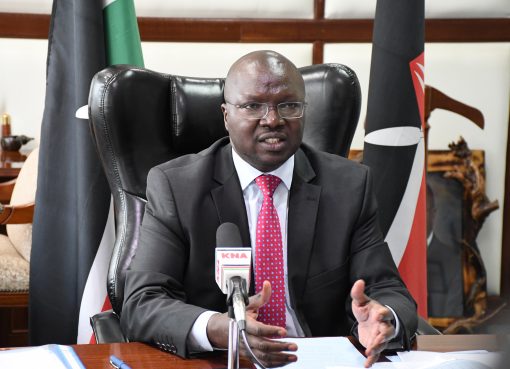
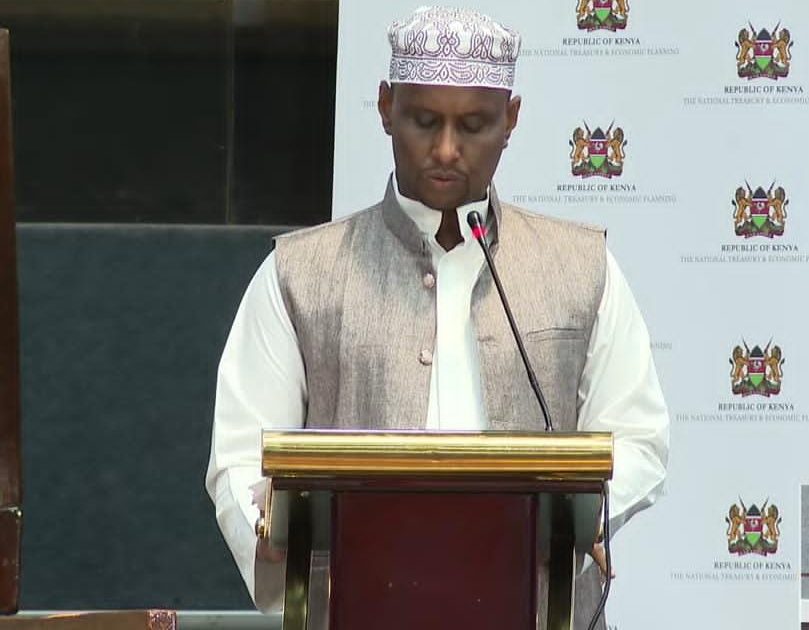
Speaking during the sector’s public participation forum held in Nairobi, the Principal Secretary (PS) for National Government Coordination Ahmed Abdisalan Ibrahim said that the sector remains central to Kenya’s governance and economic management systems.
“Our vision remains excellent in public policy administration and international relations. We are committed to providing leadership, coordination and oversight in public finance, economic management, public service transformation and global competitiveness,” stated the PS.
Ibrahim explained that the sector comprises 26 sub-sectors including the Executive Office of the President, Office of the Prime Cabinet Secretary, National Treasury, State Departments for Foreign Affairs, Diaspora Affairs, Devolution, Parliamentary Affairs, Public Service, and Economic Planning that collectively steer the country’s governance, fiscal stabilization and intergovernmental relations.
In addition, he highlighted the sector’s strategic objectives which include improving performance management, strengthening human capital, enhancing county national government coordination, safeguarding public assets, promoting accountability and building a competitive and resilient economy.
The PS highlighted several key achievements recorded between the 2022–2023 and 2023–2025 financial years among them included the empowerment of 6,973 women groups through affordable credit, which was above the target of 4,000 and the distribution of food to 30,522 vulnerable households.
Further, the sector also reaffirmed 266 kilometres of the Kenya–Tanzania boundary, trained and rehabilitated more than 4,274 boys under the Anti-Drug and Substance Abuse Initiative, and evaluated 451 ministries, departments and agencies (MDAs) along with 250 State Corporations under the performance contracting framework. Additionally, 1,970 government projects were updated on the Government Performance Reporting System.
Notably, PS Ibrahim disclosed that the Foreign Affairs docket recorded significant milestones with the launch of a 10-year foreign policy framework, the establishment of new embassies in Guangzhou, Jeddah and Riyadh, the signing of nine bilateral agreements and three economic partnership agreements, and enhanced diaspora engagement through 51 outbound meetings, 27 virtual town halls, 13 diaspora conferences and one investment expo.
He mentioned that environmental and climate actions saw over 8,000 trees planted across the country, while public-private partnership initiatives mobilized Sh67.7 billion for key projects. The sector also upgraded the Government Human Resource Information System and trained 26,655 officers in paramilitary skills, he said.
The PS further pointed out that budget absorption improved significantly, with overall expenditure performance rising from 80.8 percent to 92.9 percent between 2022 and 2025.
He added that recurrent budget absorption surpassed 90 percent in the last two financial years, while development expenditure absorption ranged from 70 percent to 94 percent.
The PS however revealed that pending bills remained an ongoing challenge, amounting to Sh11.9 billion in 2022–23, Sh24.4 billion in 2023–24 and Sh13.0 billion in 2024–25, despite continuous verification efforts.
At the same time, an independent analysis by the Kenya Institute of Public Policy Research and Analysis (KIPPRA) commended the sector for its comprehensive presentation.
KIPPRA’s representative David Wanjala said the report adequately covers the mandate and performance of the sector, but emphasized the need for stronger analysis of why some development funds remained unutilized in certain years.
“We noted improved absorption, but more clarity is needed on why rates fluctuated, especially where they were affected by incomplete development projects,” he pointed.
Wanjala also recommended more rigorous project readiness checks before Treasury approves funding, including feasibility studies, procurement preparedness and detailed implementation timelines.
He further urged for enhanced tracking of pending bills, mapping of delayed projects and better alignment of budget allocations with sector mandates and called for strengthened disaster preparedness capacity, saying the country must be equipped to respond to climate-related emergencies.
Meanwhile, the sector has proposed 46 programmes for implementation across its various institutions in the 2026–2029 Medium-Term Expenditure Framework. Key targets include rolling out the legislative agenda and strategic information system, supporting 2.8 million vulnerable Kenyans with food and related assistance, and expanding Kenya’s diplomatic presence through new embassies in Asmara and Bogotá.
The sector also aims to maintain inflation within the 5 ± 2.5 percent policy range, raise domestic revenue from Sh2.694 trillion in 2026 to Sh3.605 trillion in 2029, reduce the fiscal deficit to 4.1 percent of GDP, and attract foreign direct investment valued at USD 2 billion by 2029.
Other priorities include creating 14.5 million jobs through government service platforms, conducting 10,479 audit reports for national and county entities, and finalizing the Public Service Performance Management Framework and the Transitional Plan 2030–2038.
During the plenary session, participants urged the government to allow more time for public engagement on the sector due to its wide mandate.
One of the facilitators noted that the ‘one hour’ given was not enough for meaningful engagement, with the government assuring participants that all memoranda submitted would be fully considered in the ongoing budget review process.
In the meantime, KIPPRA also noted that to fully deliver on its mandate, the PAIR sector must progressively expand medium-term funding, enhance resource mobilization, improve efficiency and deepen strategic partnerships.
“Capital-intensive priorities such as digital transformation, devolution strengthening and disaster preparedness must receive consistent and adequate investment,” Wanjala stated.
The sector reaffirmed its commitment to integrating the recommendations into its final budget proposals for the 2026–2027 financial year.
By Samuel Kivuva and Mary Ndanu