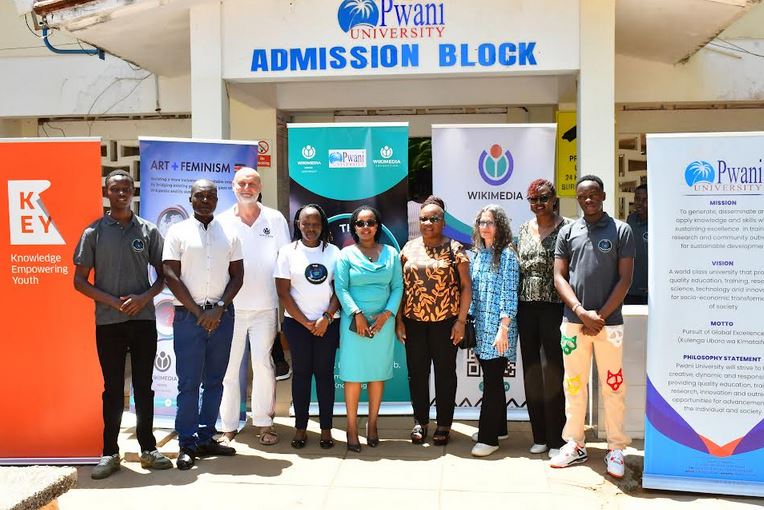
Wikimedia User Group Kenya has launched the country’s first university-based Wikimedia club at Pwani University in Kilifi County, marking a significant step toward empowering students to document and preserve Kenya’s cultural heritage online.
The Pwani Wiki Club seeks to equip students with digital skills to create, edit and share credible content about African history, traditions and contemporary culture on Wikimedia platforms, including Wikipedia. The initiative aims to bridge the content gap on African issues online while promoting authentic storytelling by local communities.
Speaking during the launch at Pwani University, Wikimedia Kenya Executive Director Winnie Kabintie said the club will provide young people with an opportunity to tell their own stories and present African culture accurately and confidently.
“This process will help explain our culture in a way that is accurate, relatable, and reflective of who we truly are,” said Kabintie. “For a long time, many African narratives have been told from an external perspective. It is time for us to shape and share our own knowledge.”
Pwani University Deputy Vice-Chancellor Professor Rose Ruto observed that limited online information about African culture has contributed to misconceptions and the gradual erosion of traditions.
“The lack of African cultural content on the internet has led to increased reports of degradation of our traditions and heritage. We must take responsibility to document and safeguard our identity,” she said.
Ruto encouraged students, lecturers, and researchers to utilize Wikimedia platforms responsibly by uploading well-researched and verifiable content that showcases the richness and diversity of African communities.
Kilifi County Executive Committee Member (CECM) for Education and Vocational Training Colleges Felkin Kaingu described the establishment of the club as timely, noting that it complements county and national efforts to preserve heritage.
“The Wikimedia club will play a key role in preserving and promoting our culture. The information generated will support academic research, improve access to cultural knowledge and engage communities by highlighting aspects that have not been documented online,” said Kaingu.
Knowledge, Empowerment, and Youth Trust official Gladys Kerich said her organization is developing a strategy to establish digital libraries accessible without data bundles to improve information access in underserved areas.
“It’s not just about supporting students with books and infrastructure development; we are prioritizing cultural content in these libraries to ensure communities can access information easily. So far, we have established 46 libraries across 14 counties,” she said.
Pwani Wiki Club chairperson Wellington Karani said students are eager to use the platform to promote the coastal region digitally.
“We want to take advantage of this opportunity to showcase the Coast online by documenting the resources and heritage available in our region,” he said.
The launch aligns with Wikimedia Kenya’s strategic plan and broader efforts within the global Wikimedia movement to promote equitable access to knowledge, education and inclusive community participation, particularly in underserved regions.
By Stephen Mrira